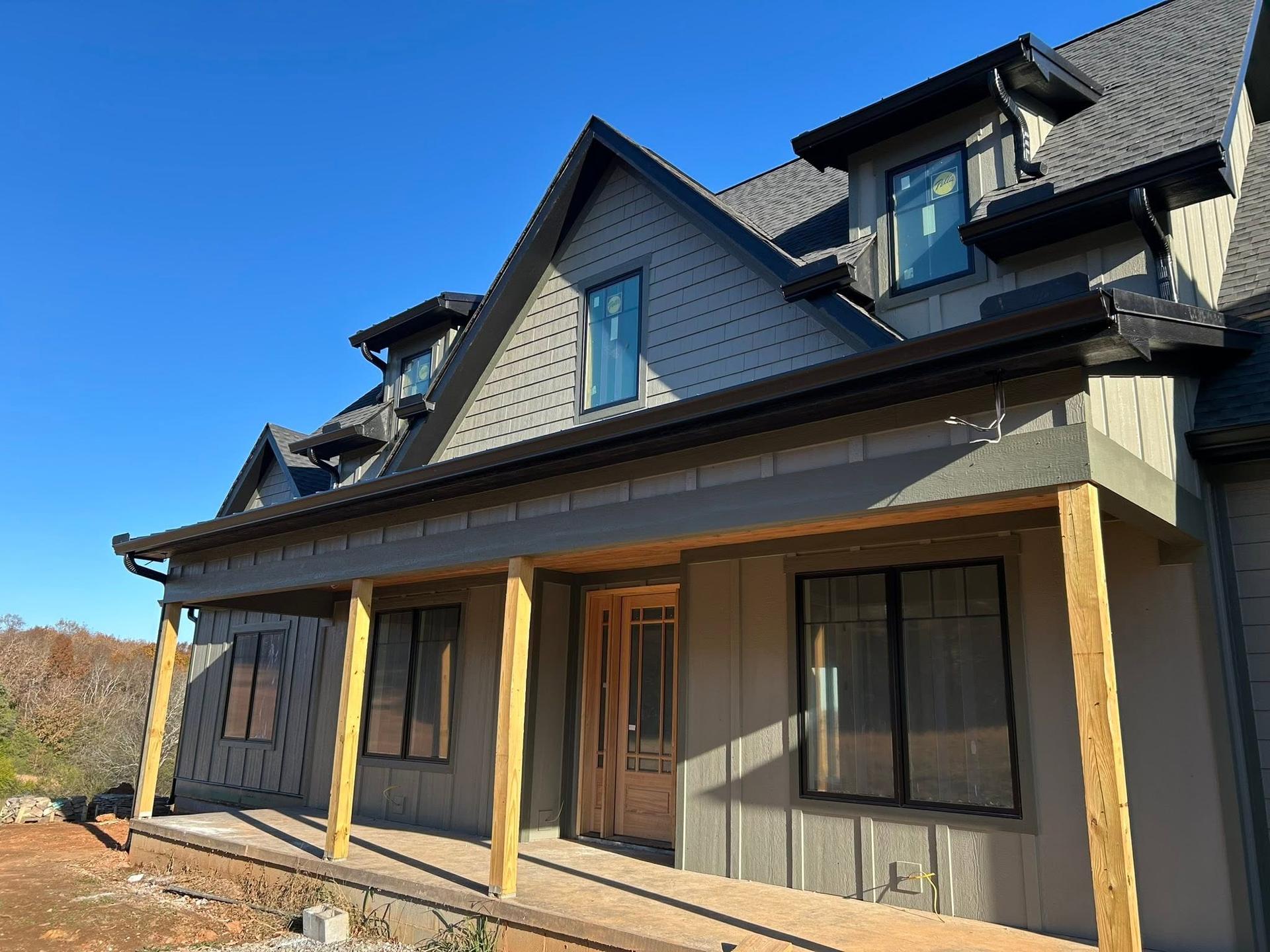
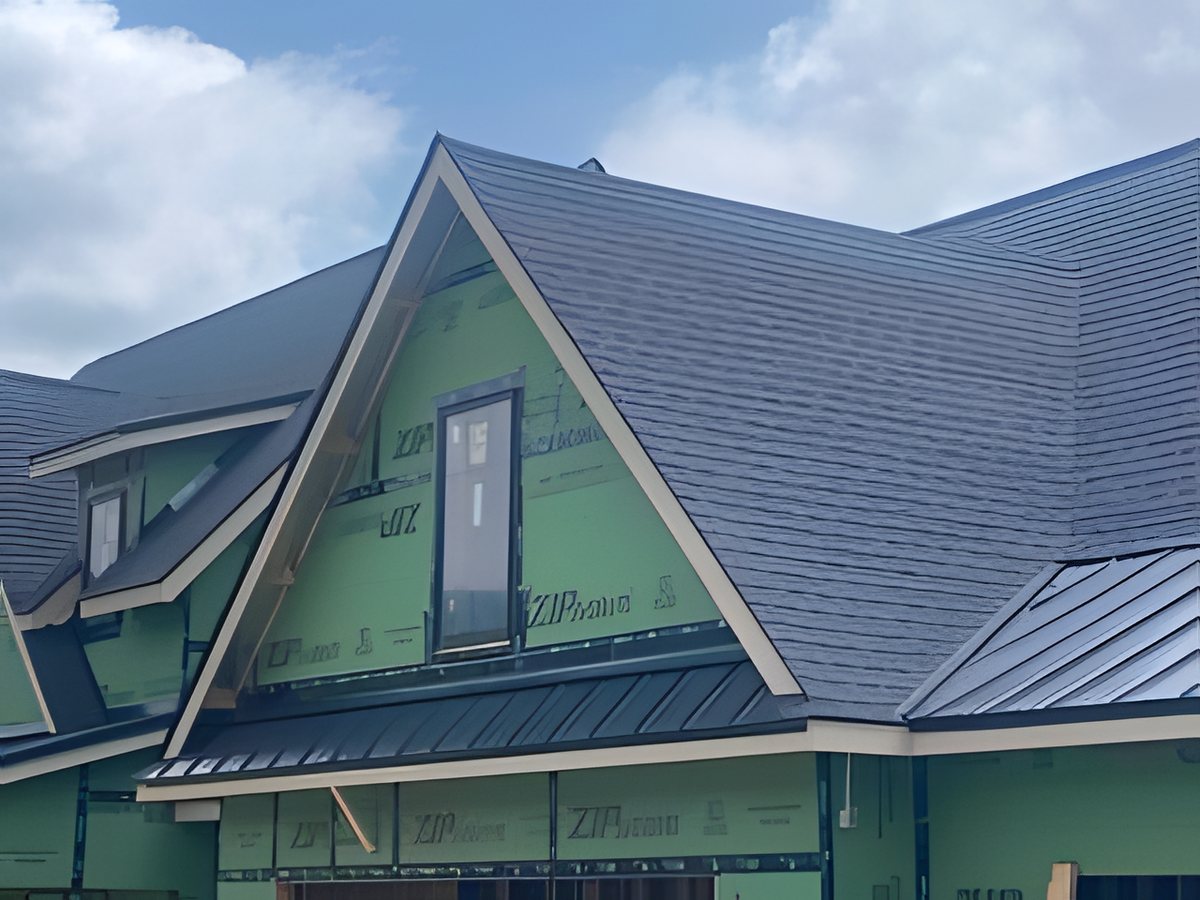
Layered, dimensional asphalt shingles.
Architectural shingles
Price level 1 of 4: $$$$Most affordable- Best for
- Traditional looks and the lowest cost up front
- Brands
- We install all major manufacturers of asphalt shingles
A straightforward exteriors company based in Maryville, Tennessee. Honest pricing, clear communication, and work done right.
Tap a service to see what we install, the options, and how to get a free quote.
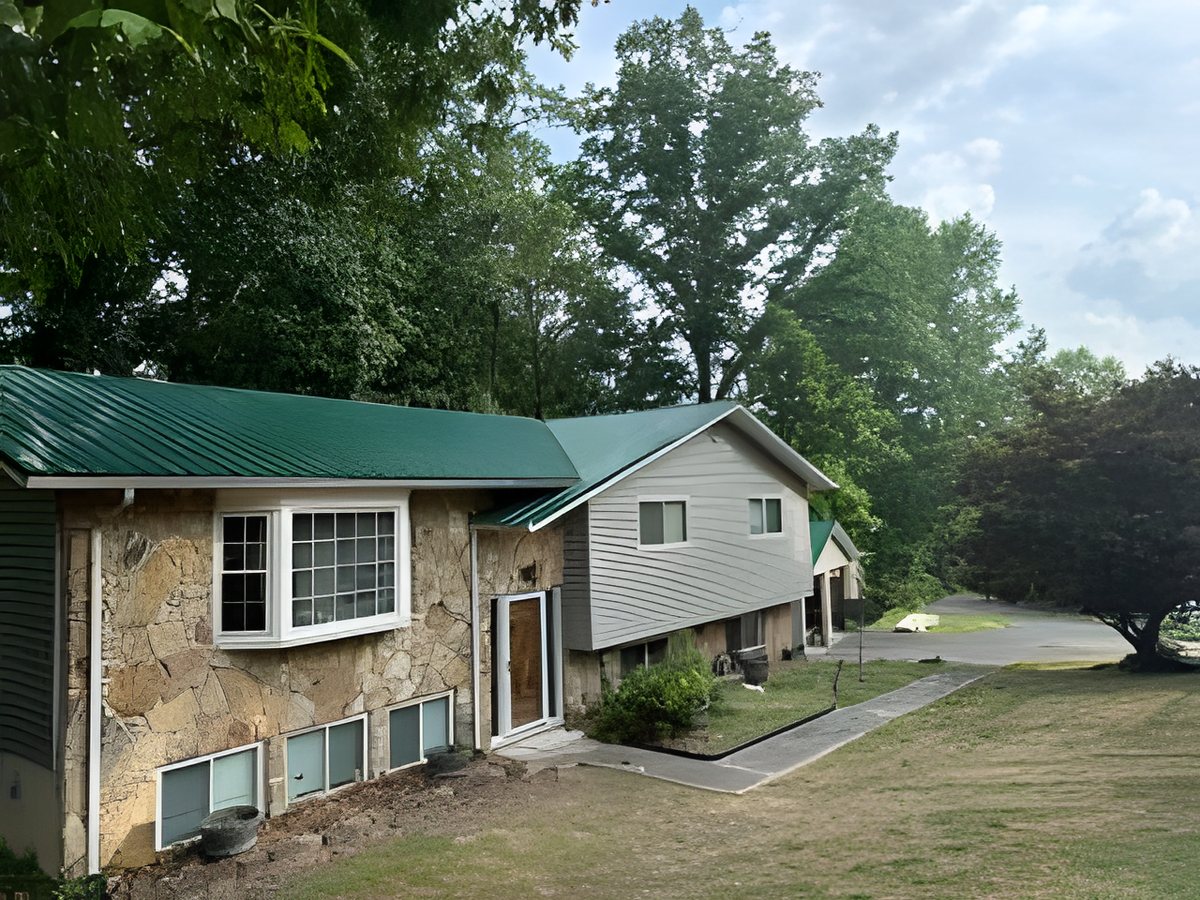
We install architectural shingles, exposed-fastener and standing seam metal roofs, and DaVinci synthetic shake and slate. Our installers are certified and factory-trained.
Listed from most affordable to most high-end. Every roof is quoted on your house. Call, text or send the form for a free quote.
Layered, dimensional asphalt shingles.
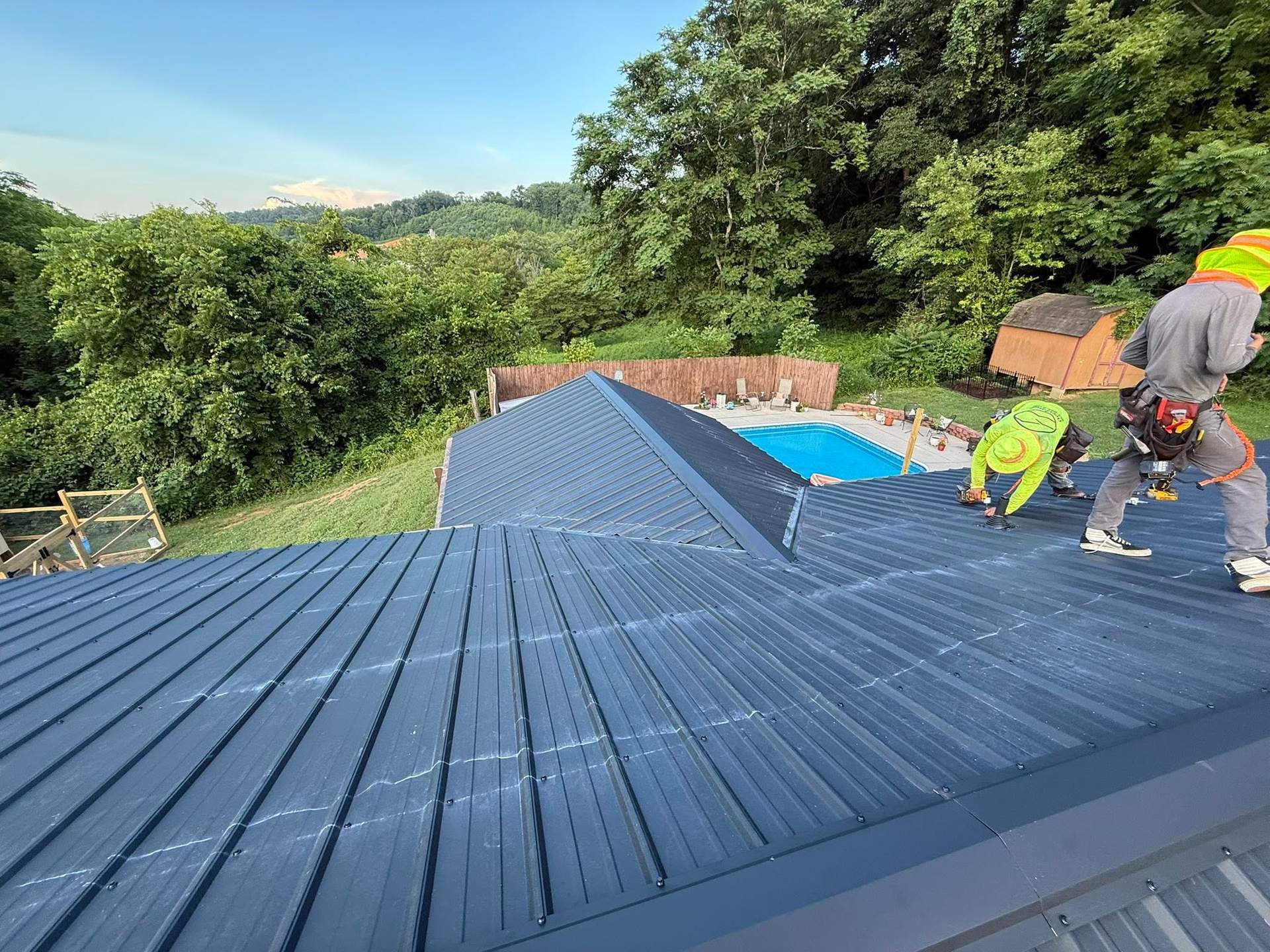
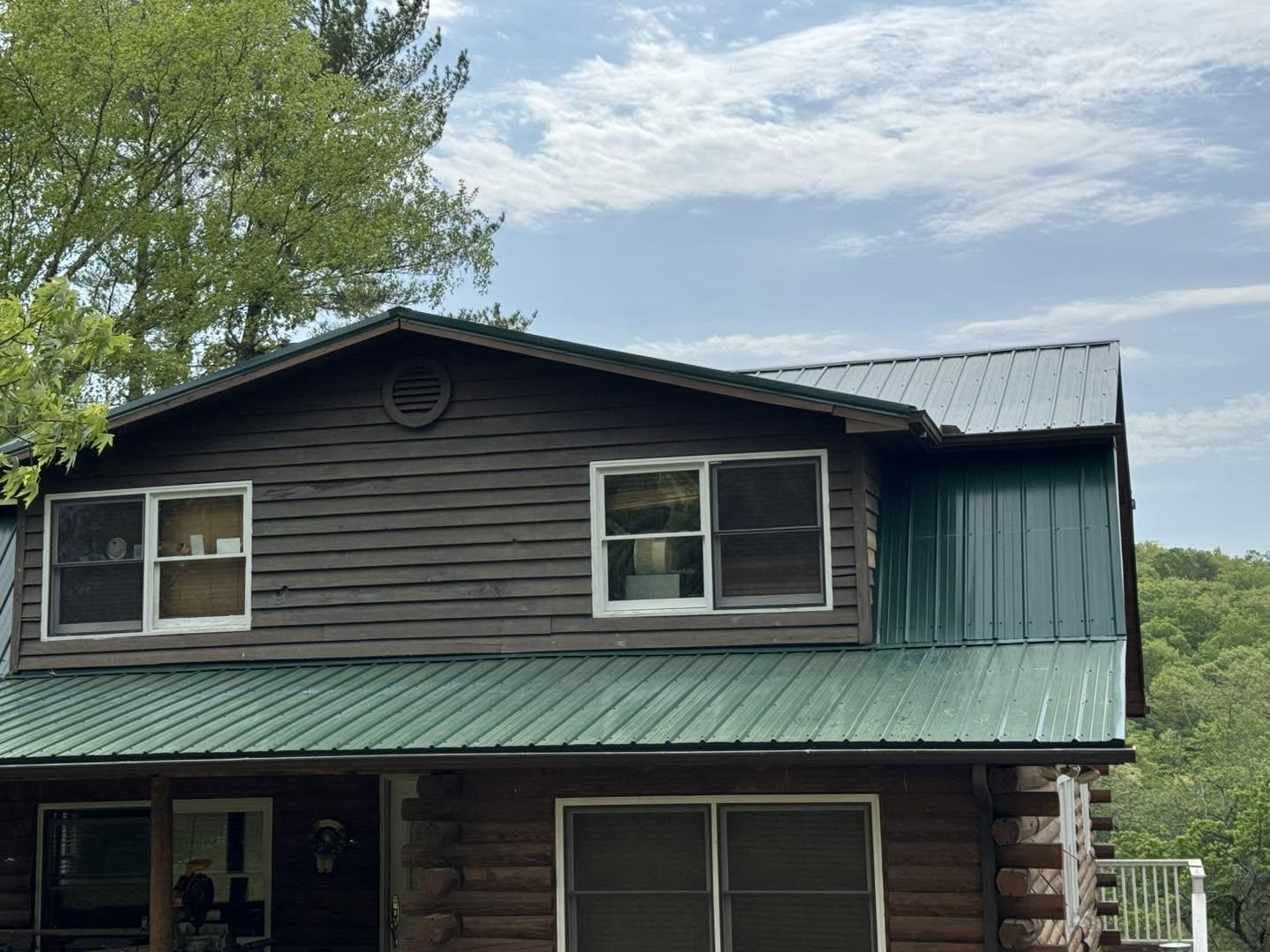
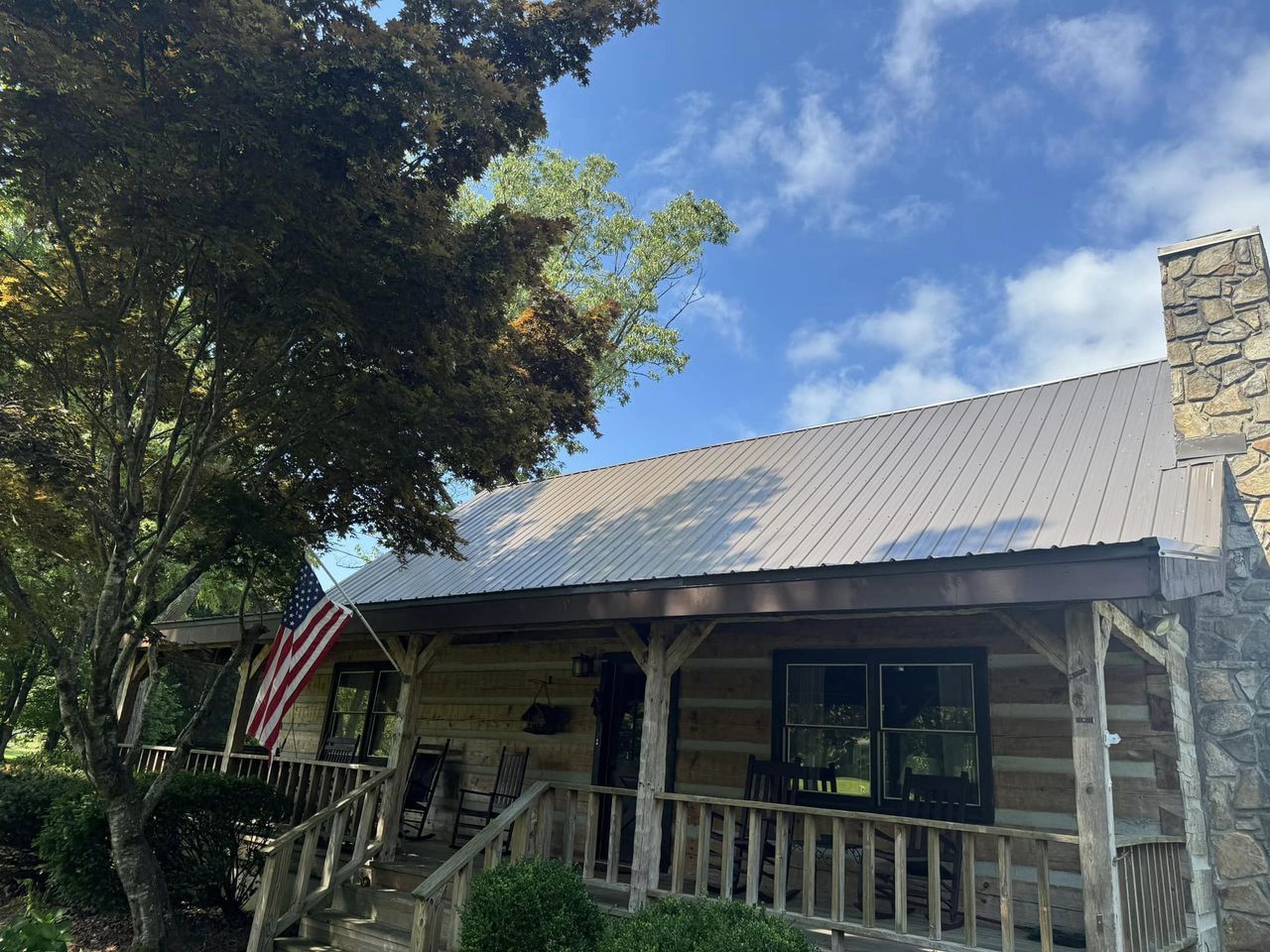
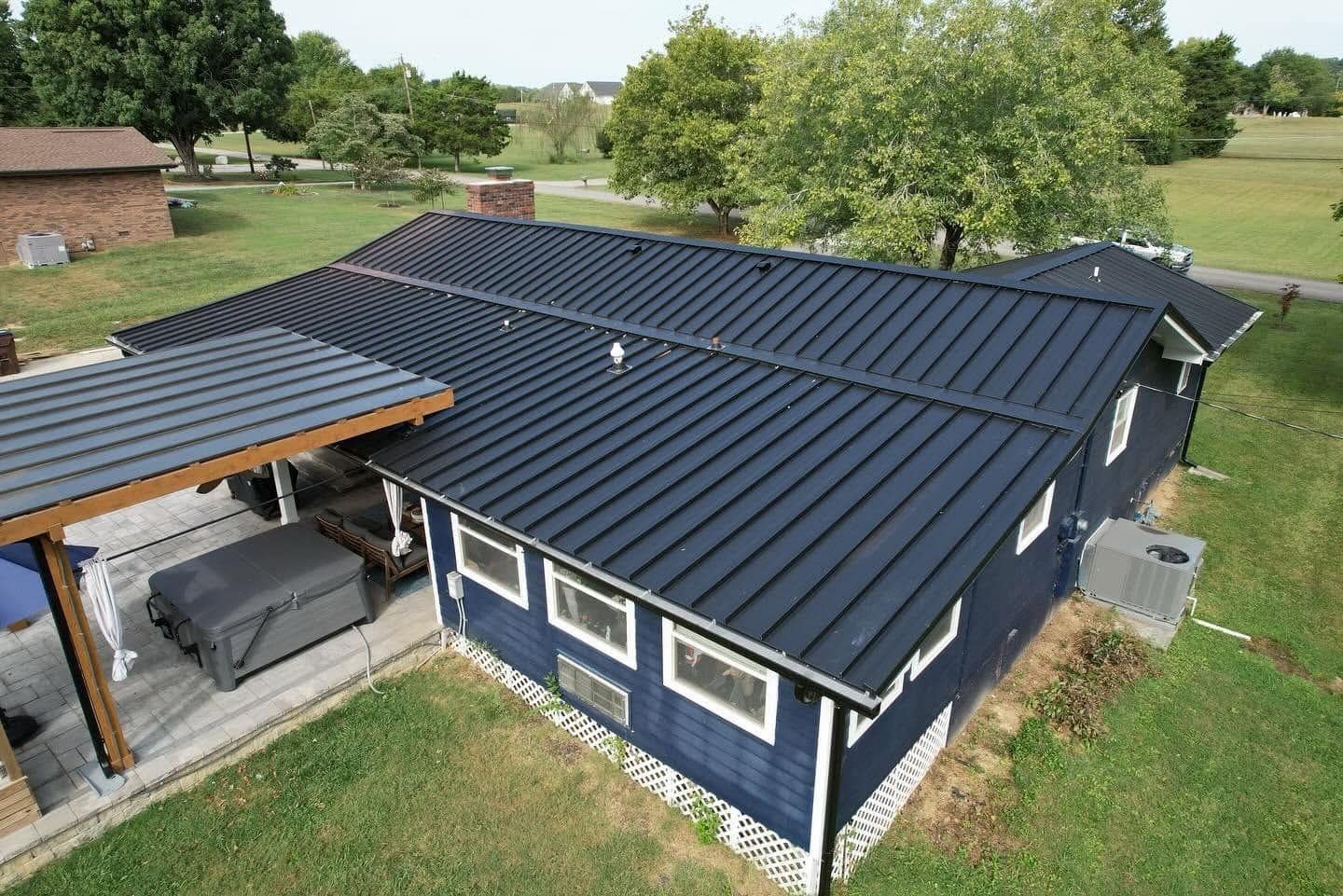
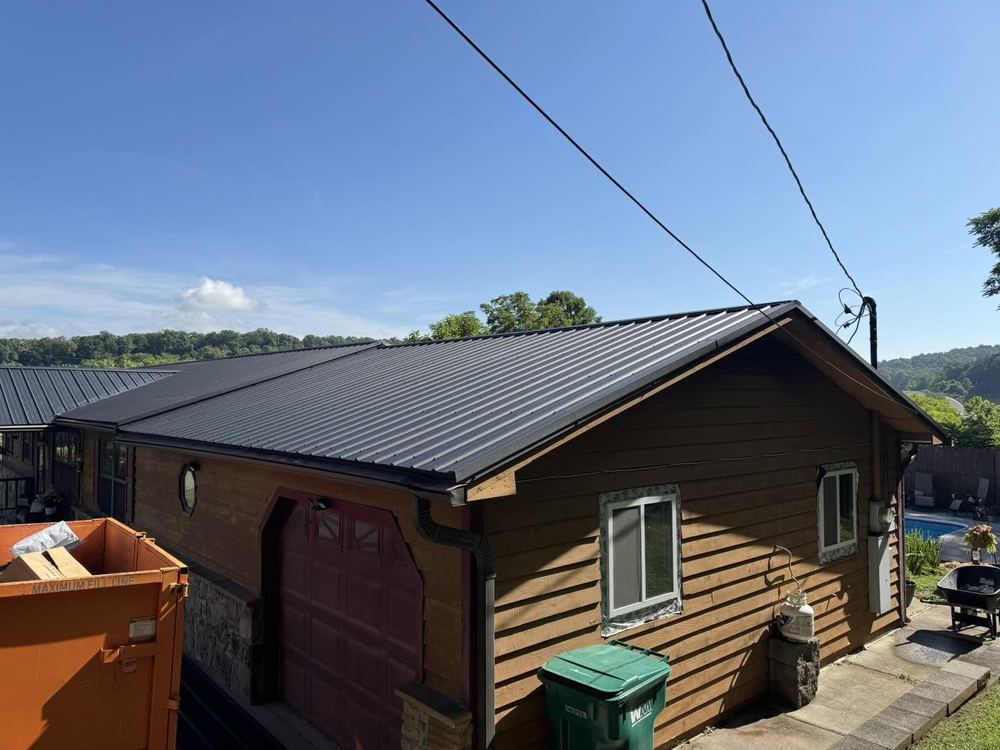
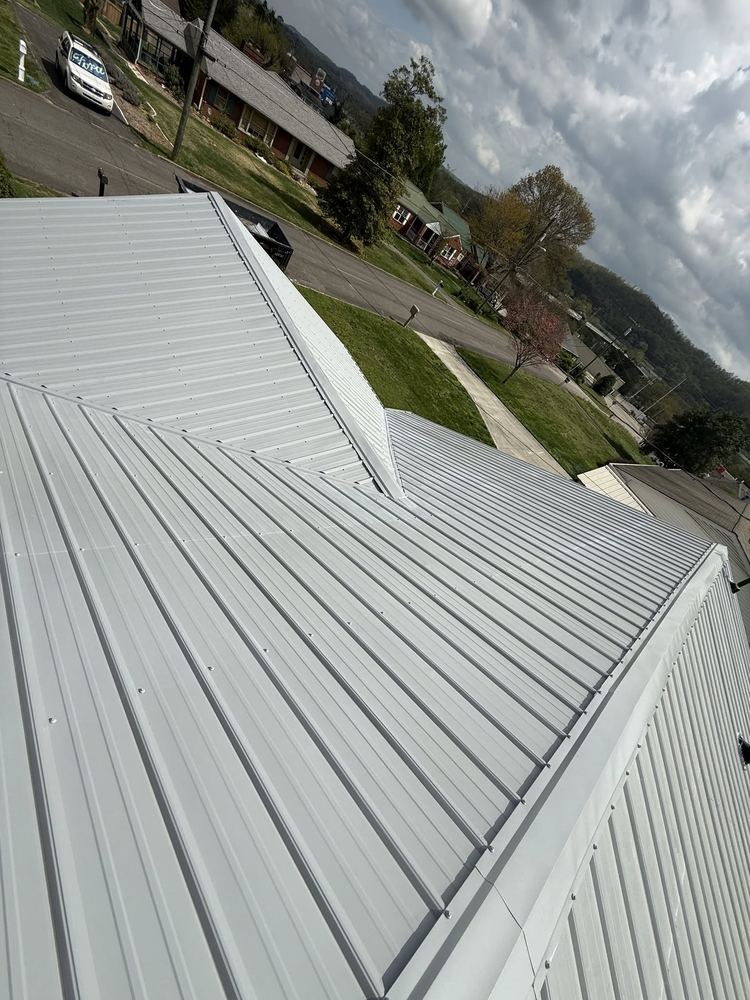
Raised ribs, with screws through the flat of the panel.
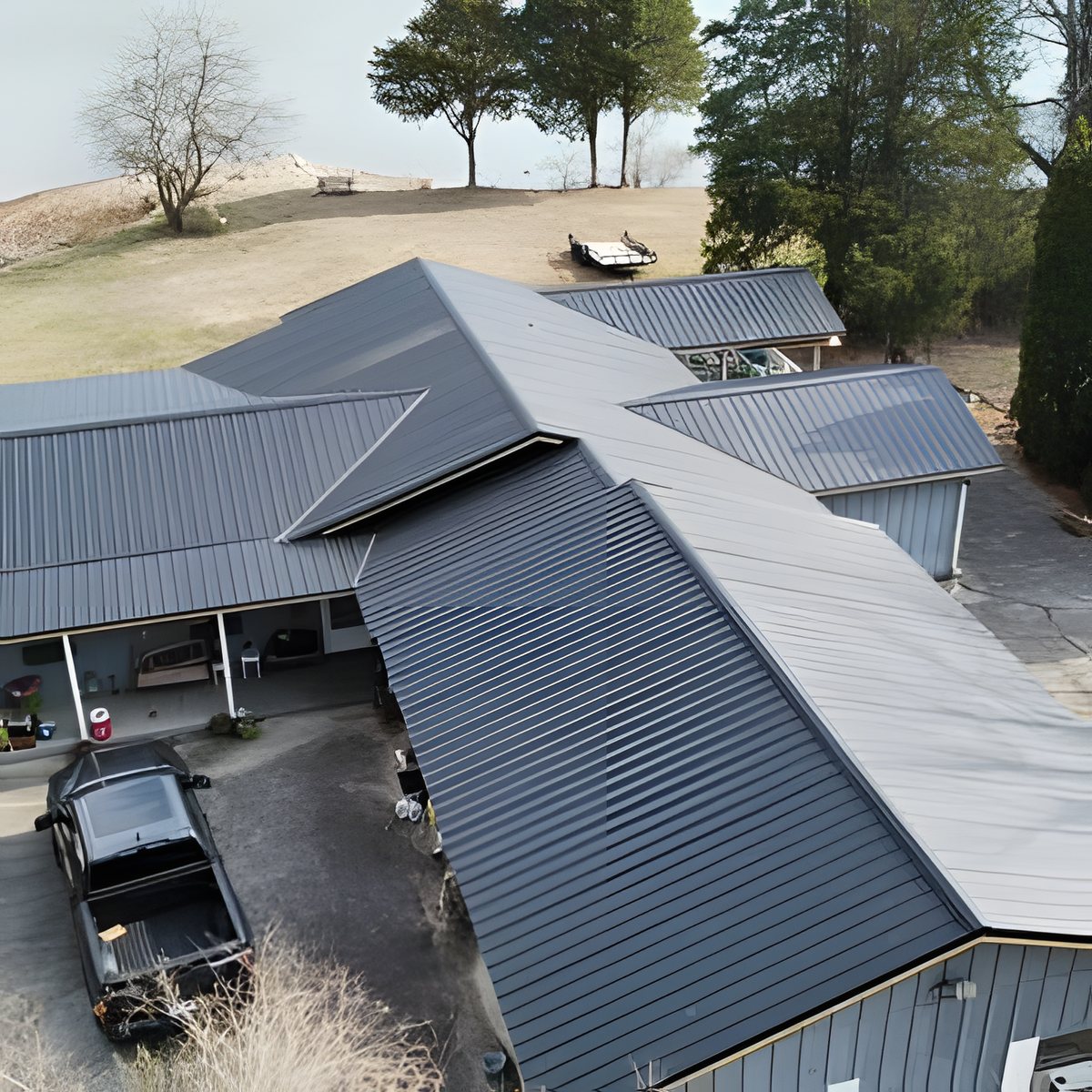
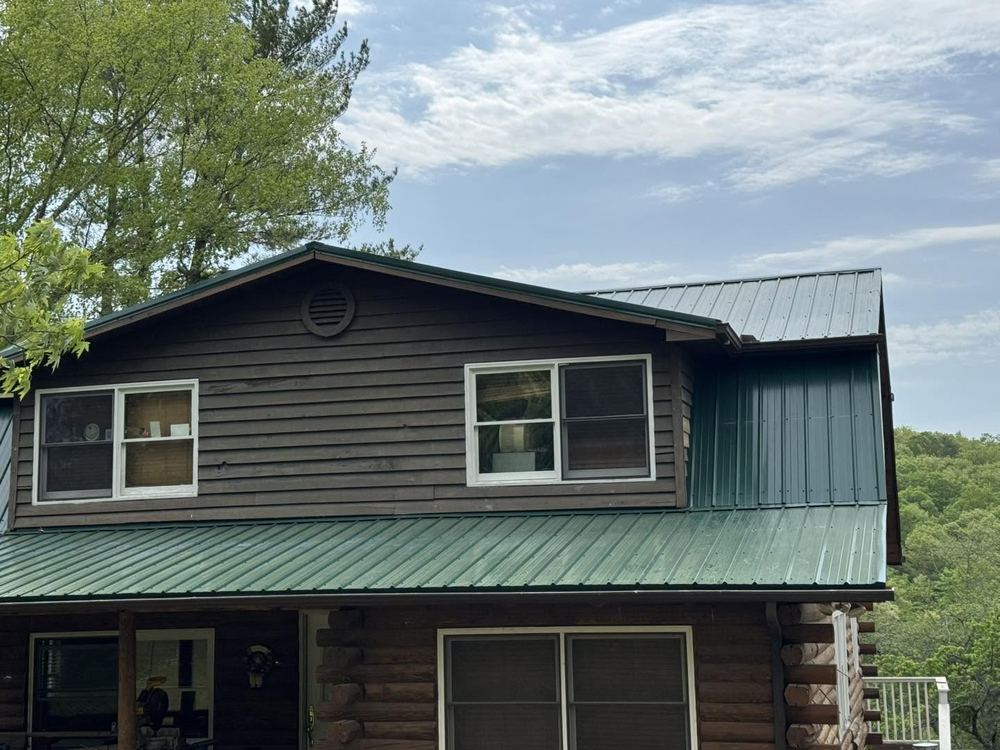
Flat pans between raised seams. No exposed screws.
Synthetic tiles modeled on slate and hand-split cedar.
We work with several metal manufacturers to get the exact look of your project. The steel is American-made. Painted panels carry a Sherwin-Williams lifetime paint warranty, and other paint systems carry 40 years.
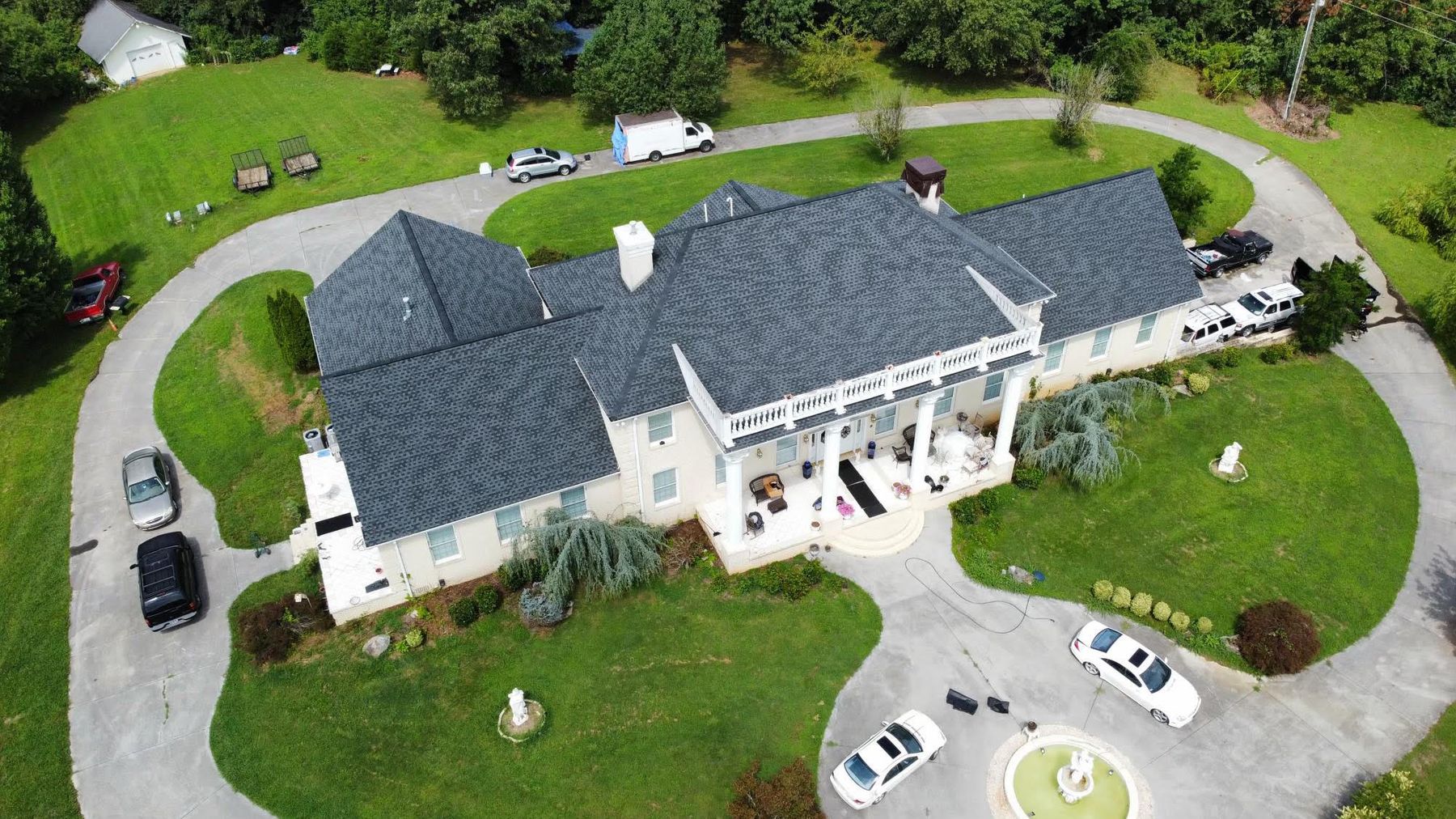
We install all major manufacturers of asphalt shingles, with certified, factory-trained installers.
Not sure it's time? Start with 10 signs you need a new roof.
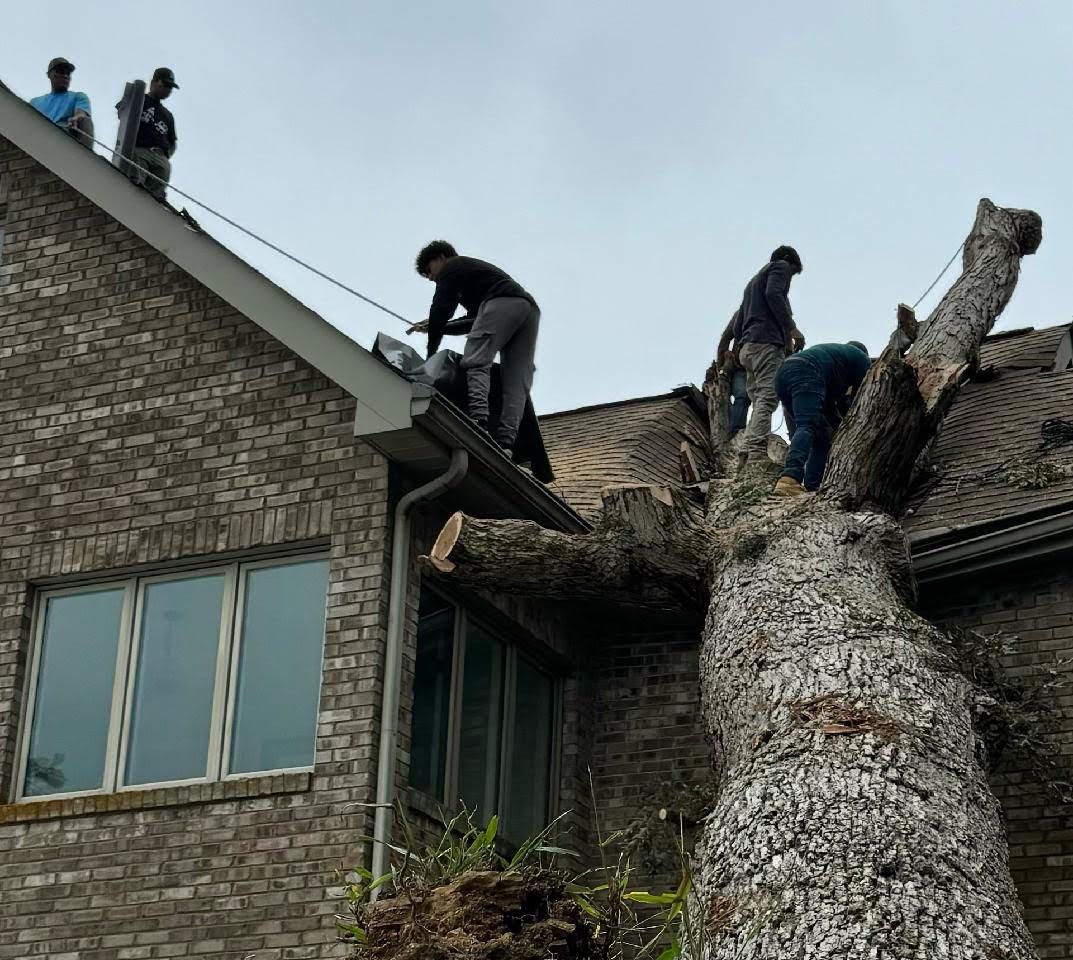
When a storm or a falling tree damages your roof, call us. We document the damage with photos and can meet your insurance adjuster.
Every policy is different, so check yours. Our guide explains how a roof insurance claim works in Tennessee.
Office hours Monday to Friday, 9 AM to 5 PM. Storm and emergency calls answered outside office hours.
We install steel board-and-batten siding in solid colors, and wood prints that look like real boards. We also replace failing hardboard and Masonite siding.
Siding is quoted on your house. See it on a real home in our award-winning project.
Wide flat boards with narrow raised battens.
Barnwood, Cedar Natural, Primitive Pine and Cedar Gray.
Swollen, flaking hardboard laps.
Press your thumb into the bottom edge of a board near the ground. If it dents, flakes or feels spongy, the board has taken on water, and paint will not fix it. Read the full guide.
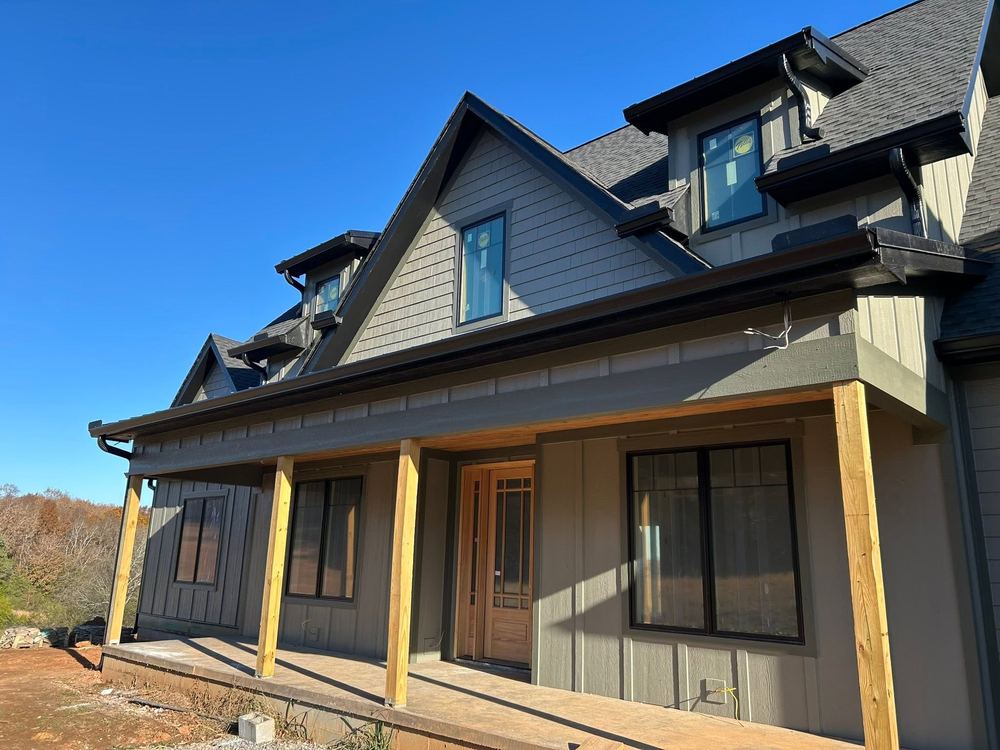
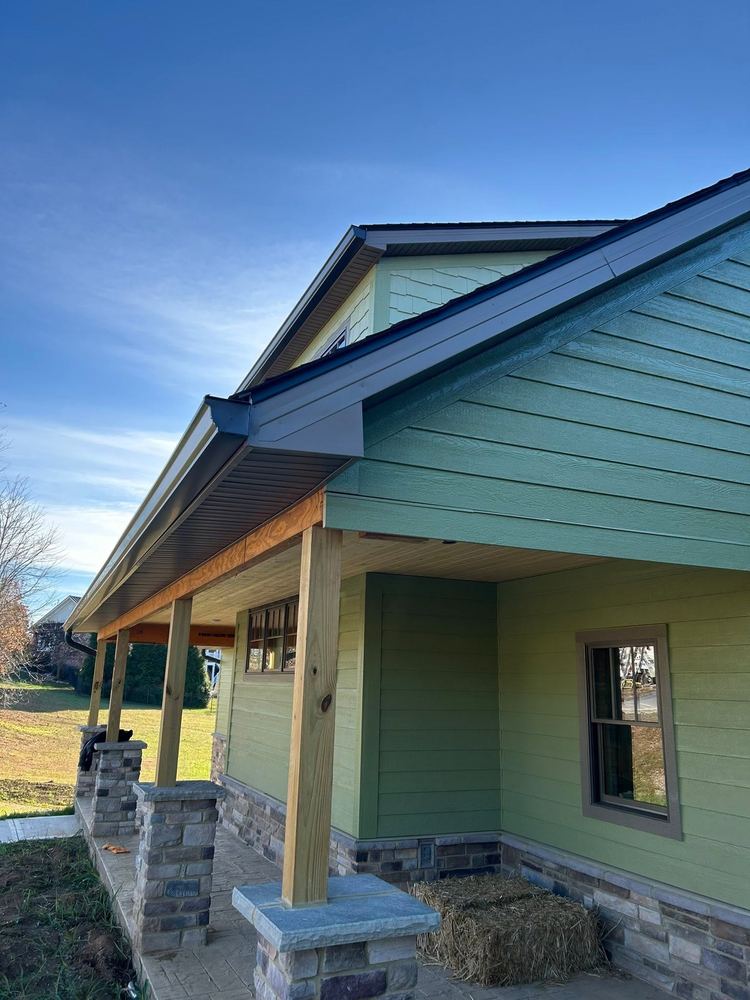
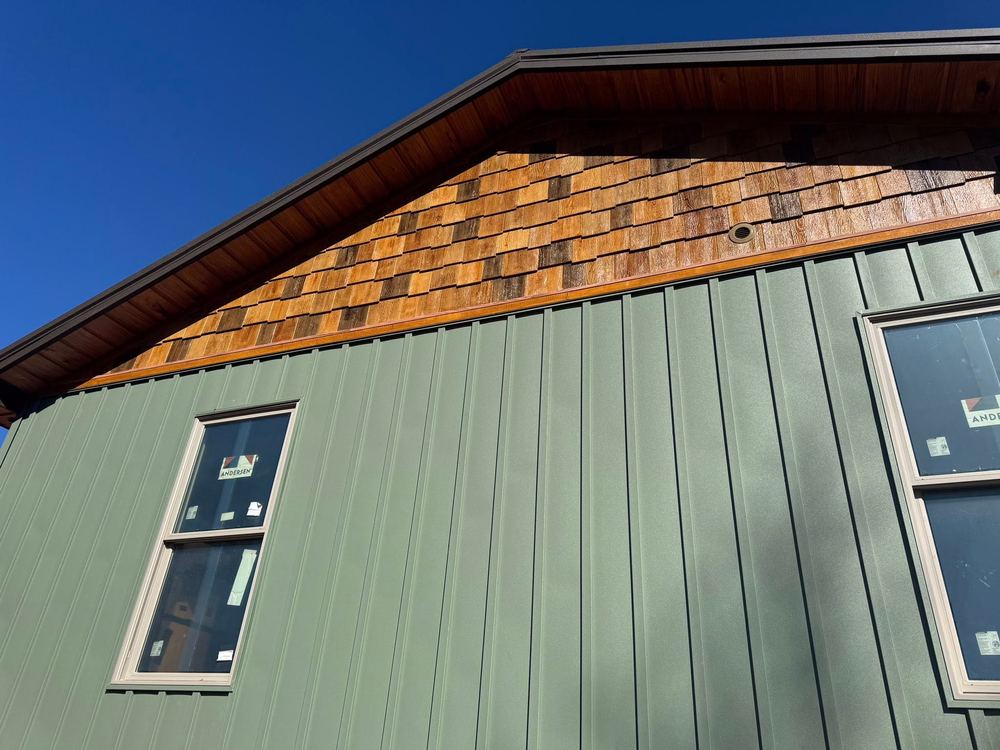
We're an authorized Alcoa Post Buildings dealer. Pick a model and we set it on your land. Every price below is installed, building shell only.
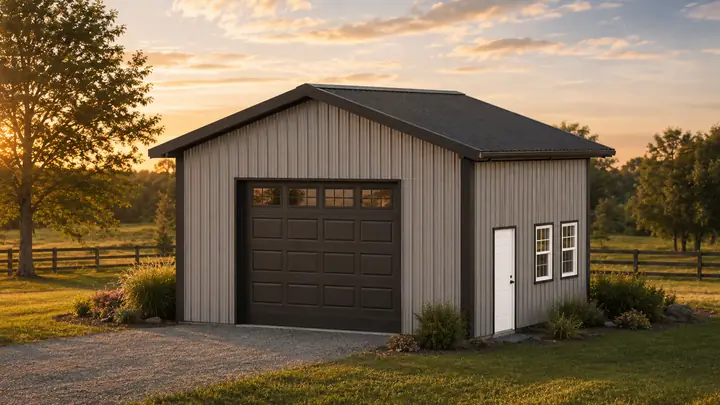
24 × 20 ft, 12 ft walls480 sq ft
Enclosed single-car garage. A compact garage for vehicle storage, a home workshop, lawn equipment, or recreational gear without taking up excessive space.
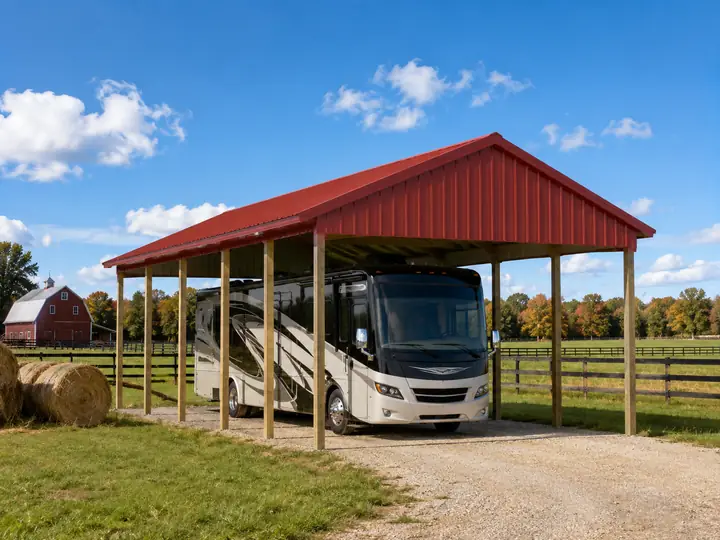
24 × 40 ft, 16 ft walls960 sq ft
Open-sided RV and equipment cover. Tall, open-sided covered storage for an RV, trailer, stacked hay, or farm equipment on properties that need versatile coverage without a fully enclosed building.
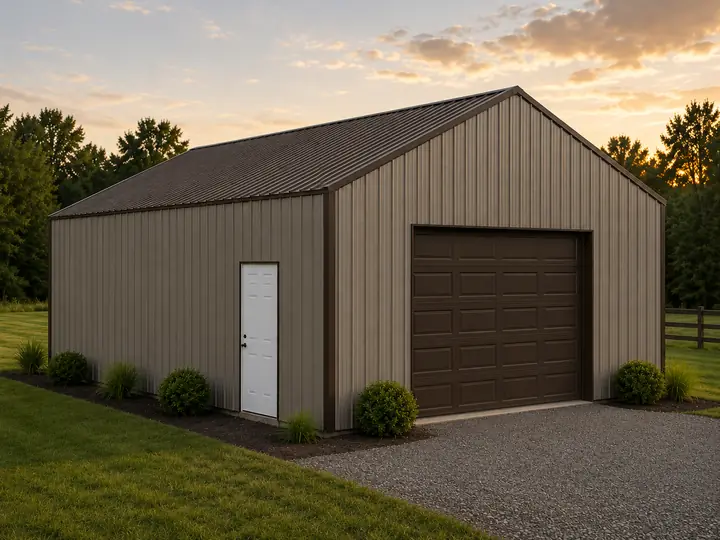
24 × 30 ft, 10 ft walls720 sq ft
Enclosed single-door garage. A practical garage with space for one large vehicle or two smaller vehicles, plus room for shelving, workbenches, and equipment.
A different size, more doors, a lean-to or a barndominium. We'll talk it through.
A lean-to is a roof that hangs off the side of a building, open or closed in. We add them to new buildings and to buildings you already have.
Every lean-to is custom-priced, especially on an existing structure, so we quote each one personally.
Tap to change the size. Every lean-to is custom-priced, so we'll quote yours.
24 ft long, 12 ft deep, open sides
We'll confirm the price after a quick look at your building.
Keep the tractor, mower and trailer out of the rain without building another barn.
Covered parking on the side of a shop or garage.
A shaded place to sit on the side of a building.
Firewood, hay and supplies, with the ends closed in if you like.
We set the building shell on your land and install the windows and exterior doors. You or your builder finish the inside. Every barndominium is quoted personally.
A low-maintenance alternative to wood and vinyl. Choose open rail or privacy, steel-wrapped wood posts or full steel posts, in black, white or a wood print.
Fence color
Open rail, for a ranch or farm look that keeps the view open.
Clean horizontal boards, closed for privacy or spaced for an open look.
Colors: black, white or a wood print. Drawings show standard sections; we quote your fence line personally.
Choose a metal or shingle roof, then pick roof and siding colors. The house changes as you tap.
Actual colors may vary. Final selection should be made from metal color chips. Painted panels carry a Sherwin-Williams lifetime paint warranty; other paint systems carry 40 years.
Metal Roofing Magazine, August/September 2026 edition
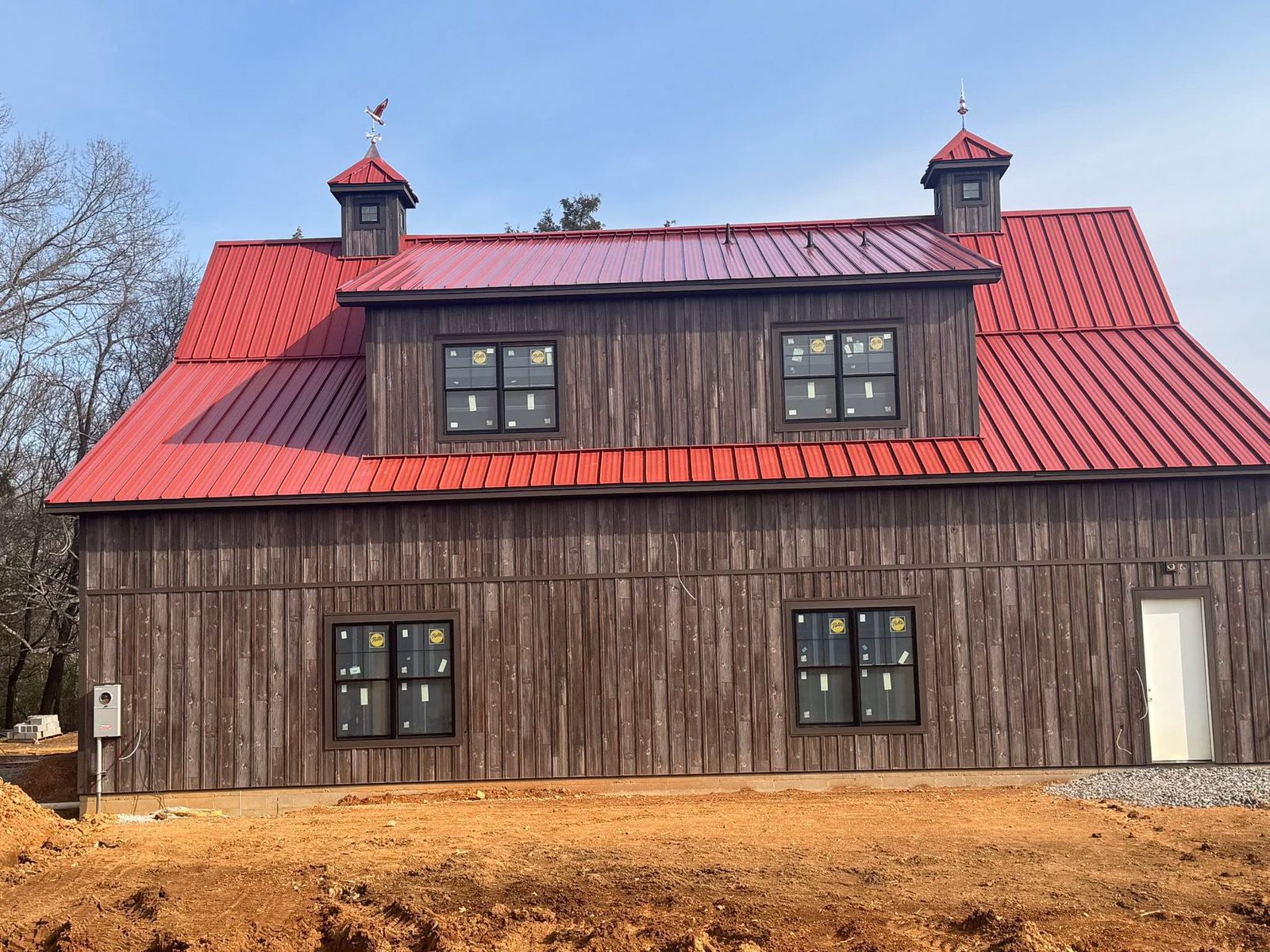
Our standing seam roof was featured as “Standing Seam Metal Roofing Delivers Timeless Performance on Tennessee Custom Home.”
A red standing seam roof with two cupolas and a dormer, over dark wood-print board-and-batten steel siding and black windows.
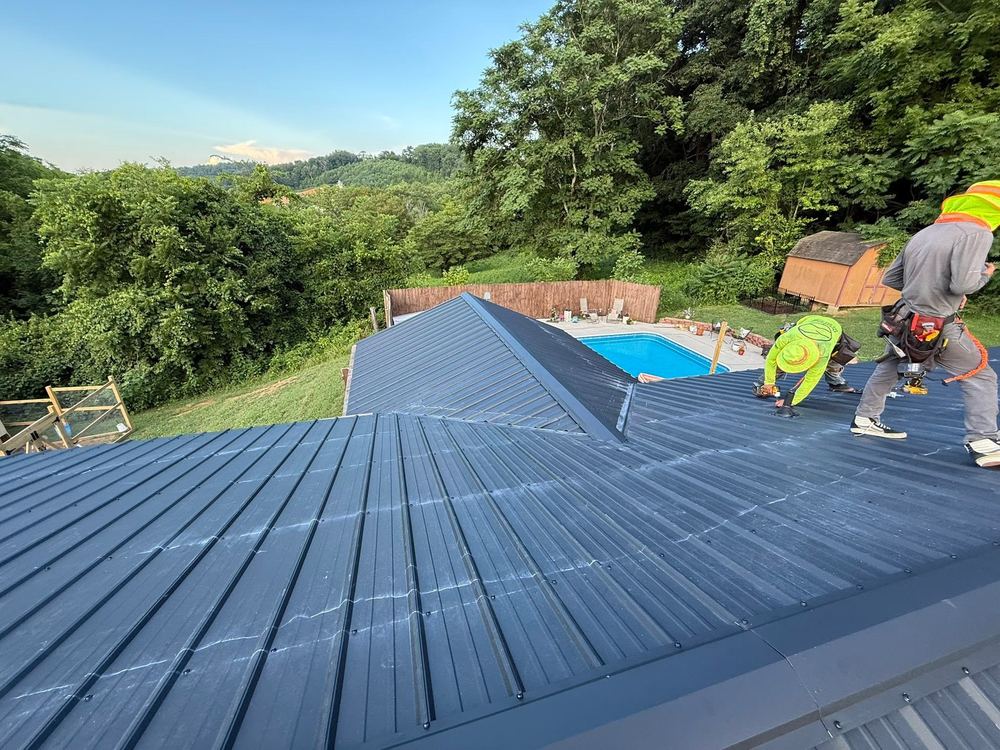
Straightforward from the first call.
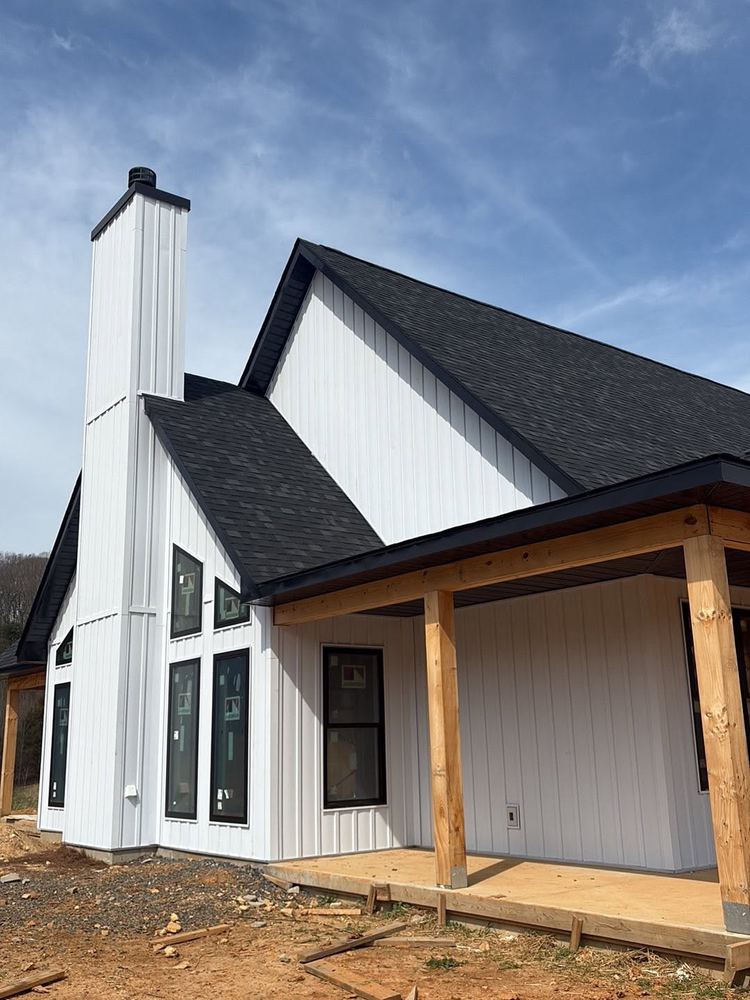
Overland started in 2021 because there was a need for a straightforward construction company: honest pricing, clear communication, and work done right.
Since then we've completed over 800 jobs. Overland Exteriors was formerly Overland Construction & Roofing.
“Chris from Overland Construction is an honest man, and a great person to work with. Always taking each project as if it were his own home, Chris will make sure your new roof is left looking amazing. 10/10 Recommend.”
“I have known Chris for many years both personally and professionally. Overland is a great company that is there to serve. Chris is responsive, on time and always there to listen.”
“They are a great company and group of people to work with, from the initial sales person to the crew that performed the work, everyone included.”
Three short steps. Taps until the last one.
Yes. Hail can crack or punch holes in vinyl siding, dent aluminum and steel, chip fiber cement, and split wood and hardboard. Damage is usually heaviest on the side of the house that faced the storm. After an East Tennessee hailstorm, check siding, gutters, window screens and your AC unit, take dated photos, and read your policy before filing.
Hail damages siding by hitting it hard enough to crack, dent, chip or puncture the surface. How bad it gets depends on the size of the stones, the wind behind them, and what your siding is made of.
Wind matters as much as size. Hail falling straight down mostly hits the roof. Hail driven sideways by a strong thunderstorm slams into walls, which is why siding damage is often worst on one or two sides of the house and nearly absent on the others.
As a rough guide, pea-sized hail rarely harms siding in good condition. Damage becomes common once hail reaches about one inch across, the size of a quarter, and it climbs quickly with golf ball sized stones and larger. Older siding, sun-faded vinyl and anything already brittle can fail with smaller hail.
Vinyl gets stiffer as it gets colder and as it ages in the sun. A spring storm that rolls in on a cool evening can crack vinyl that would have flexed on a warm afternoon. Paint on wood and hardboard also gets more brittle with age, so older homes tend to show damage sooner.
Each siding material shows hail damage in its own way. Use this table to know what you are looking for before you walk the house.
| Siding type | What hail damage looks like | Easy to miss? |
|---|---|---|
| Vinyl | Cracks, round or jagged holes, broken corners at the bottom lip of a panel, chips along the edges | Yes. Hairline cracks hide in shadow and often show up only at an angle |
| Aluminum | Round dents, sometimes in clusters; chipped or flaking paint at the dents | Sometimes. Dents show best in low, side light |
| Steel (lap or board-and-batten) | Dents on flat areas; on severe storms, cracked paint at the impact point | Often. Heavier steel resists small hail, and ribbed or battened profiles hide small dents |
| Fiber cement | Chips, cracked corners, broken edges near nails, spots where the paint is knocked off | Yes. Small chips look like ordinary wear |
| Wood and hardboard | Dents, splits, crushed edges, bare spots where paint was knocked loose | Sometimes. Damage may not show until the bare spot swells or rots |
Hardboard siding, the pressed wood product found on many 1980s and 1990s homes, deserves extra attention. If hail knocks the paint off, water can soak in and the board begins to swell. Our article on whether your hardboard siding is failing explains how to tell storm damage from old age.
Start on the side of the house that faced the storm, then check everything around it that is made of thin metal or plastic. Matching damage on several surfaces tells you, and later an adjuster, that hail really hit the house.
Insurers often separate damage that only changes how siding looks from damage that lets water in or shortens its life. Which kind you have can decide whether a claim is paid.
Functional damage includes cracks, holes, broken pieces and impacts that crack the paint or coating down to bare material. These let water behind the wall or speed up rust, rot or swelling.
Cosmetic damage usually means dents that leave the surface sealed. A dented steel panel with its paint intact still sheds water.
Some homeowners policies include a cosmetic damage exclusion, often aimed at metal roofing and metal siding. If yours has one, dents alone may not be covered. Policies differ a great deal on this point, so check your declarations page and any endorsements, or ask your agent directly.
Siding is often discontinued or fades over the years, so a few new pieces may not match the rest of the wall. How insurers handle matching depends on your policy wording and the facts of the claim. Ask your agent or adjuster how your policy addresses it rather than assuming.
Take dated photos right away and cover anything that could let rain in. Most policies expect you to take reasonable steps to stop further damage after a storm.
Only document what the storm actually did. Old cracks, faded panels and earlier dents belong in a separate conversation, never in a hail claim. If you are not sure which is which, a contractor can help you tell new damage from old.
It depends on how much damage there is, your deductible, and what your policy covers. Get the facts first, then decide.
Many homeowners have a separate wind and hail deductible, sometimes set as a percentage of the home's insured value instead of a flat amount. If the repair cost is close to your deductible, a claim may not be worth it. Your declarations page lists your deductibles.
An inspection and a written repair estimate help you make that call with real numbers. Overland inspects storm damage, photographs what we find, and can meet your adjuster on site so nothing gets missed. To understand the rest of the process, read how a roof insurance claim works in Tennessee.
If your siding needs replacing either way, it may be a good time to consider a tougher material. Our comparison of steel board-and-batten, vinyl and fiber cement covers how each holds up.
East Tennessee gets most of its hail from spring and early summer thunderstorms, and a single storm line can drop hail on Maryville and miss Alcoa entirely. Neighbors a mile apart can have very different damage, so do not assume your house is fine because the street over looks clean.
Much of the housing around Knoxville, Farragut and Lenoir City was built in the 1980s and 1990s with vinyl or hardboard siding that is now decades old. That older vinyl is more brittle, and hardboard that loses paint to hail can start swelling once our humid summers set in. Lake homes and mountain cabins often have wood or wood-look siding on exposed walls that take the full force of wind-driven storms. After any big storm, a careful walk around the house within a few days is worth the time.
Hail about one inch across, the size of a quarter, can damage vinyl siding, and golf ball sized hail often cracks or punches through it. Older, sun-faded vinyl and vinyl hit on a cool day can crack from smaller hail. Wind-driven hail does more damage than hail falling straight down.
Hail is a covered peril in most standard homeowners policies, but coverage depends on your exact policy. Some policies exclude cosmetic dents on metal siding, and many have a separate wind and hail deductible. Check your declarations page and endorsements, or ask your agent.
Most policies require you to report damage promptly, and many set a specific deadline for filing. The time limit varies by insurer and policy, so look it up in your policy or call your agent soon after the storm. Waiting too long can make it harder to show the storm caused the damage.
Yes. Hairline cracks in vinyl, small chips in fiber cement and shallow dents in steel are easy to miss from the yard. Look along the wall at an angle in morning or evening light, and check gutters and the AC unit for dents that confirm hail hit.
Steel siding resists small hail well and does not crack or shatter the way vinyl can, but large hail can still dent it. Board-and-batten and ribbed profiles help hide small dents. Dents that leave the paint intact are usually cosmetic and do not affect how the siding sheds water.