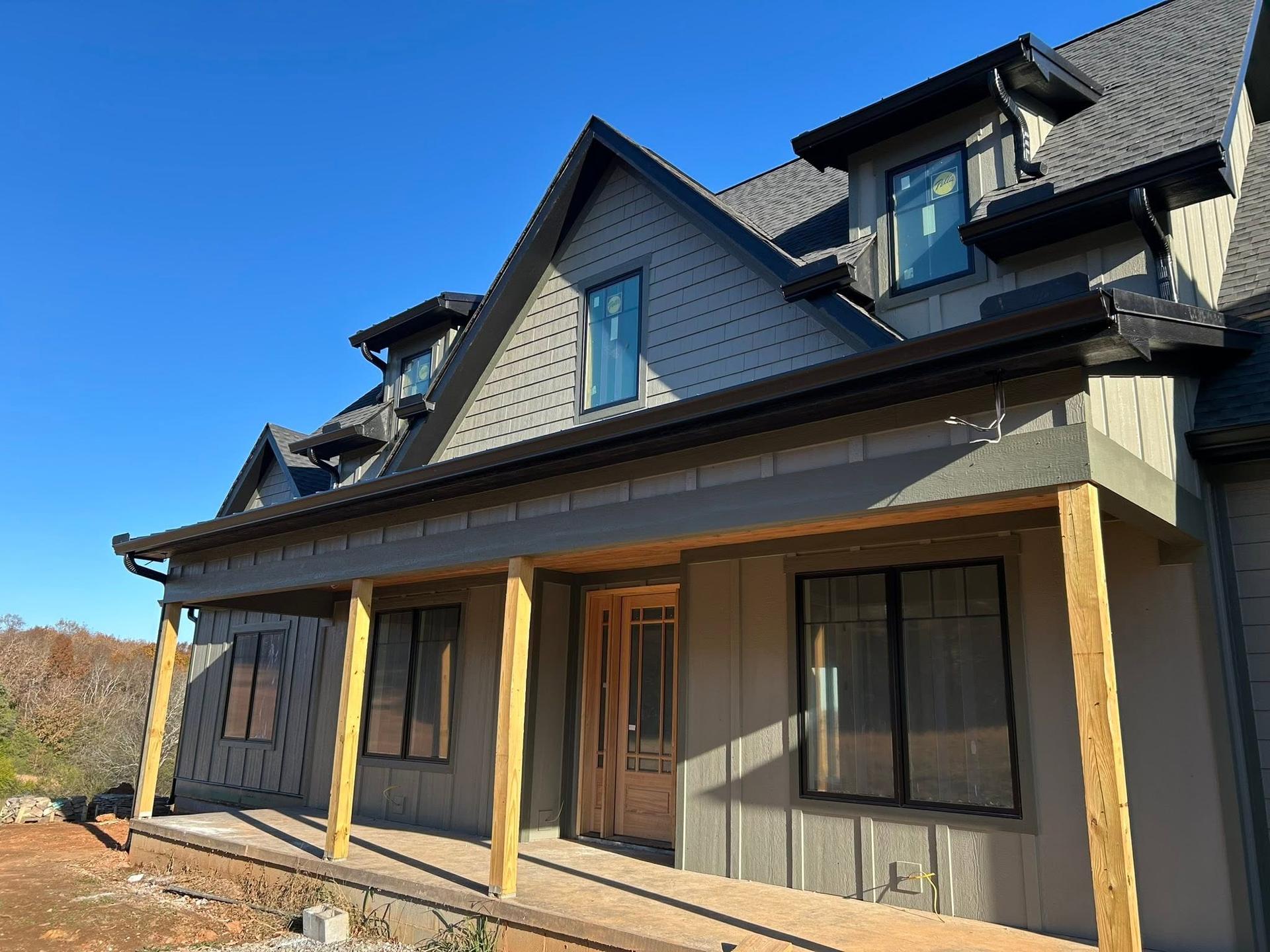
Layered, dimensional asphalt shingles.
Architectural shingles
Price level 1 of 4: $$$$Most affordable- Best for
- Traditional looks and the lowest cost up front
- Brands
- We install all major manufacturers of asphalt shingles
A straightforward exteriors company based in Maryville, Tennessee. Honest pricing, clear communication, and work done right.
Tap a service to see what we install, the options, and how to get a free quote.
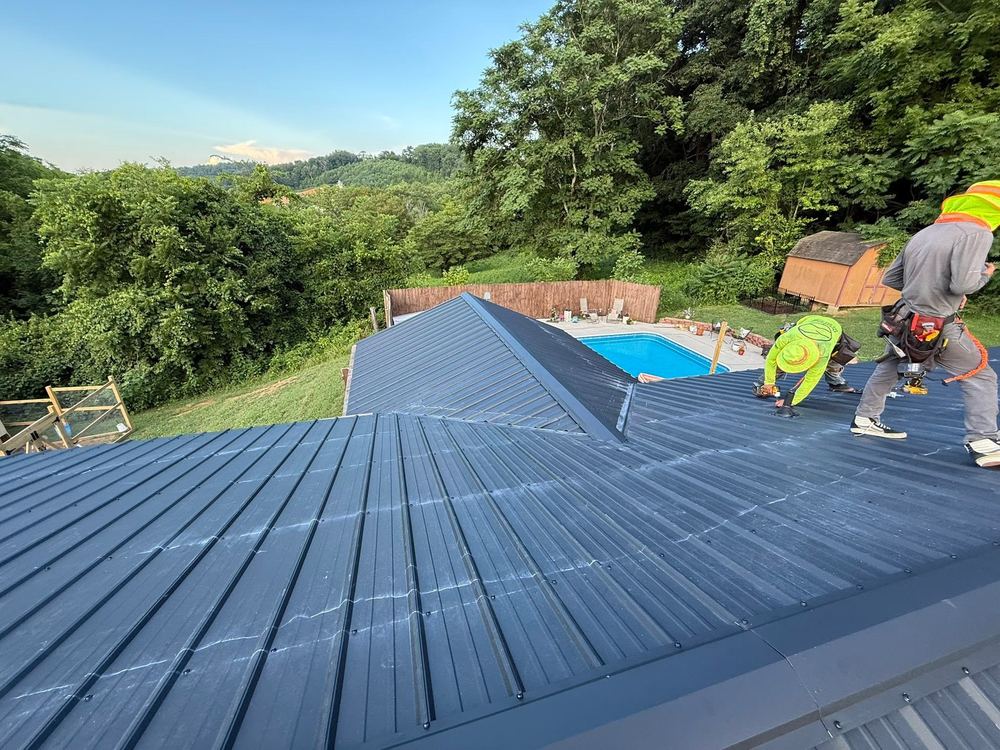
We install architectural shingles, exposed-fastener and standing seam metal roofs, and DaVinci synthetic shake and slate. Our installers are certified and factory-trained.
Listed from most affordable to most high-end. Every roof is quoted on your house. Call, text or send the form for a free quote.
Layered, dimensional asphalt shingles.
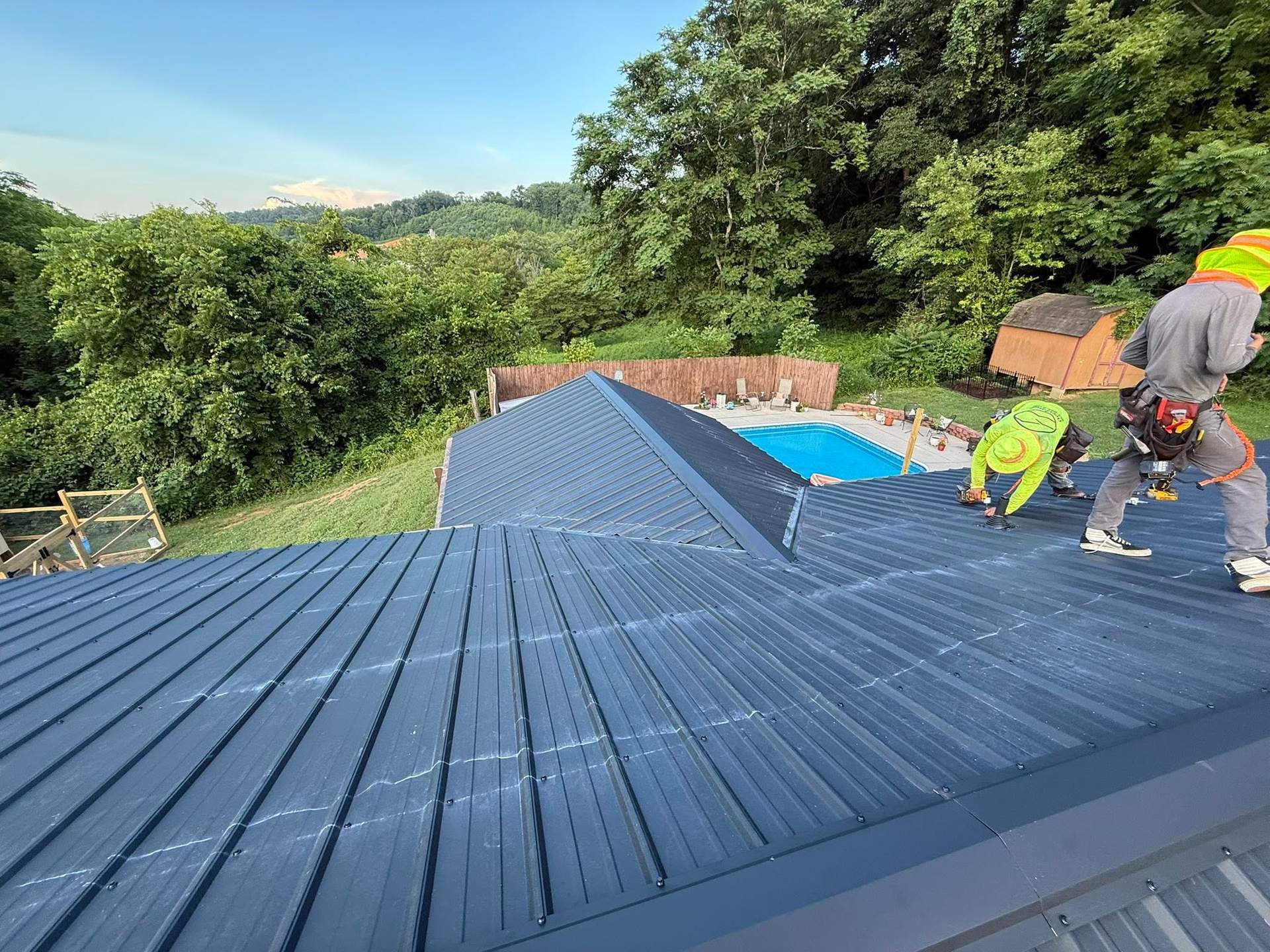
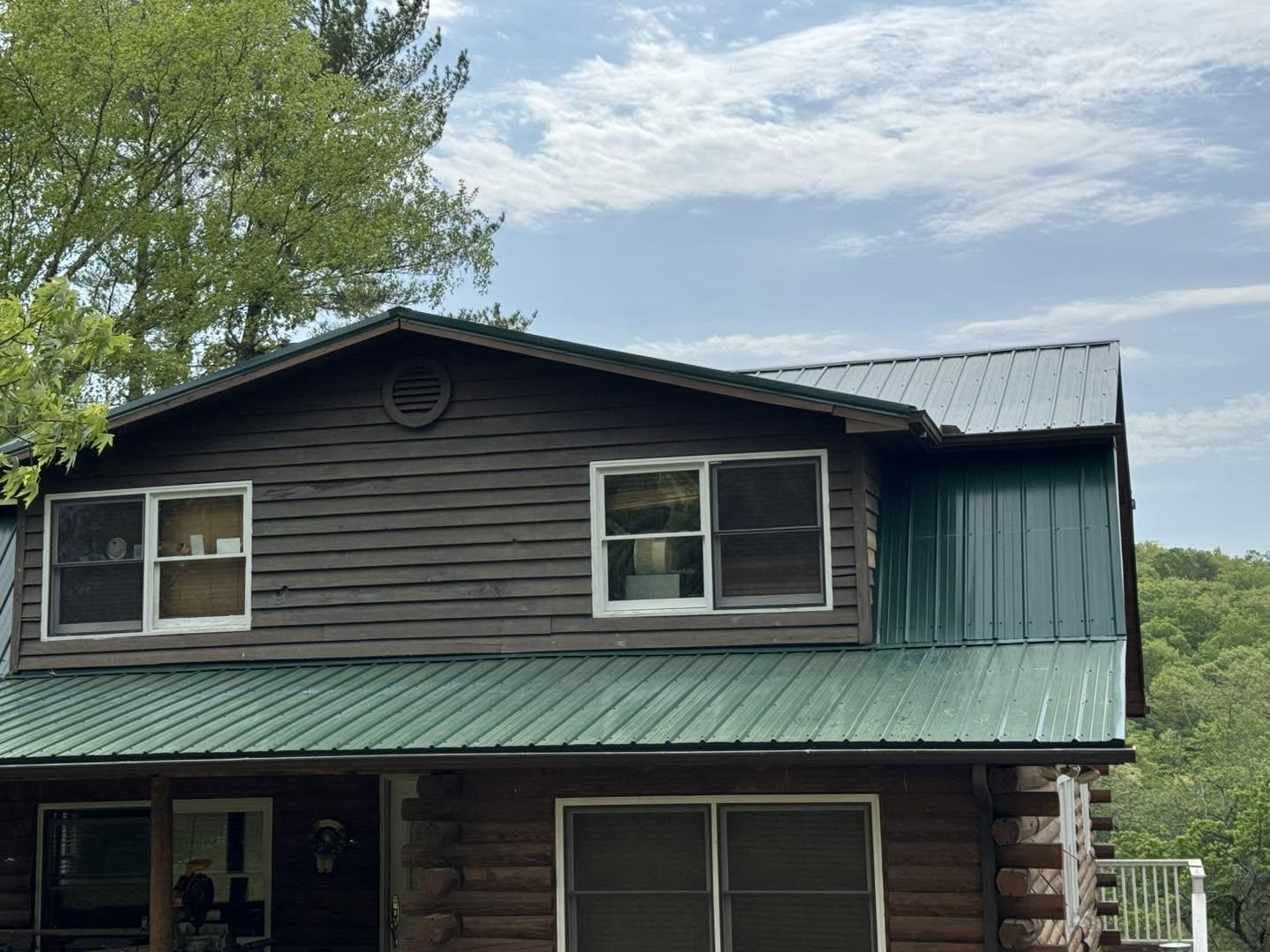
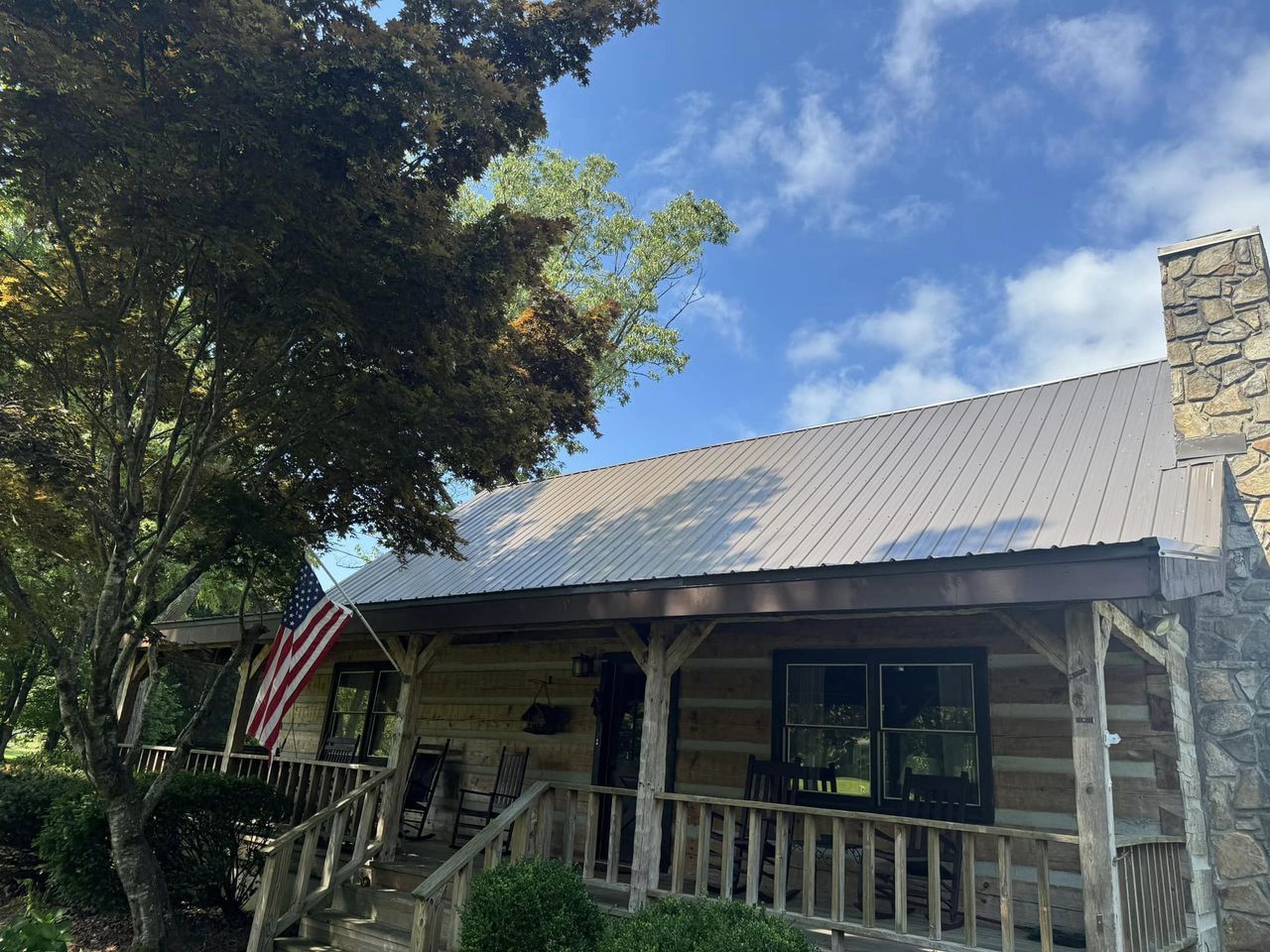
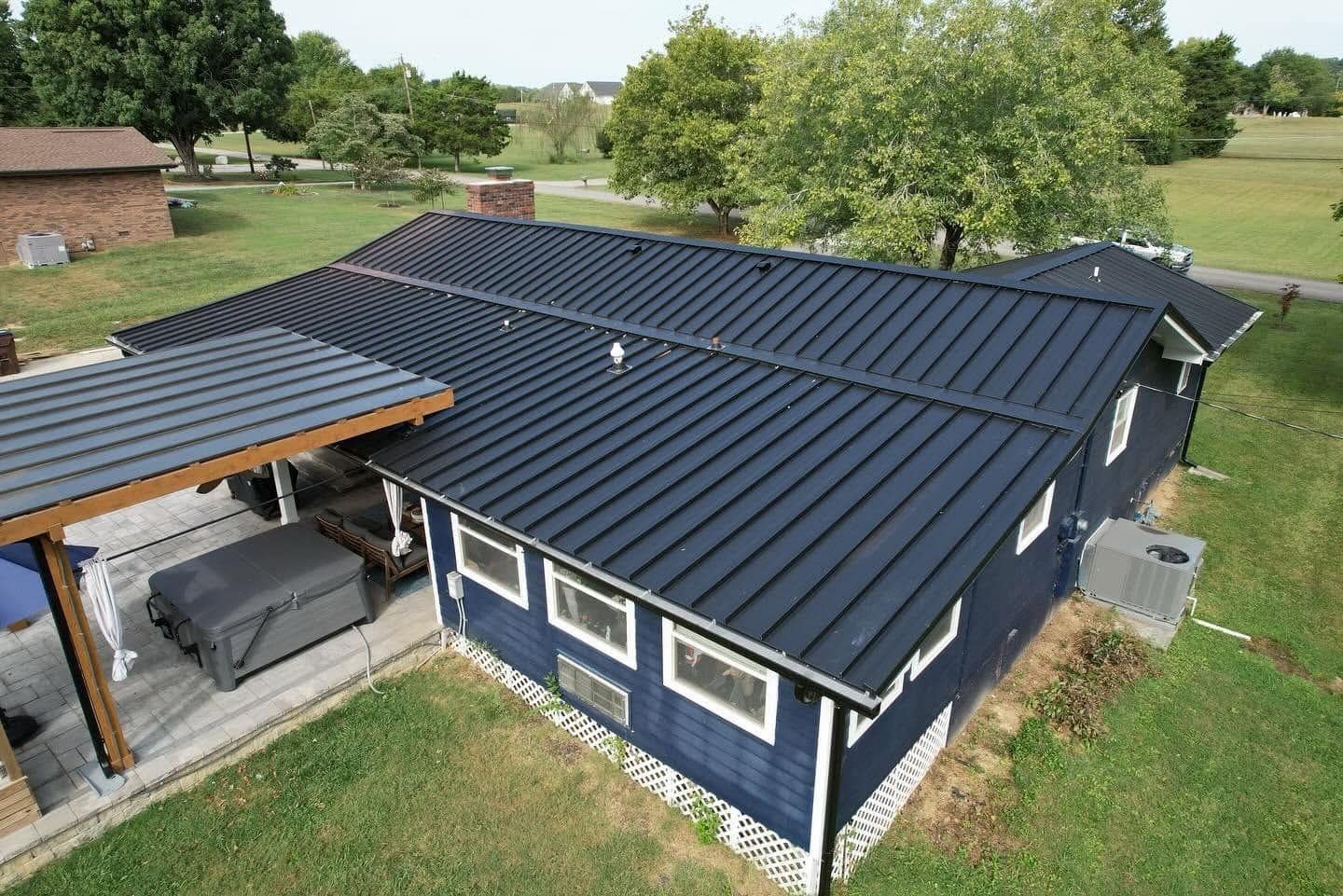
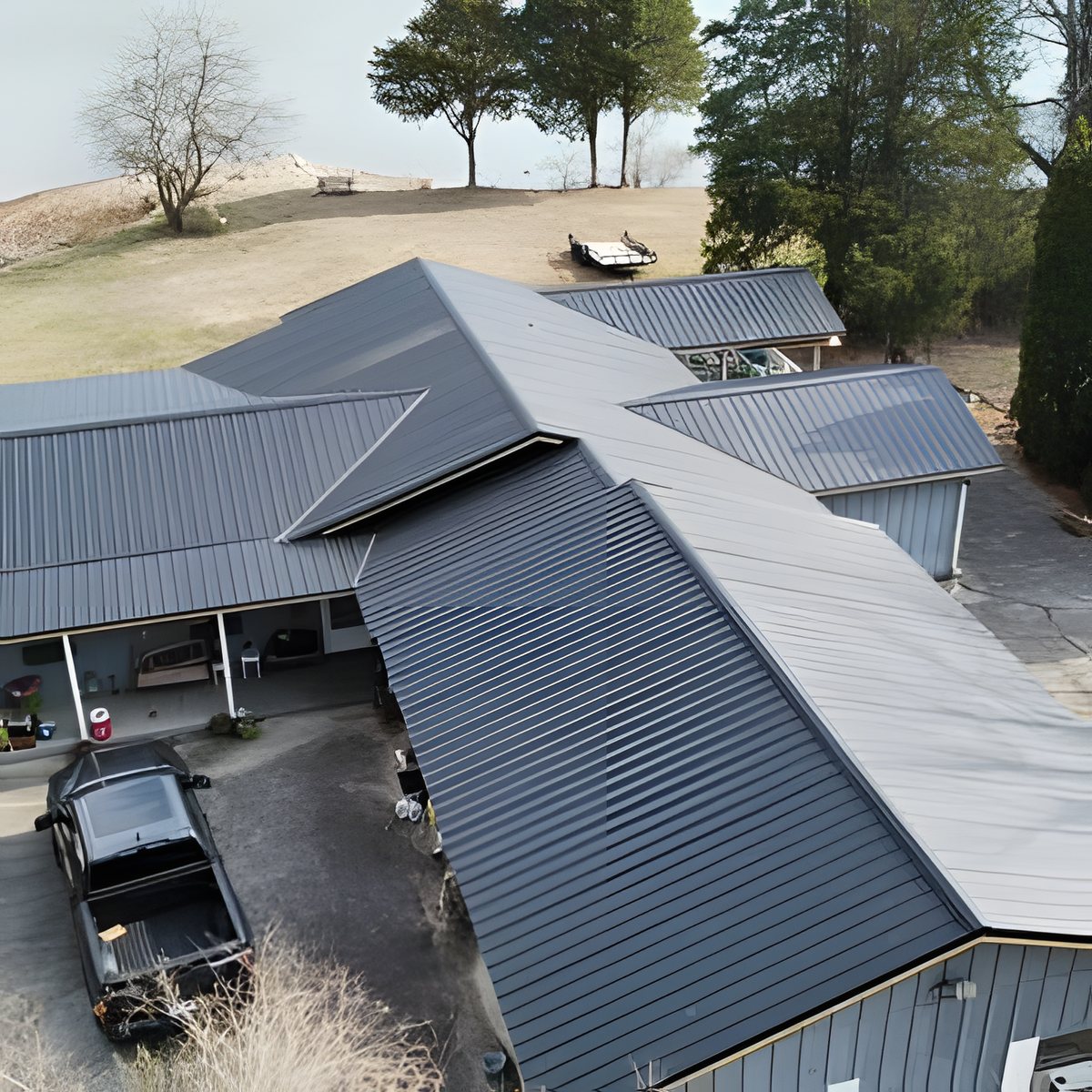
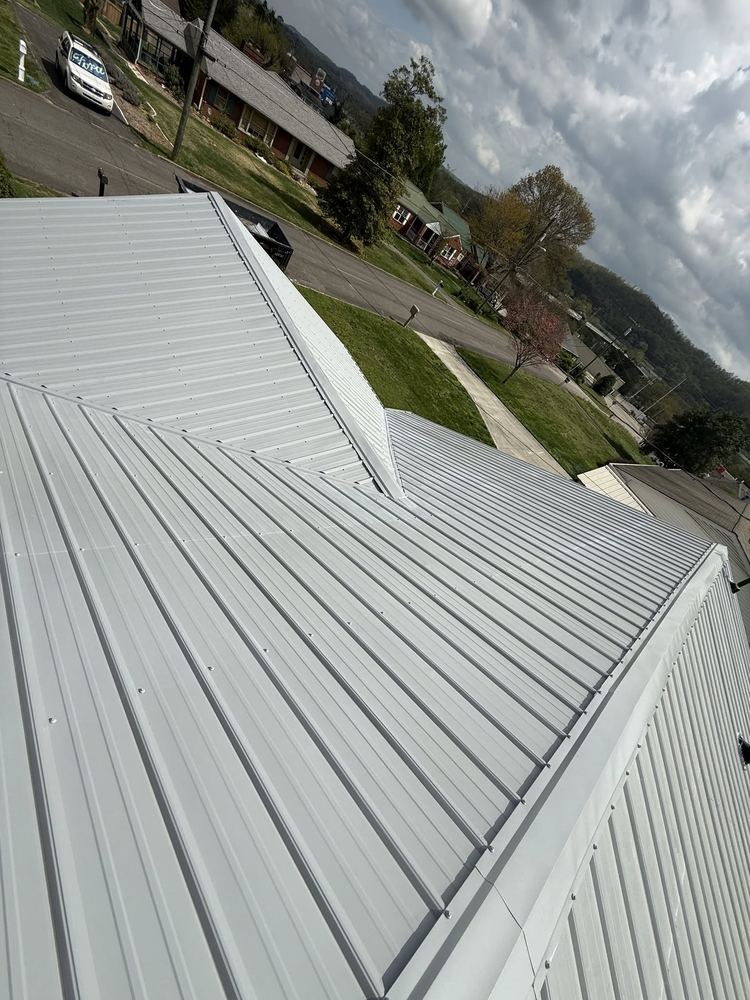
Raised ribs, with screws through the flat of the panel.
Flat pans between raised seams. No exposed screws.
Synthetic tiles modeled on slate and hand-split cedar.
We work with several metal manufacturers to get the exact look of your project. The steel is American-made. Painted panels carry a Sherwin-Williams lifetime paint warranty, and other paint systems carry 40 years.
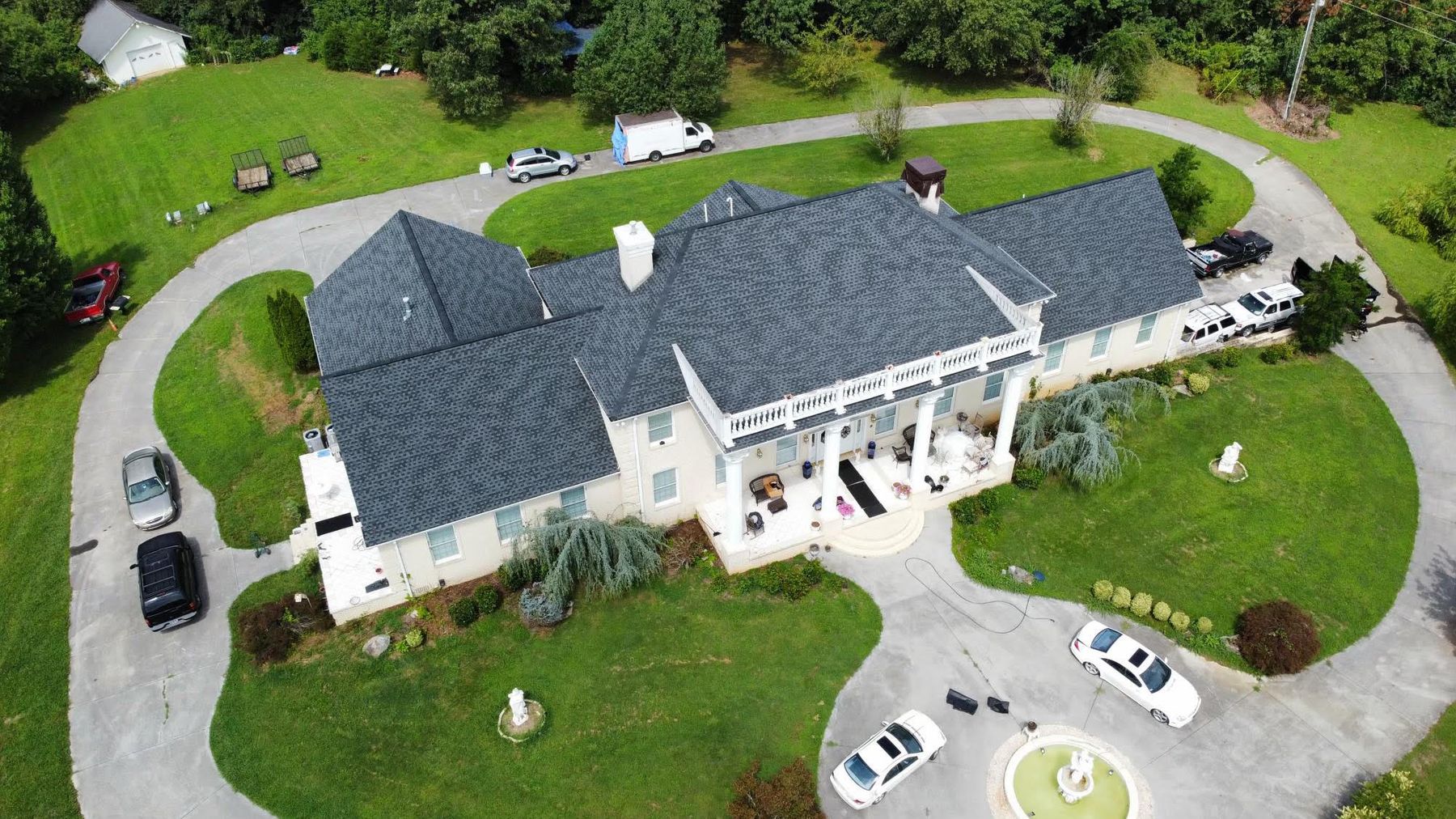
We install all major manufacturers of asphalt shingles, with certified, factory-trained installers.
Not sure it's time? Start with 10 signs you need a new roof.
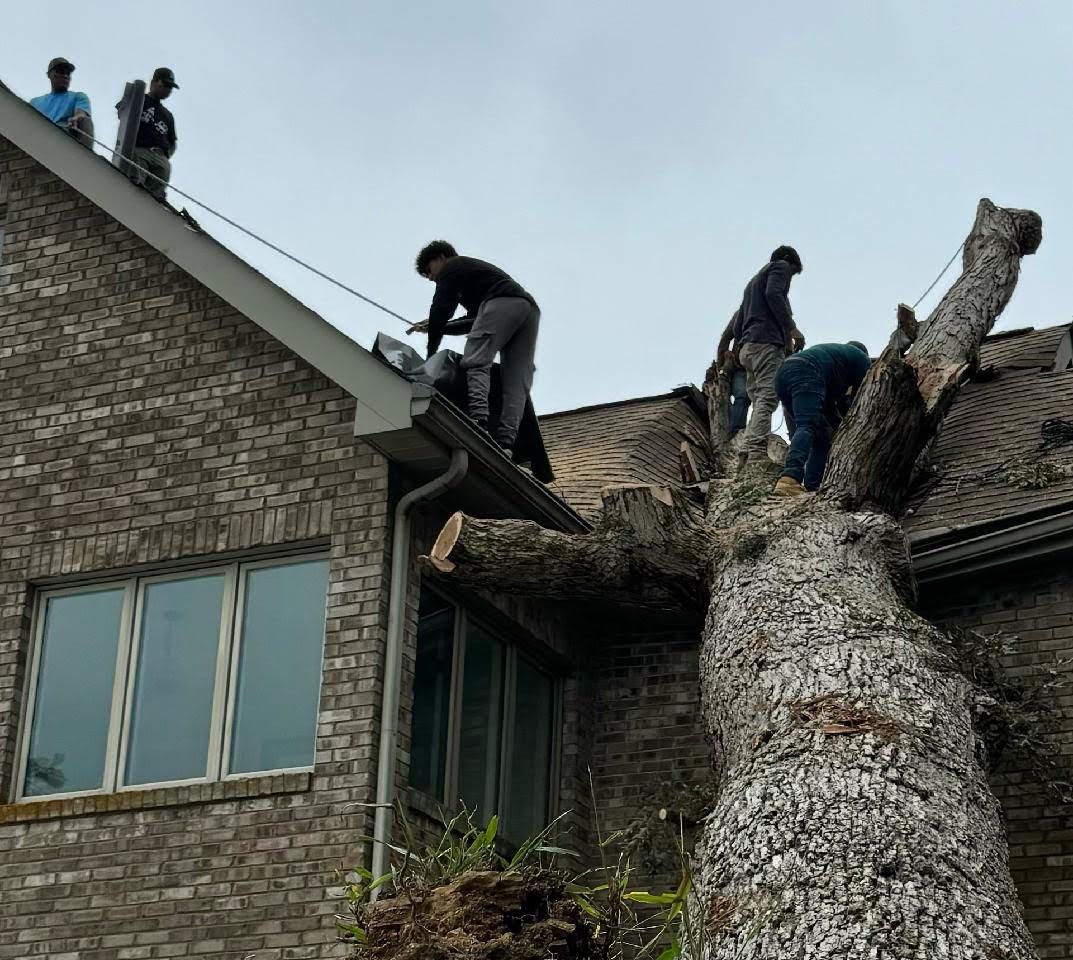
When a storm or a falling tree damages your roof, call us. We document the damage with photos and can meet your insurance adjuster.
Every policy is different, so check yours. Our guide explains how a roof insurance claim works in Tennessee.
Office hours Monday to Friday, 9 AM to 5 PM. Storm and emergency calls answered outside office hours.
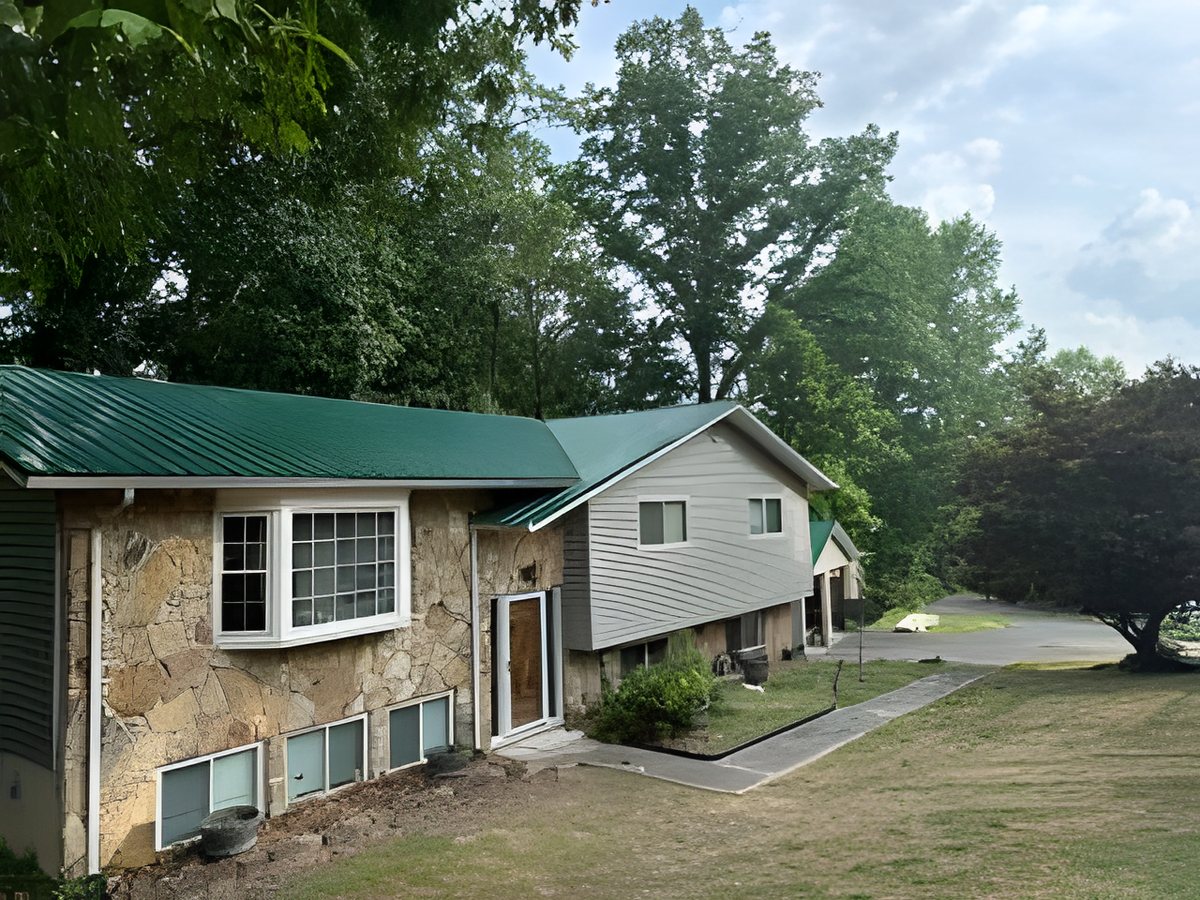
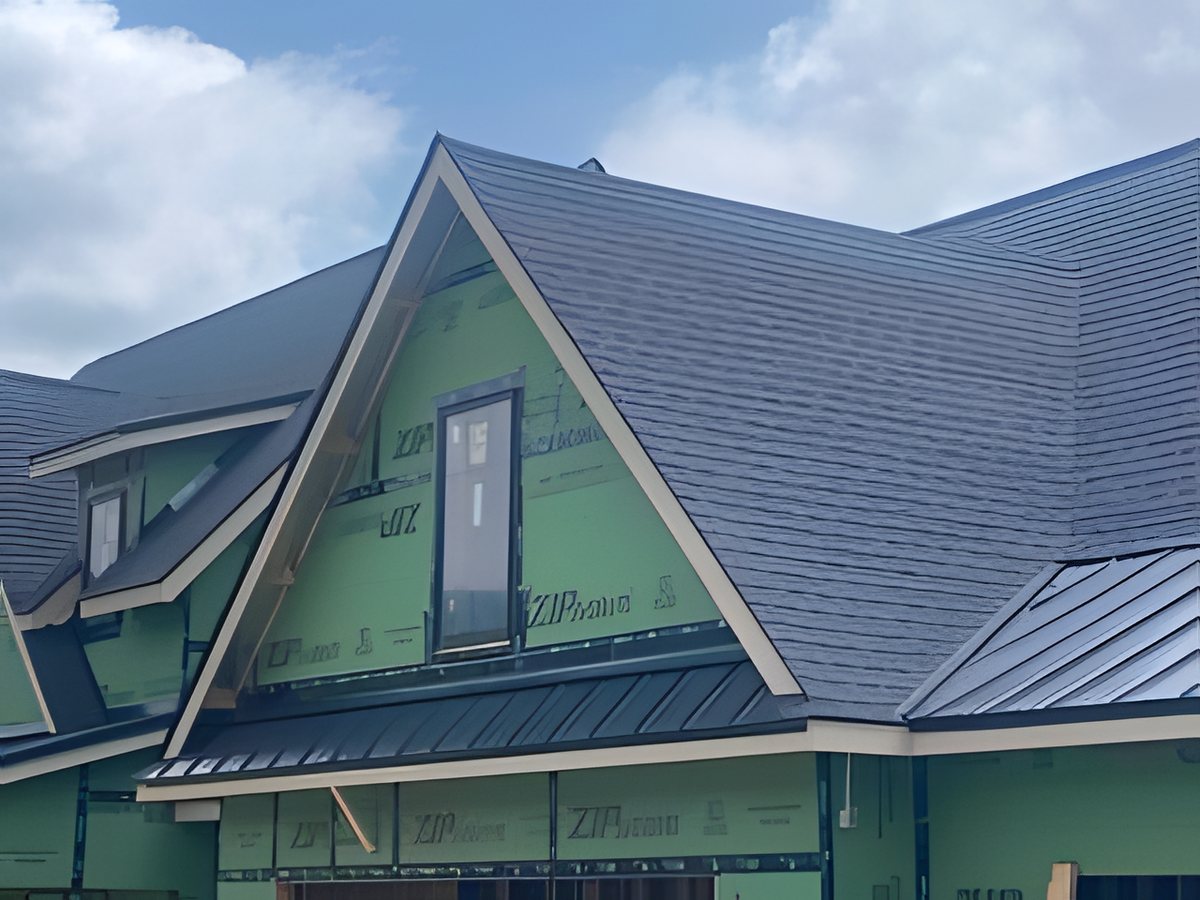
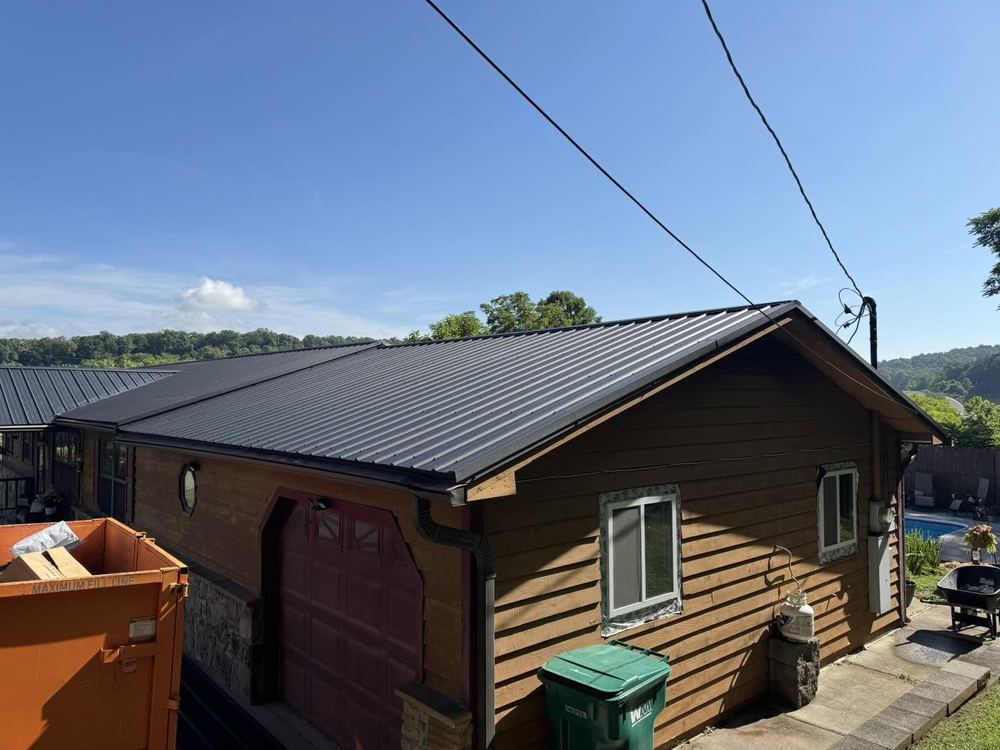
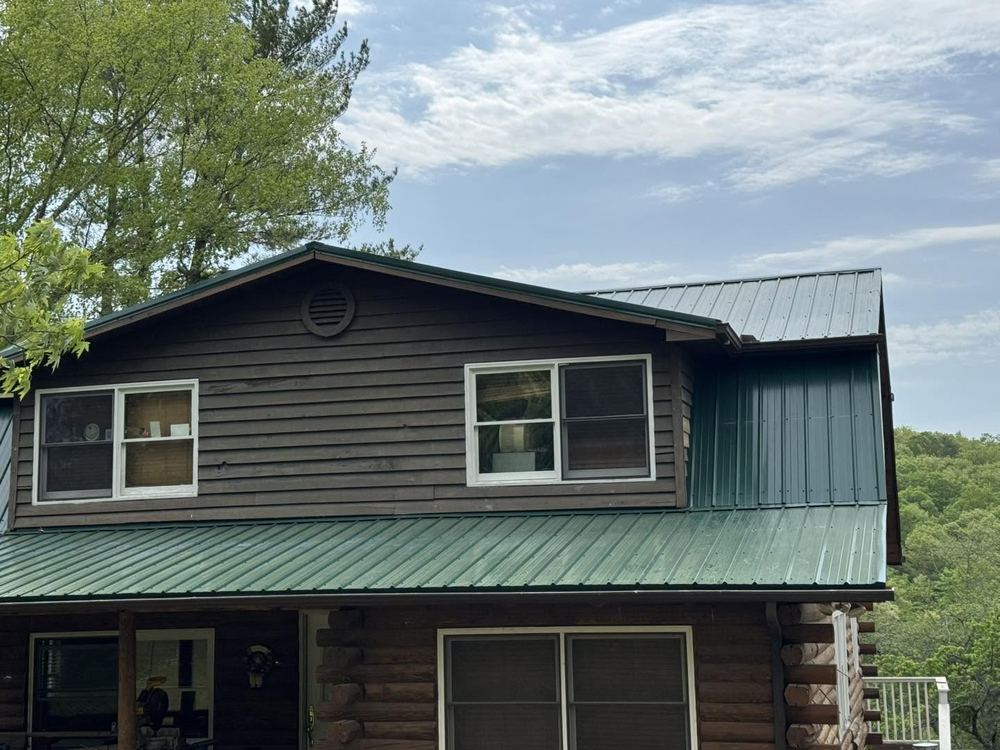
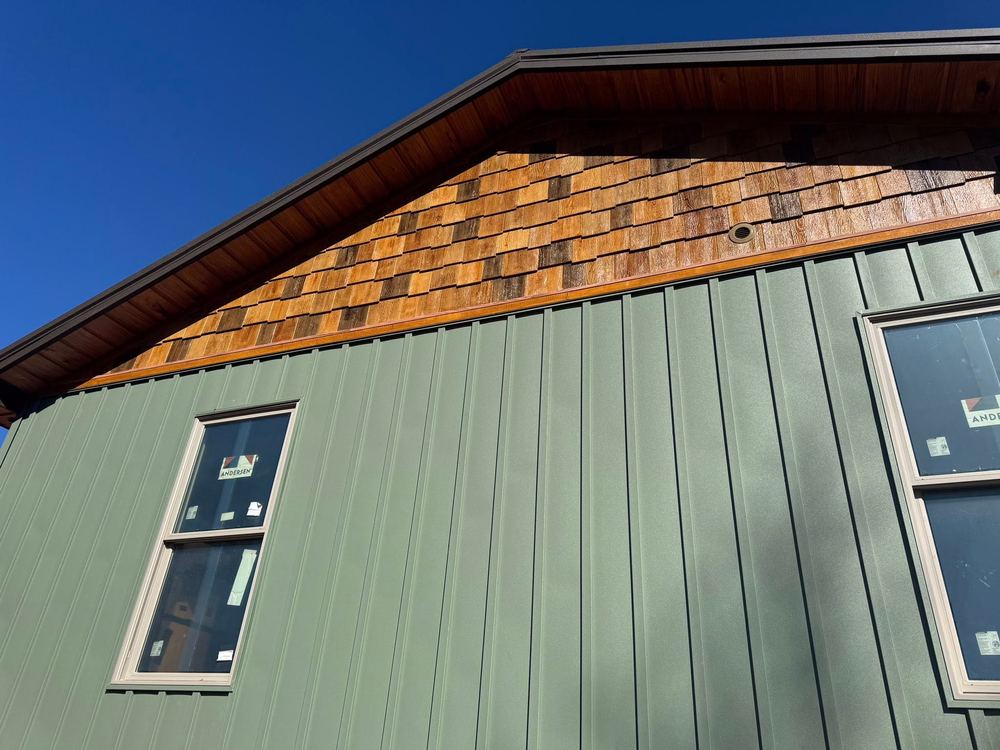
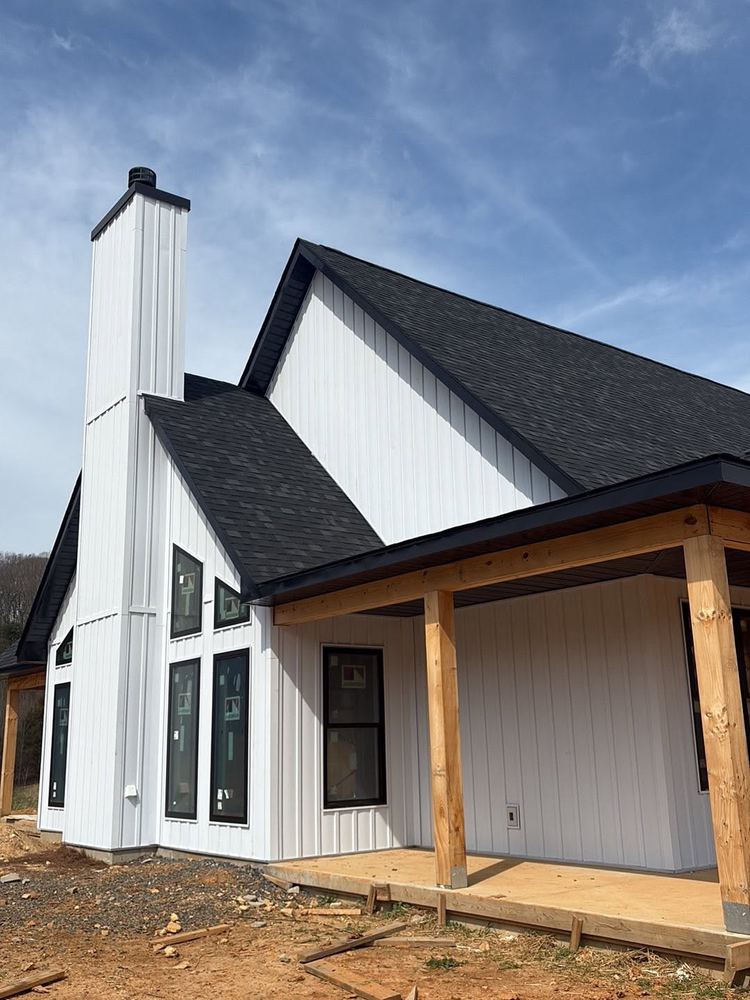
We install steel board-and-batten siding in solid colors, and wood prints that look like real boards. We also replace failing hardboard and Masonite siding.
Siding is quoted on your house. See it on a real home in our award-winning project.
Wide flat boards with narrow raised battens.
Barnwood, Cedar Natural, Primitive Pine and Cedar Gray.
Swollen, flaking hardboard laps.
Press your thumb into the bottom edge of a board near the ground. If it dents, flakes or feels spongy, the board has taken on water, and paint will not fix it. Read the full guide.
We're an authorized Alcoa Post Buildings dealer. Pick a model and we set it on your land. Every price below is installed, building shell only.
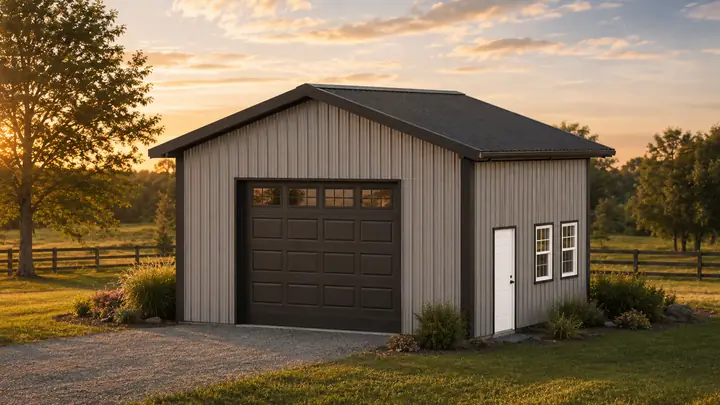
24 × 20 ft, 12 ft walls480 sq ft
Enclosed single-car garage. A compact garage for vehicle storage, a home workshop, lawn equipment, or recreational gear without taking up excessive space.
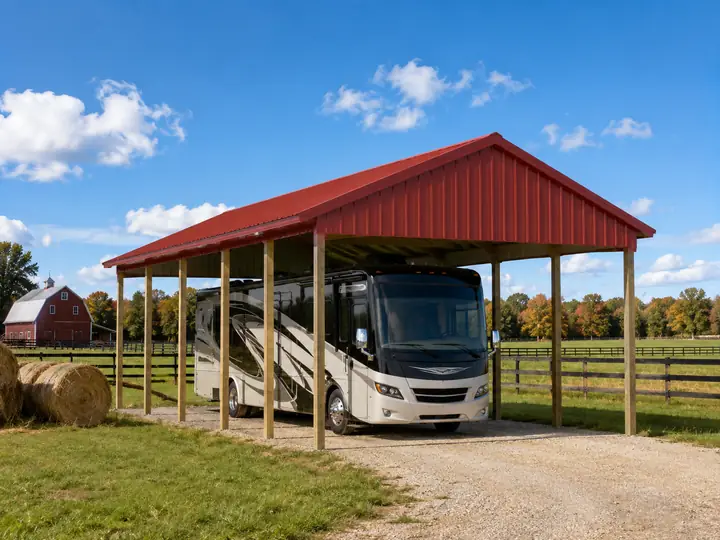
24 × 40 ft, 16 ft walls960 sq ft
Open-sided RV and equipment cover. Tall, open-sided covered storage for an RV, trailer, stacked hay, or farm equipment on properties that need versatile coverage without a fully enclosed building.
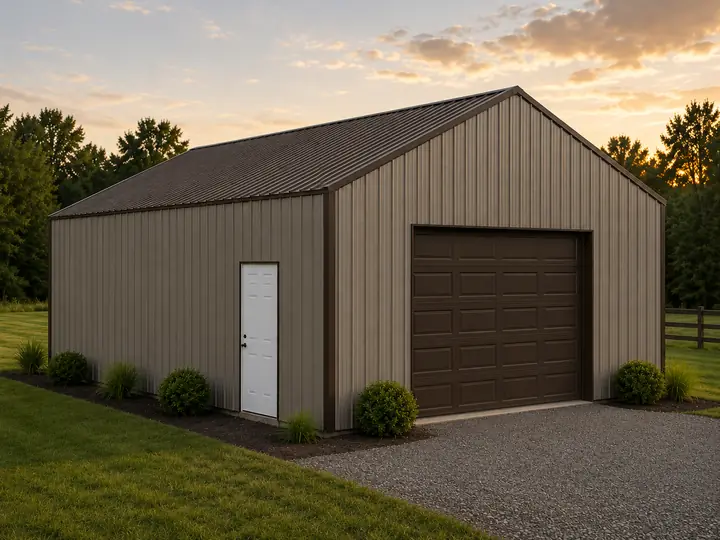
24 × 30 ft, 10 ft walls720 sq ft
Enclosed single-door garage. A practical garage with space for one large vehicle or two smaller vehicles, plus room for shelving, workbenches, and equipment.
A different size, more doors, a lean-to or a barndominium. We'll talk it through.
A lean-to is a roof that hangs off the side of a building, open or closed in. We add them to new buildings and to buildings you already have.
Every lean-to is custom-priced, especially on an existing structure, so we quote each one personally.
Tap to change the size. Every lean-to is custom-priced, so we'll quote yours.
24 ft long, 12 ft deep, open sides
We'll confirm the price after a quick look at your building.
Keep the tractor, mower and trailer out of the rain without building another barn.
Covered parking on the side of a shop or garage.
A shaded place to sit on the side of a building.
Firewood, hay and supplies, with the ends closed in if you like.
We set the building shell on your land and install the windows and exterior doors. You or your builder finish the inside. Every barndominium is quoted personally.
A low-maintenance alternative to wood and vinyl. Choose open rail or privacy, steel-wrapped wood posts or full steel posts, in black, white or a wood print.
Fence color
Open rail, for a ranch or farm look that keeps the view open.
Clean horizontal boards, closed for privacy or spaced for an open look.
Colors: black, white or a wood print. Drawings show standard sections; we quote your fence line personally.
Choose a metal or shingle roof, then pick roof and siding colors. The house changes as you tap.
Actual colors may vary. Final selection should be made from metal color chips. Painted panels carry a Sherwin-Williams lifetime paint warranty; other paint systems carry 40 years.
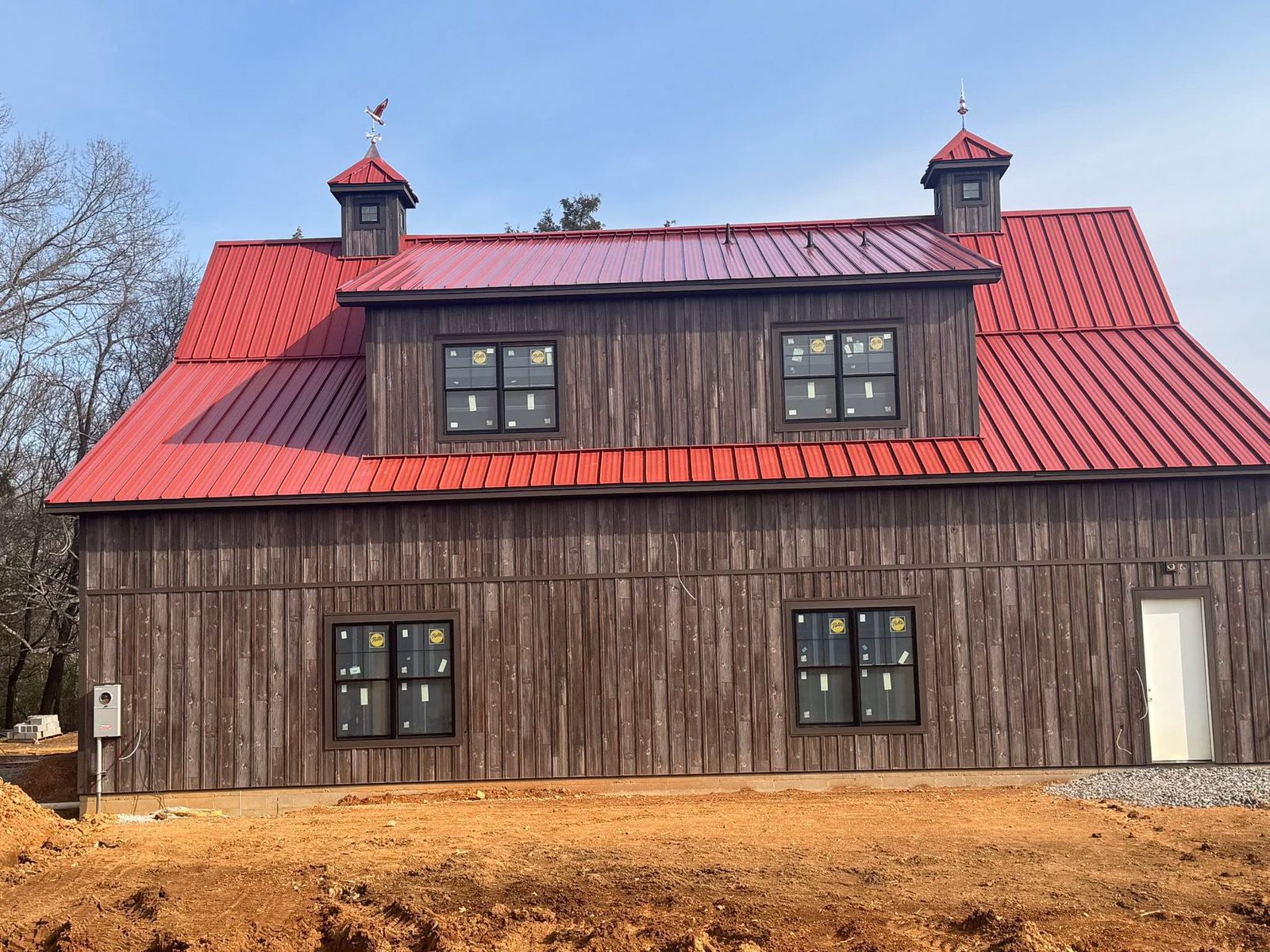
Metal Roofing Magazine, August/September 2026 edition
Our standing seam roof was featured as “Standing Seam Metal Roofing Delivers Timeless Performance on Tennessee Custom Home.”
A red standing seam roof with two cupolas and a dormer, over dark wood-print board-and-batten steel siding and black windows.
Straightforward from the first call.
Overland started in 2021 because there was a need for a straightforward construction company: honest pricing, clear communication, and work done right.
Since then we've completed over 800 jobs. Overland Exteriors was formerly Overland Construction & Roofing.
“Chris from Overland Construction is an honest man, and a great person to work with. Always taking each project as if it were his own home, Chris will make sure your new roof is left looking amazing. 10/10 Recommend.”
“I have known Chris for many years both personally and professionally. Overland is a great company that is there to serve. Chris is responsive, on time and always there to listen.”
“They are a great company and group of people to work with, from the initial sales person to the crew that performed the work, everyone included.”
Three short steps. Taps until the last one.
Press your thumb firmly into the bottom edge of a few siding boards, especially near the ground, gutters and windows. Sound hardboard feels hard like a tabletop. If it feels soft, spongy or leaves a dent, water has gotten into the wood fibers and that board is failing. In East Tennessee humidity, failing spots usually keep spreading.
Hardboard siding is a manufactured wood product made from wood fibers bonded with resin and pressed into boards under heat. It was installed on a large share of homes built in the 1980s and 1990s, and many people still call it by the best-known brand name, Masonite.
When it is new and fully painted, hardboard looks good and holds up reasonably well. The weak point is water. Once moisture gets past the paint, the wood fibers soak it up like a sponge, swell, and slowly lose their strength. Freeze and thaw cycles and summer heat speed that process along.
Water usually gets in at the same handful of places:
Hardboard siding from this era was the subject of class-action lawsuits in the 1990s over early failures. Those cases are long closed, but the houses are still standing, and many of them are now showing the damage.
Press the pad of your thumb hard into the bottom edge of a siding board and hold it for a second. Good hardboard feels firm and solid. Failing hardboard feels soft or spongy, and it may leave a dent or crumble at the edge.
Tip: Take a phone photo of every soft spot you find and note where it is. A handful of pictures tells a contractor a great deal about whether you are looking at a few boards or a whole wall.
Besides softness, failing hardboard siding usually shows swollen edges, bumps around nails and paint that will not stay put. You can spot most of these from the yard.
| What you see | What it usually means |
|---|---|
| Bottom edges flared out or puffy | Water has soaked in from the drip edge and the fibers have swelled |
| Raised bumps around nail heads | Moisture has wicked in at the nail hole, sometimes called mushrooming |
| Paint peeling or flaking in the same spots year after year | The board underneath stays damp and pushes the paint off |
| Boards that are wavy or buckled | Swelling has pushed boards out of line |
| Cracks, splits or missing chunks | The board has lost strength and is breaking apart |
| Dark stains, mold or mildew that returns after washing | The surface is holding moisture |
If you also see stains on interior walls, soft drywall near the floor, or a musty smell in a room along an exterior wall, water may have moved past the siding and into the sheathing or framing behind it. That calls for a closer look sooner rather than later.
Hardboard is usually a dense, brown, fiber board with a stamped wood-grain face and lap boards that are fairly wide. The quickest way to confirm is to look at a cut edge or the back of a board.
Places to look include the garage, the attic gable, a crawlspace vent or anywhere a board has been cut around a pipe or meter. Some boards also have a manufacturer stamp on the back. If you are not sure, a siding contractor can usually tell at a glance.
If only a few boards are soft and the rest pass the thumb test, spot repair and good paint can buy you time. If soft spots show up on several sides of the house, replacement is usually the better use of your money.
A small number of damaged boards in one area, often under a single bad gutter, can be cut out and replaced. Fix the water source at the same time or the new boards will fail the same way. Be aware that many original hardboard profiles are no longer made, so finding an exact match can be hard.
Fresh paint protects sound hardboard and slows future damage, especially if the bottom edges are sealed. Paint cannot restore a board that is already swollen or soft. Painting over failing boards hides the problem for a season or two and then the paint peels again.
Replacing the siding also gives the crew a chance to inspect the sheathing and weather barrier underneath and fix problems while the wall is open.
The most common replacements are vinyl, fiber cement and steel. Each one solves the water problem in its own way, and the right choice depends on the look you want and how much upkeep you are willing to do.
Steel board-and-batten has become a popular pick for homeowners leaving hardboard behind, because steel does not absorb water, swell or rot. Painted steel panels come in solid colors and in wood-print finishes that look like natural boards. You can read a full side-by-side comparison in steel board-and-batten vs. vinyl vs. fiber cement siding, or see how the printed finishes look in wood-print steel siding.
Overland replaces failing hardboard and Masonite siding with steel board-and-batten, and the painted panels we install carry a Sherwin-Williams lifetime paint warranty. You can browse the color options on our color chart or learn more about our siding work.
East Tennessee is hard on hardboard. Long humid summers, heavy spring rain and the occasional winter freeze keep siding damp and then stress it as it swells and shrinks. Homes tucked under trees, on wooded lots around Maryville and Alcoa, or near the water in Lenoir City and Loudon tend to stay wetter on their shady sides, and that is often where failure starts.
Many neighborhoods in Knoxville, Farragut and Sevierville were built during the 1980s and 1990s, right when hardboard was most common. If your home is from that period and still has its original siding, it is worth walking the house with the thumb test once a year, ideally in late spring after the rainy season.
Masonite is a brand name that most people use for hardboard siding in general. Several companies made hardboard siding, and they all share the same basic weakness: wood fibers that swell and soften once water gets in.
No. Paint protects boards that are still sound, but it cannot repair a board that is already swollen or soft. Those boards need to be replaced, and the water source needs to be fixed, before painting will do any good.
It varies a lot with paint upkeep, roof overhangs, gutters and how much shade the walls get. Well-kept walls can last for decades, while boards near the ground or under bad gutters can fail much sooner. The thumb test tells you more than the age of the house does.
Generally, gradual rot and wear are treated as maintenance and are not covered, while sudden damage from a covered event may be. Policies differ, so check your own policy or ask your agent.
Yes, as long as the new material and color look right with what remains. Some homeowners replace the worst walls first and the rest later, though doing the whole house at once usually gives a more uniform look.