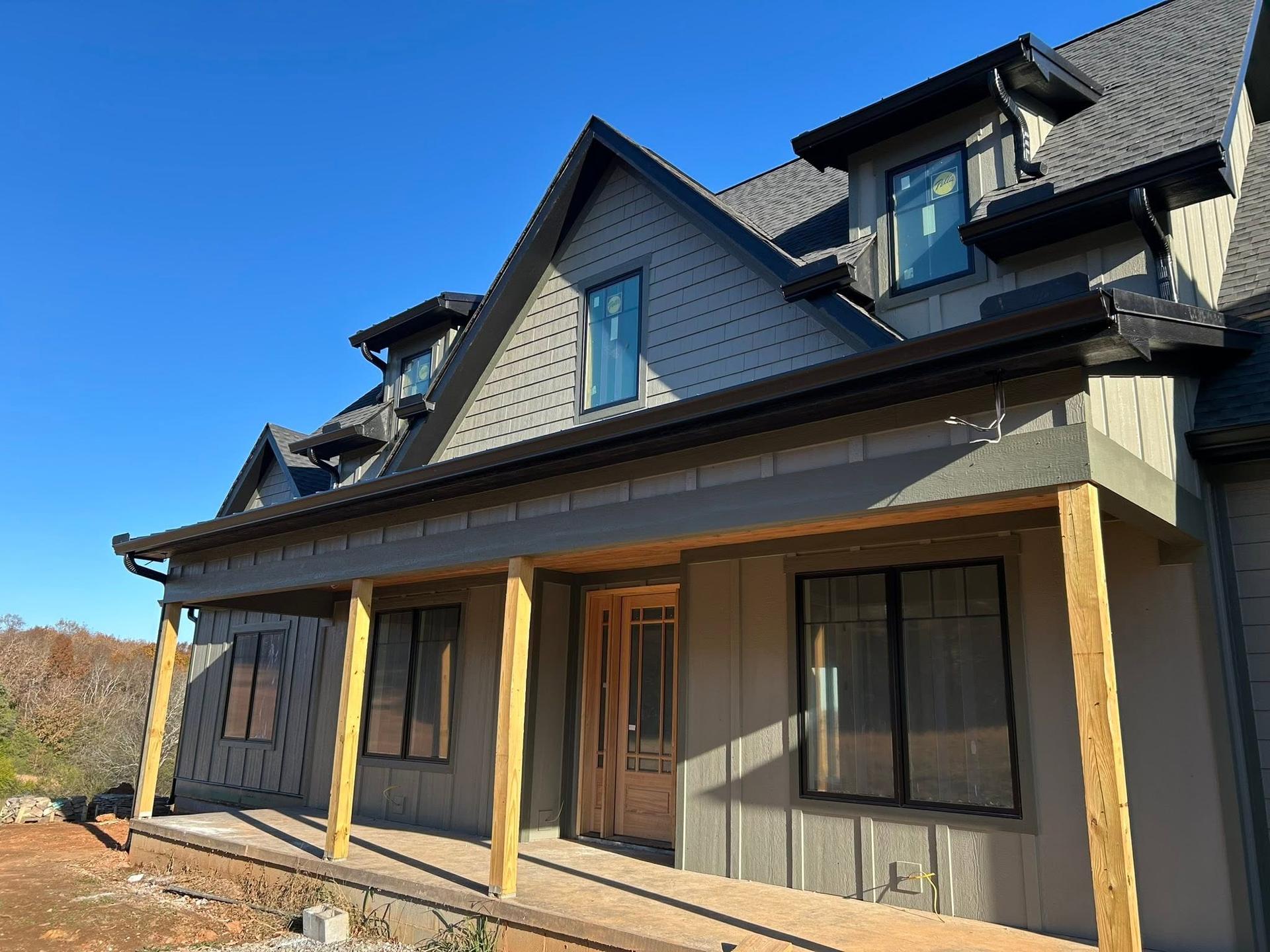
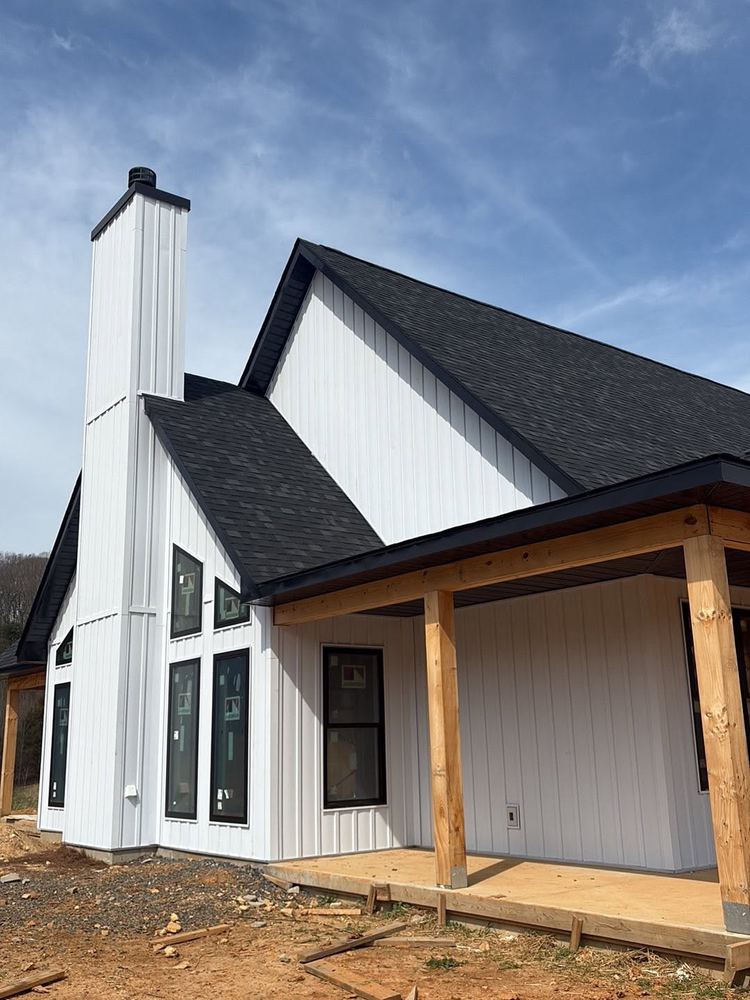
Layered, dimensional asphalt shingles.
Architectural shingles
Price level 1 of 4: $$$$Most affordable- Best for
- Traditional looks and the lowest cost up front
- Brands
- We install all major manufacturers of asphalt shingles
A straightforward exteriors company based in Maryville, Tennessee. Honest pricing, clear communication, and work done right.
Tap a service to see what we install, the options, and how to get a free quote.
We install architectural shingles, exposed-fastener and standing seam metal roofs, and DaVinci synthetic shake and slate. Our installers are certified and factory-trained.
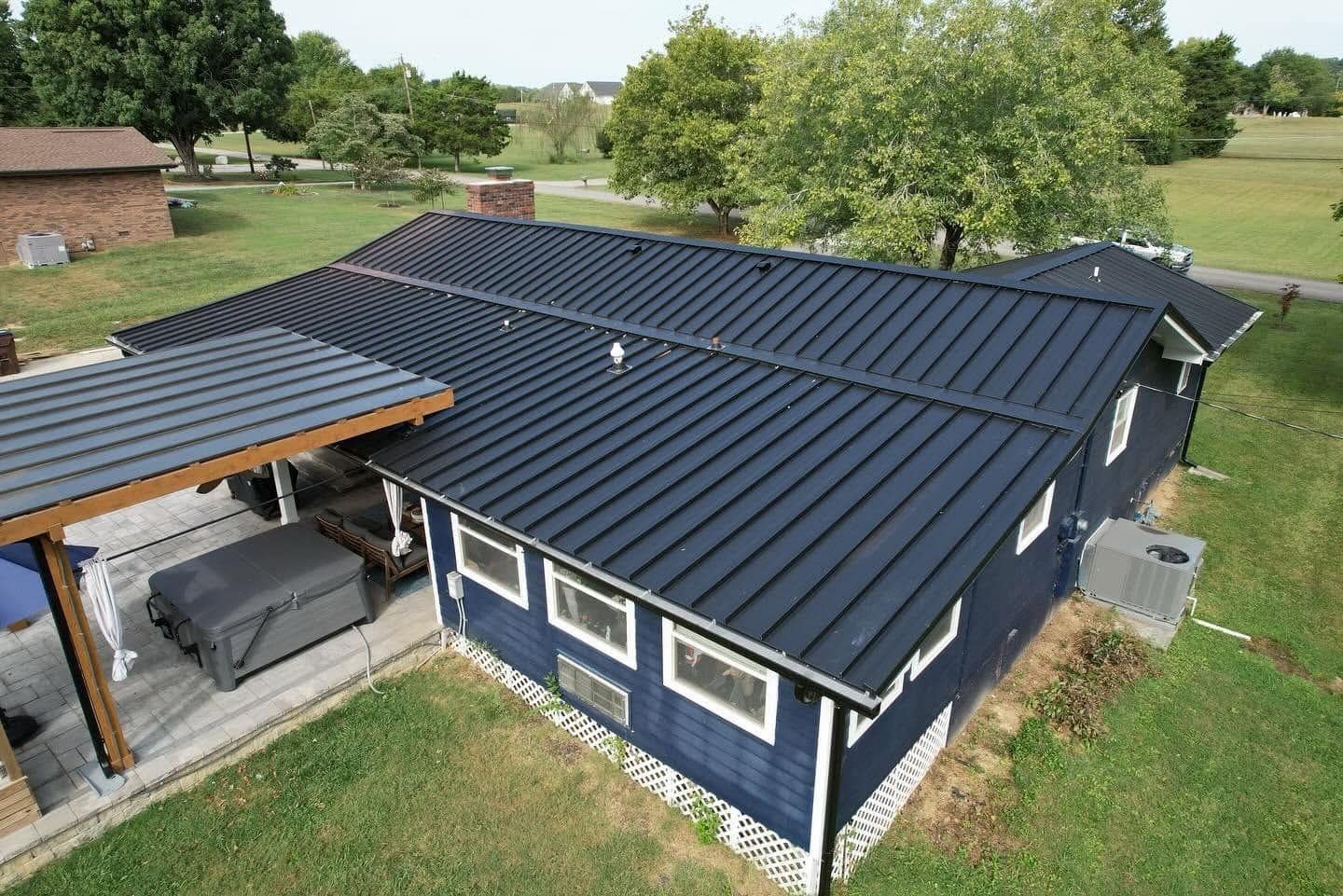
Listed from most affordable to most high-end. Every roof is quoted on your house. Call, text or send the form for a free quote.
Layered, dimensional asphalt shingles.
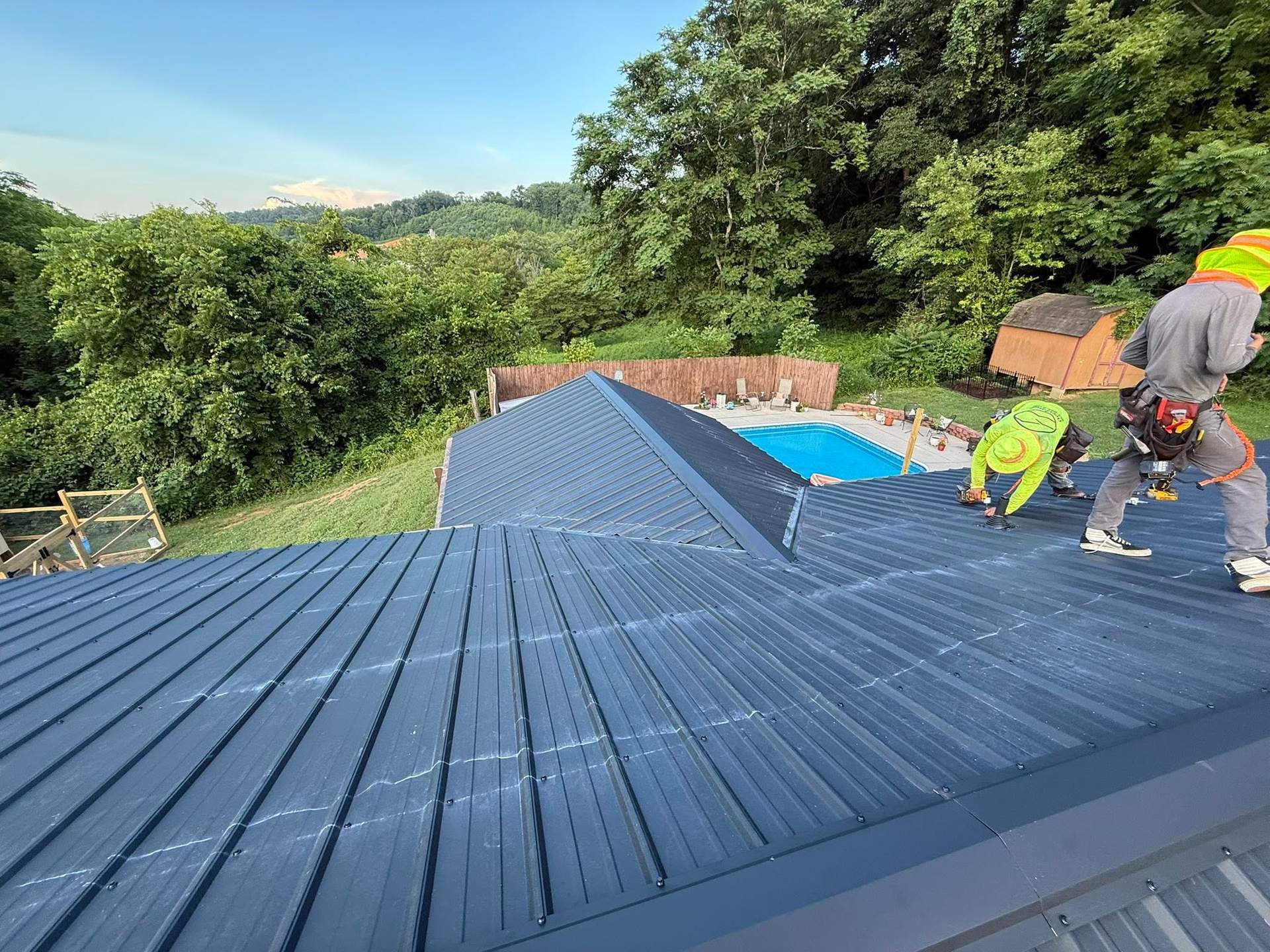
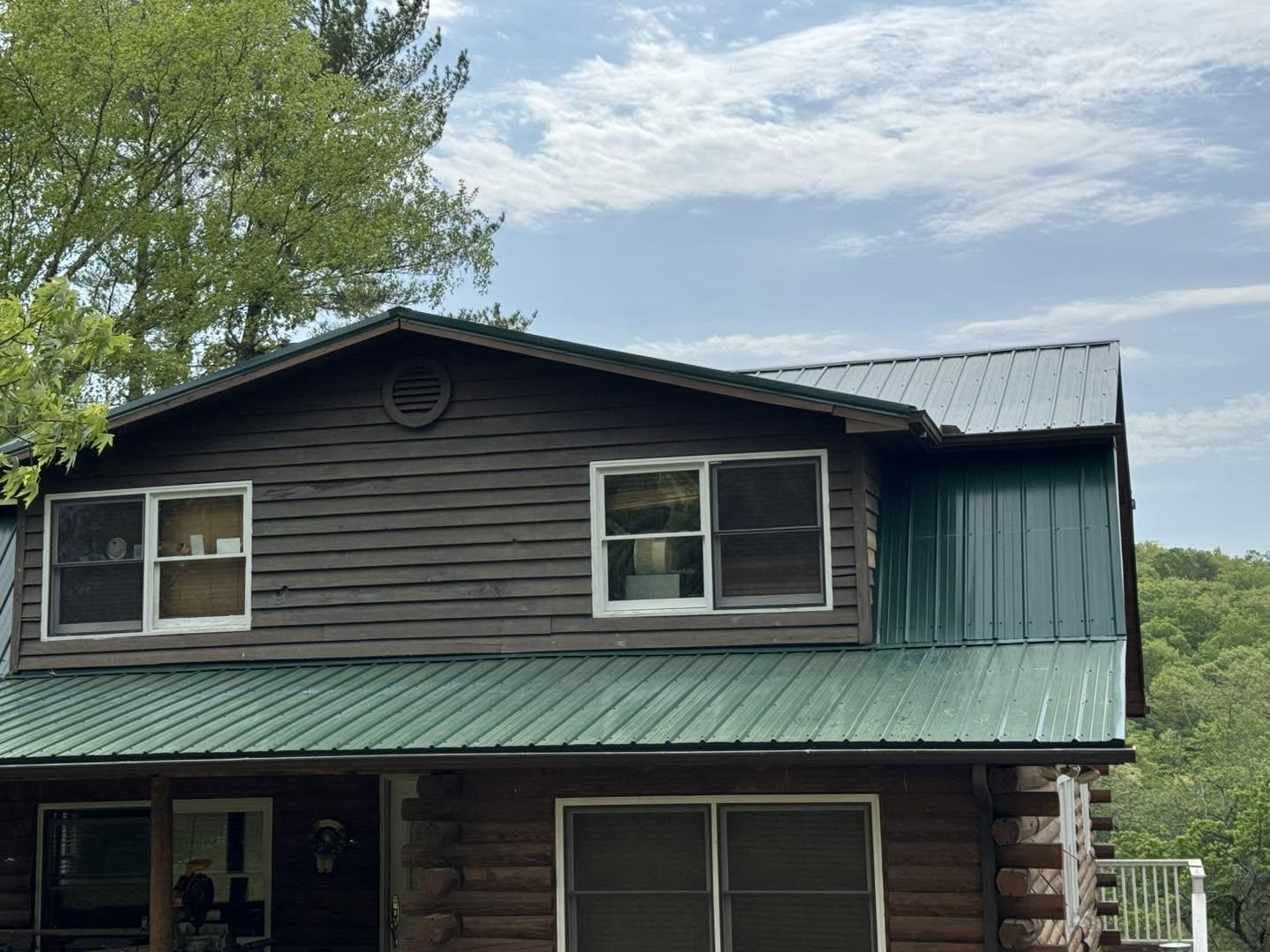
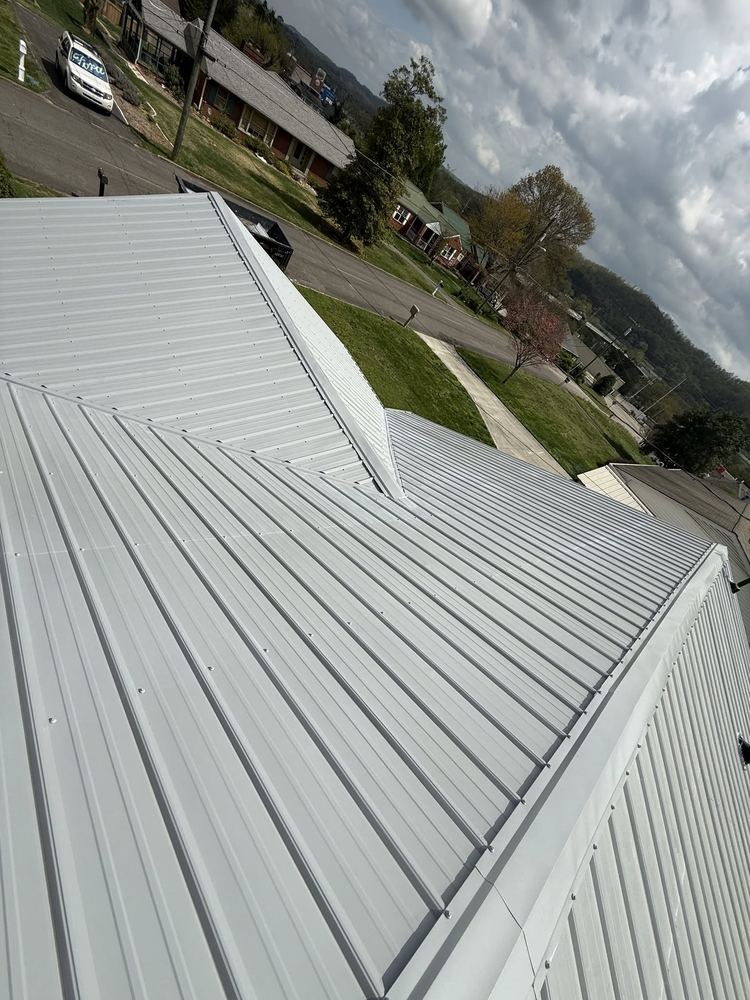
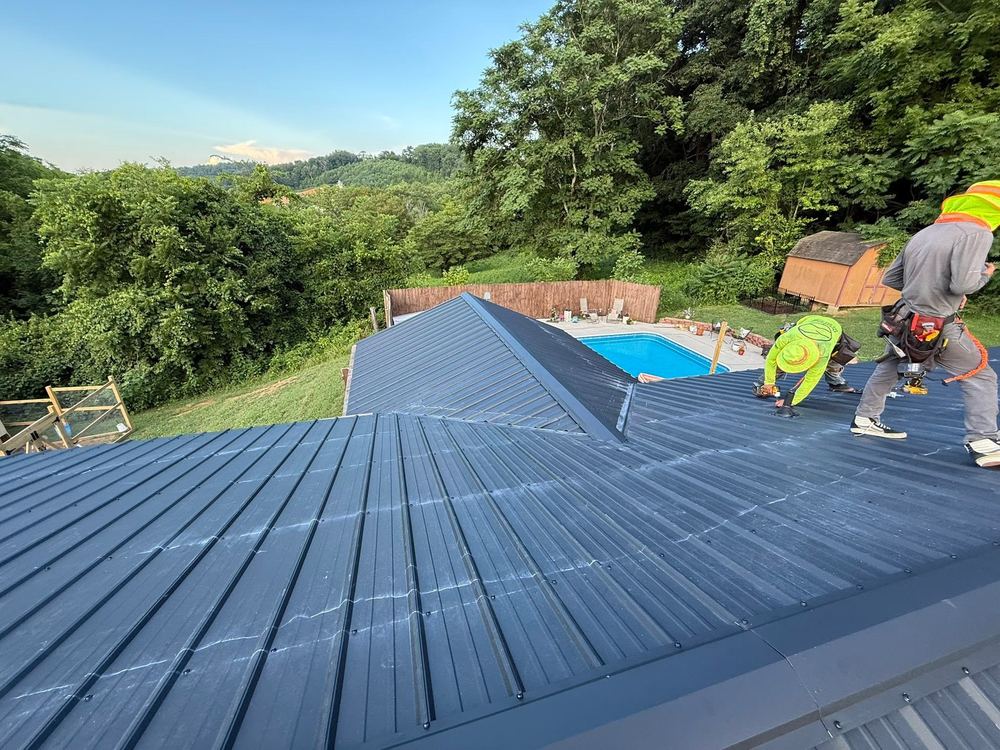
Raised ribs, with screws through the flat of the panel.
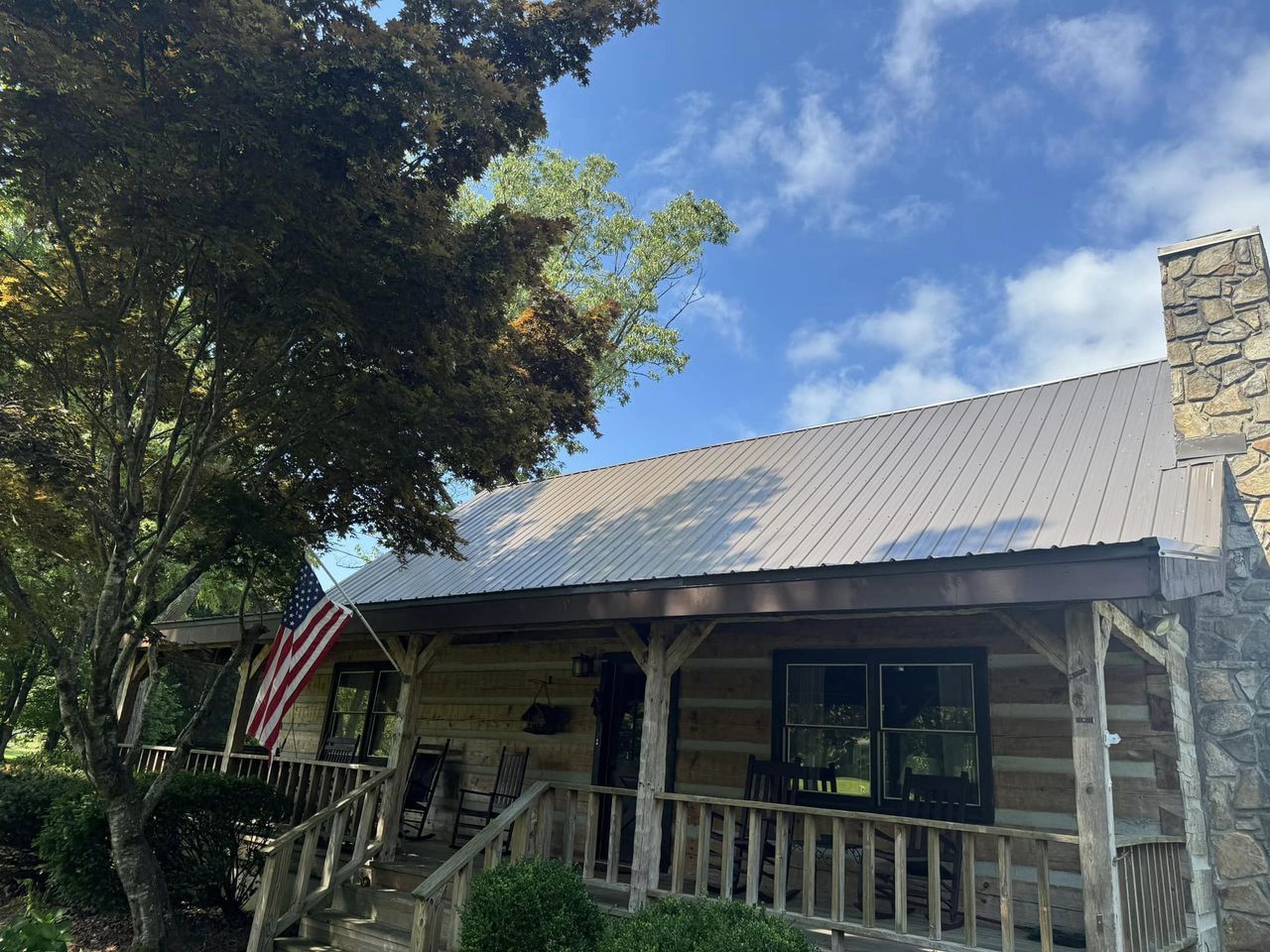
Flat pans between raised seams. No exposed screws.
Synthetic tiles modeled on slate and hand-split cedar.
We work with several metal manufacturers to get the exact look of your project. The steel is American-made. Painted panels carry a Sherwin-Williams lifetime paint warranty, and other paint systems carry 40 years.
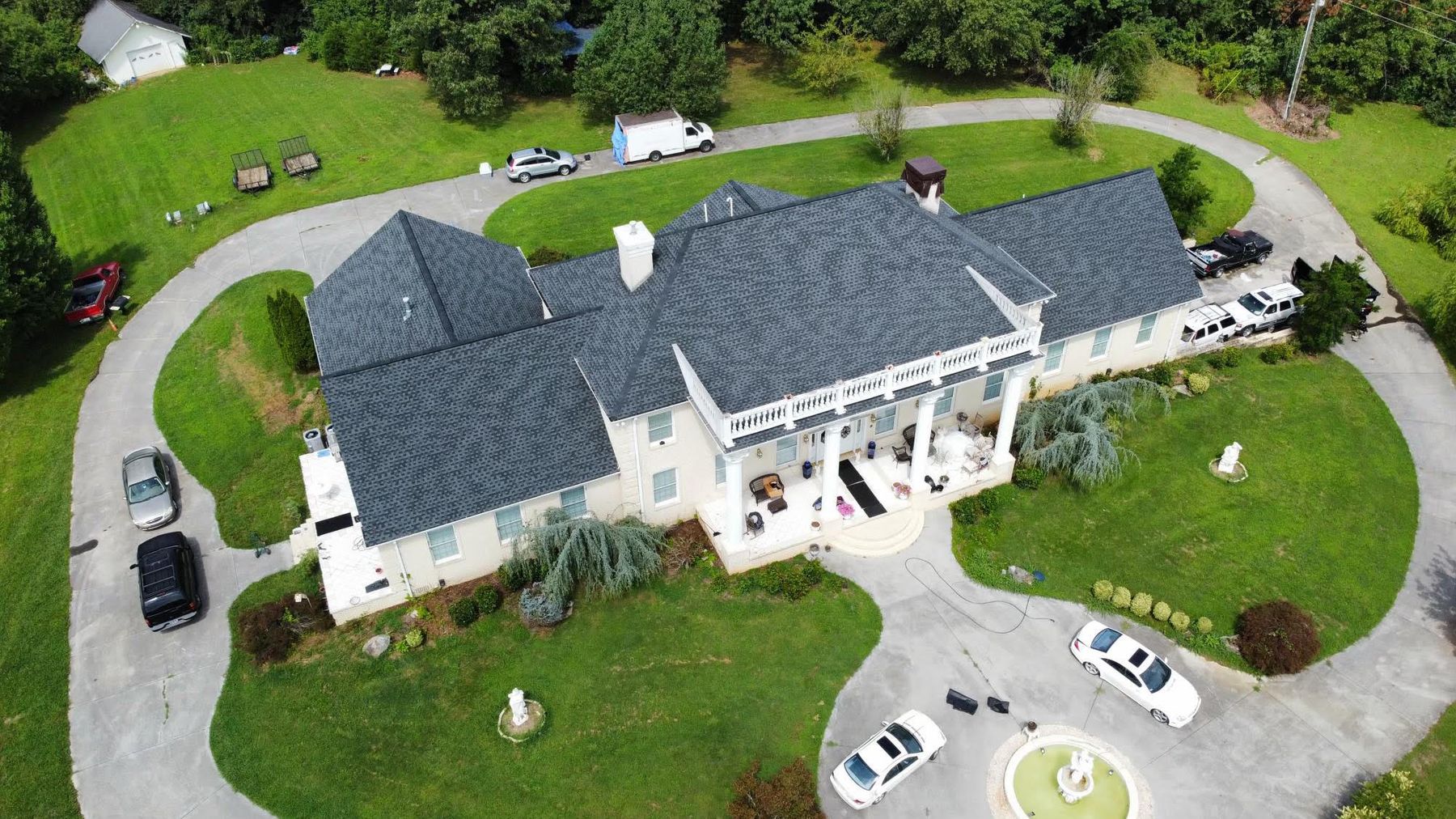
We install all major manufacturers of asphalt shingles, with certified, factory-trained installers.
Not sure it's time? Start with 10 signs you need a new roof.
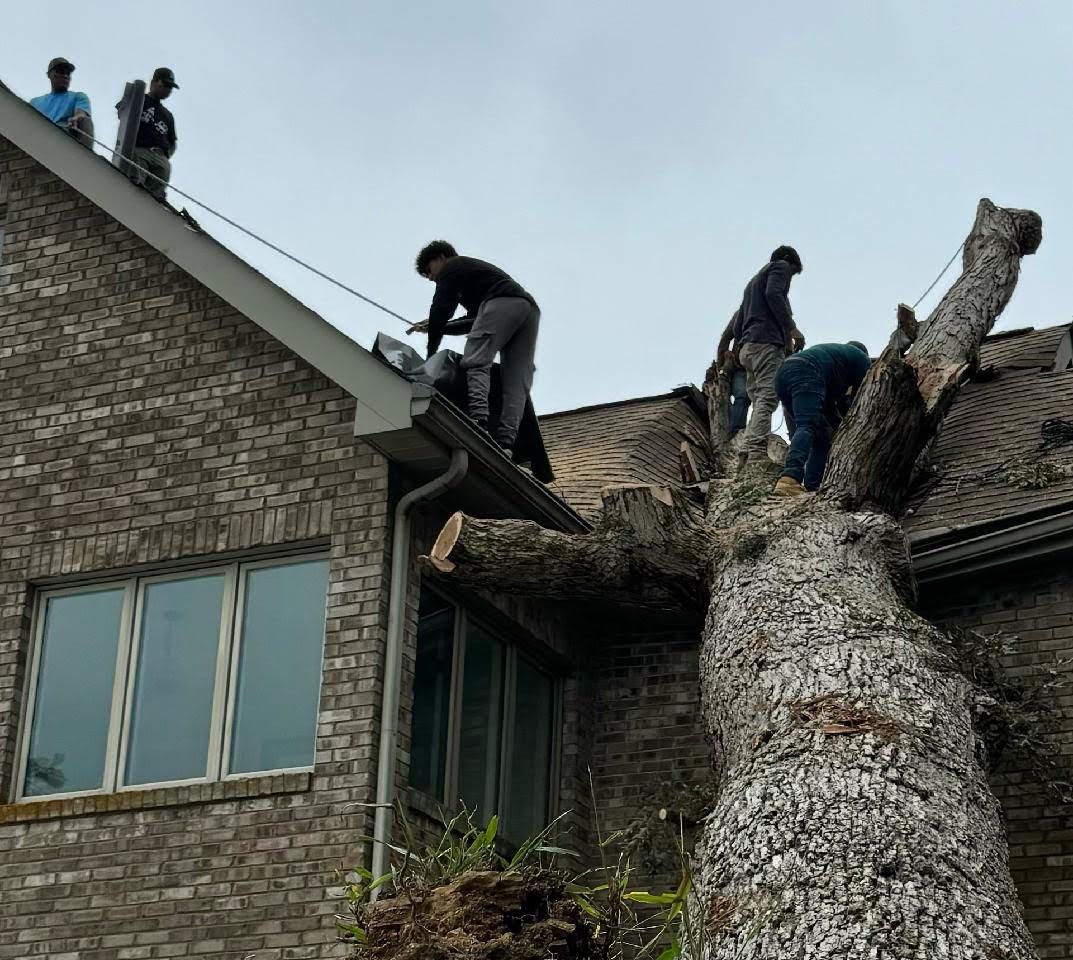
When a storm or a falling tree damages your roof, call us. We document the damage with photos and can meet your insurance adjuster.
Every policy is different, so check yours. Our guide explains how a roof insurance claim works in Tennessee.
Office hours Monday to Friday, 9 AM to 5 PM. Storm and emergency calls answered outside office hours.
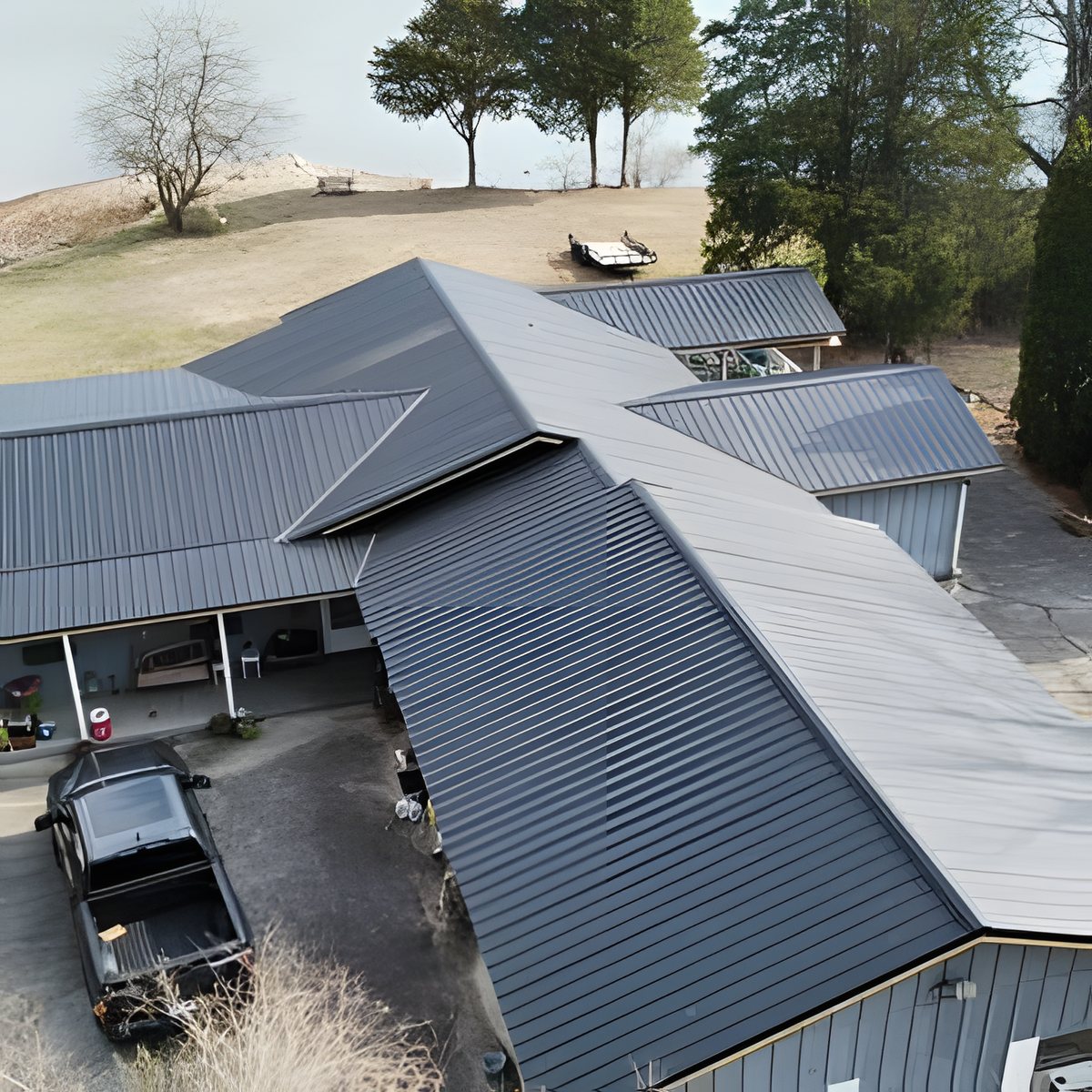
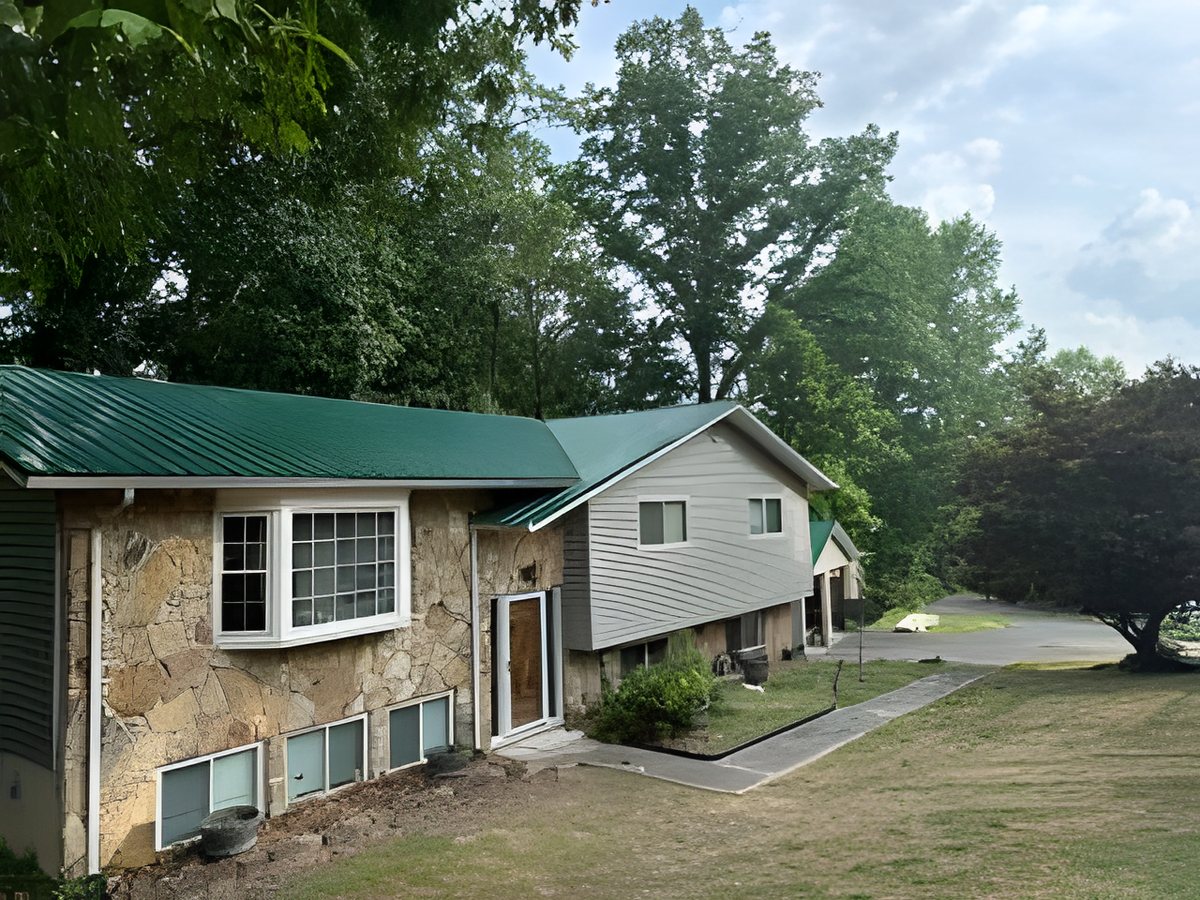
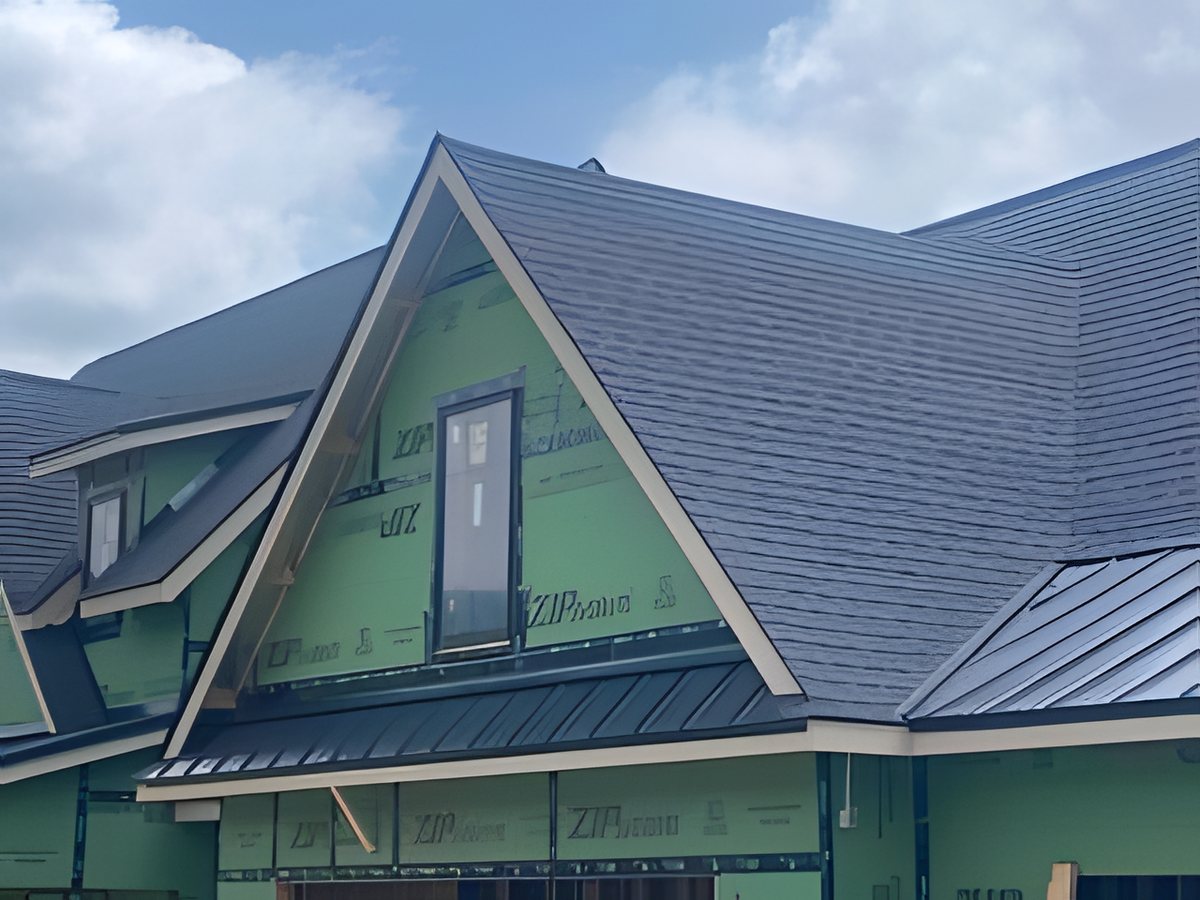
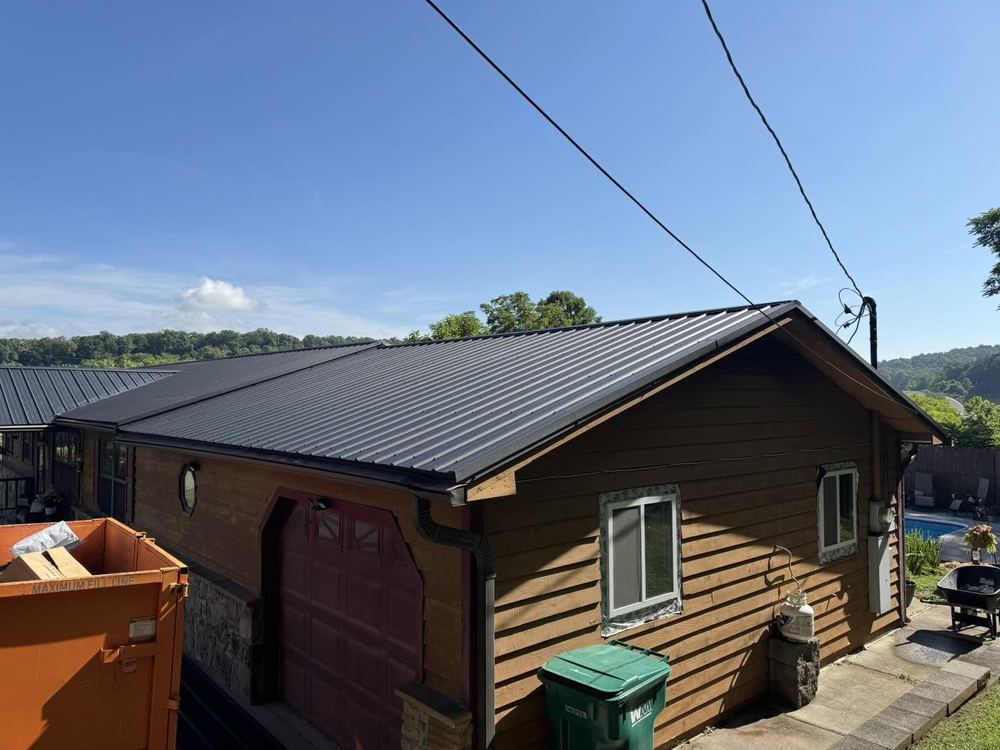
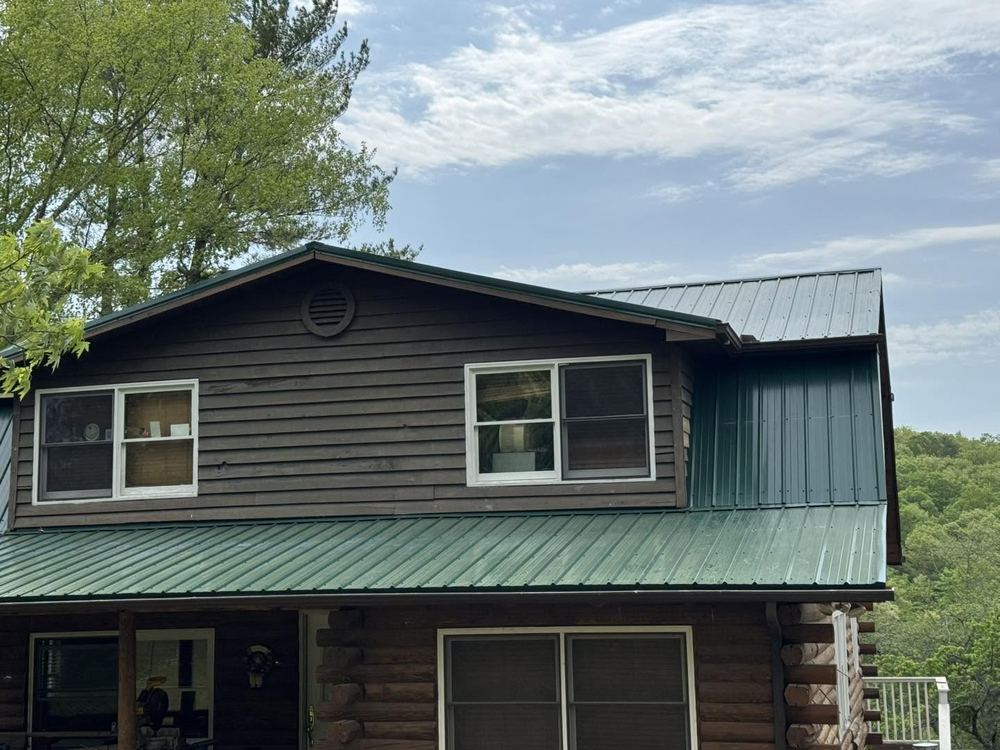
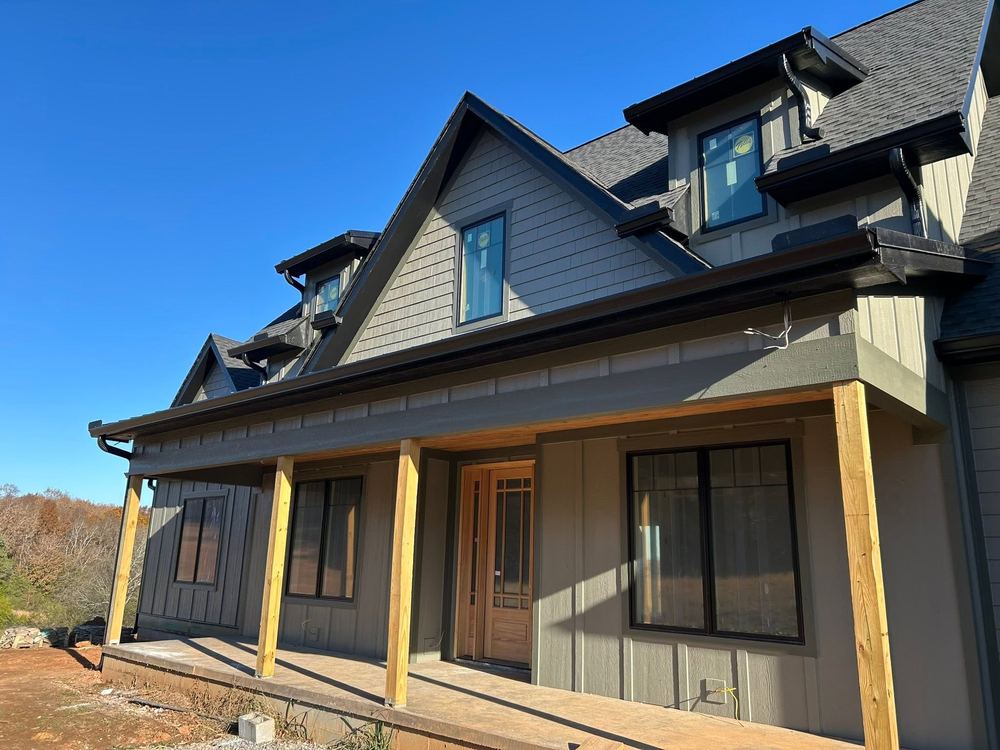
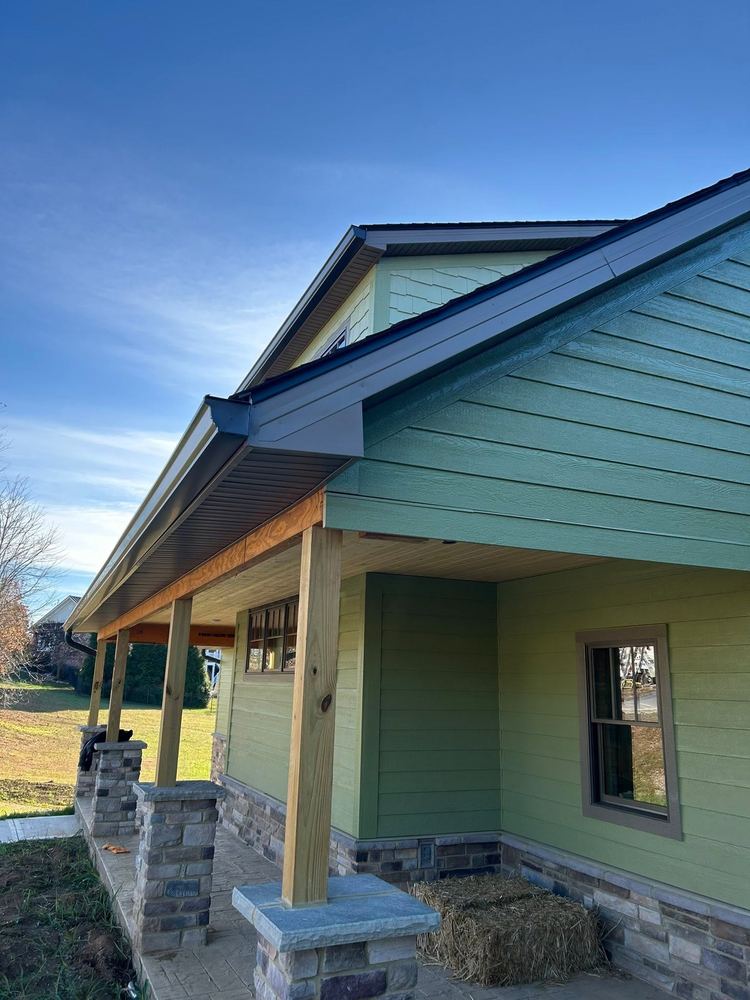
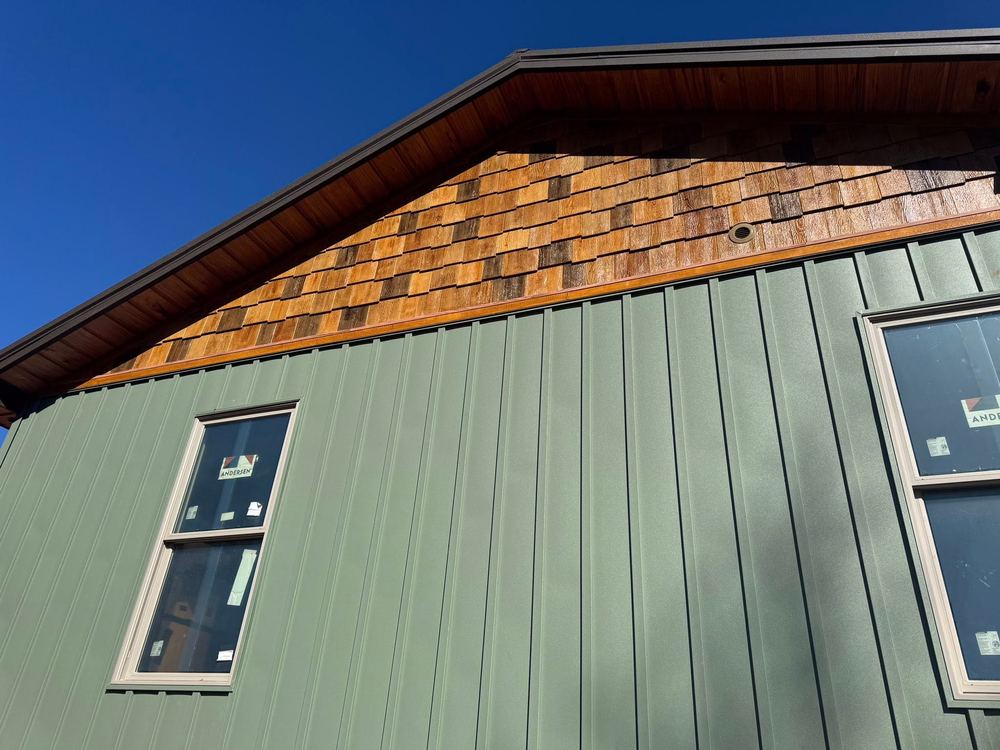
We install steel board-and-batten siding in solid colors, and wood prints that look like real boards. We also replace failing hardboard and Masonite siding.
Siding is quoted on your house. See it on a real home in our award-winning project.
Wide flat boards with narrow raised battens.
Barnwood, Cedar Natural, Primitive Pine and Cedar Gray.
Swollen, flaking hardboard laps.
Press your thumb into the bottom edge of a board near the ground. If it dents, flakes or feels spongy, the board has taken on water, and paint will not fix it. Read the full guide.
We're an authorized Alcoa Post Buildings dealer. Pick a model and we set it on your land. Every price below is installed, building shell only.
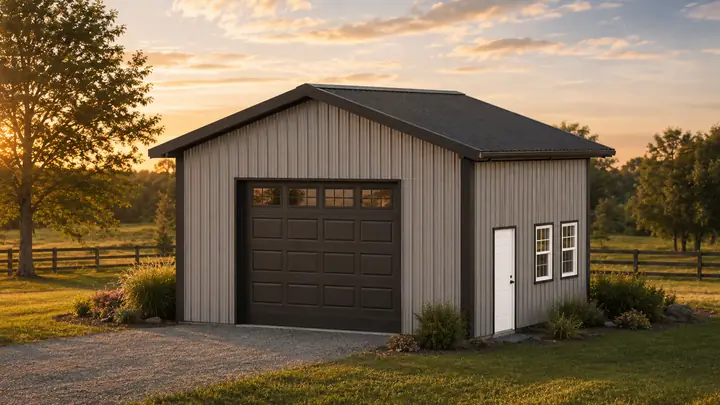
24 × 20 ft, 12 ft walls480 sq ft
Enclosed single-car garage. A compact garage for vehicle storage, a home workshop, lawn equipment, or recreational gear without taking up excessive space.
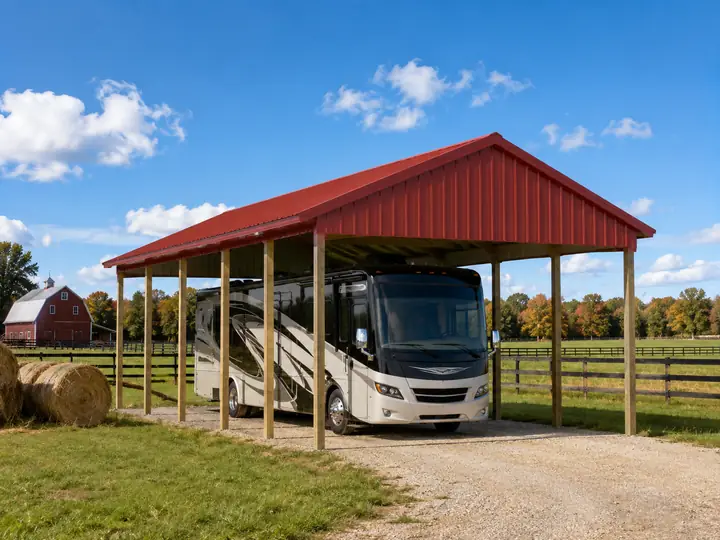
24 × 40 ft, 16 ft walls960 sq ft
Open-sided RV and equipment cover. Tall, open-sided covered storage for an RV, trailer, stacked hay, or farm equipment on properties that need versatile coverage without a fully enclosed building.
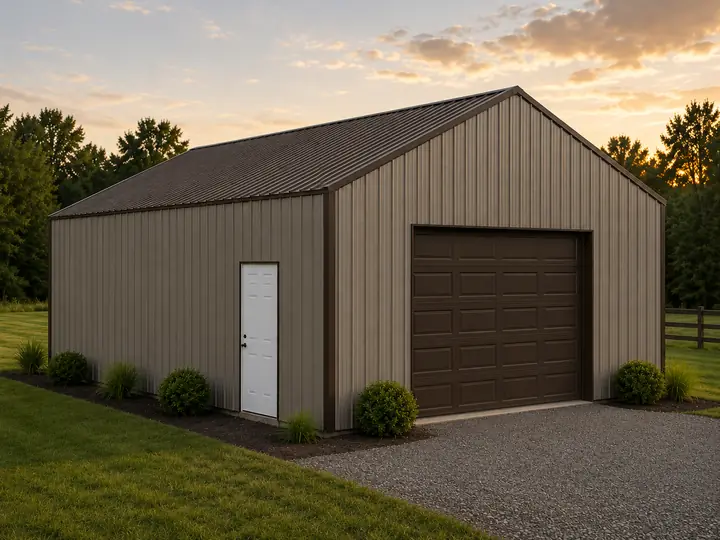
24 × 30 ft, 10 ft walls720 sq ft
Enclosed single-door garage. A practical garage with space for one large vehicle or two smaller vehicles, plus room for shelving, workbenches, and equipment.
A different size, more doors, a lean-to or a barndominium. We'll talk it through.
A lean-to is a roof that hangs off the side of a building, open or closed in. We add them to new buildings and to buildings you already have.
Every lean-to is custom-priced, especially on an existing structure, so we quote each one personally.
Tap to change the size. Every lean-to is custom-priced, so we'll quote yours.
24 ft long, 12 ft deep, open sides
We'll confirm the price after a quick look at your building.
Keep the tractor, mower and trailer out of the rain without building another barn.
Covered parking on the side of a shop or garage.
A shaded place to sit on the side of a building.
Firewood, hay and supplies, with the ends closed in if you like.
We set the building shell on your land and install the windows and exterior doors. You or your builder finish the inside. Every barndominium is quoted personally.
A low-maintenance alternative to wood and vinyl. Choose open rail or privacy, steel-wrapped wood posts or full steel posts, in black, white or a wood print.
Fence color
Open rail, for a ranch or farm look that keeps the view open.
Clean horizontal boards, closed for privacy or spaced for an open look.
Colors: black, white or a wood print. Drawings show standard sections; we quote your fence line personally.
Choose a metal or shingle roof, then pick roof and siding colors. The house changes as you tap.
Actual colors may vary. Final selection should be made from metal color chips. Painted panels carry a Sherwin-Williams lifetime paint warranty; other paint systems carry 40 years.
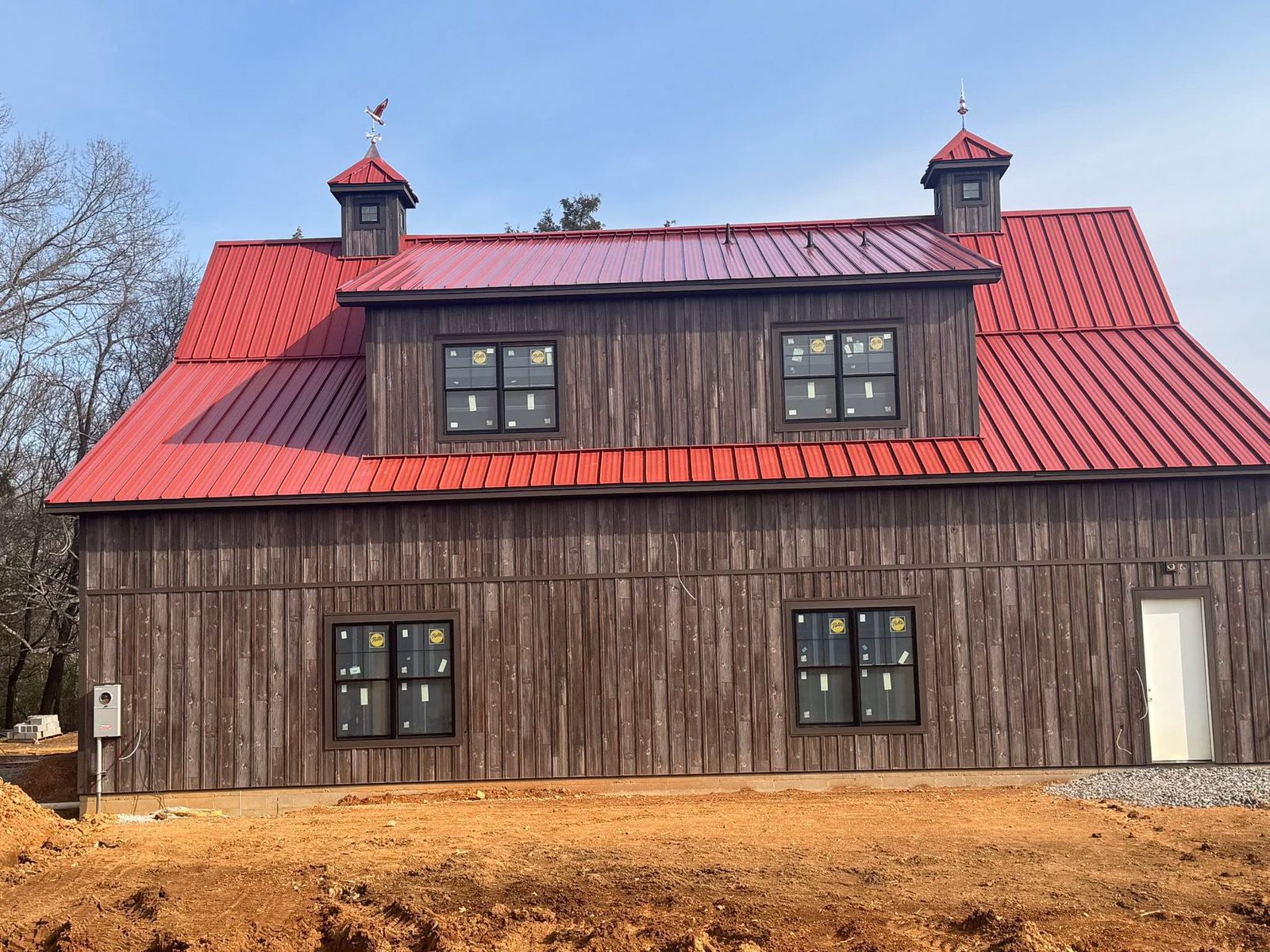
Metal Roofing Magazine, August/September 2026 edition
Our standing seam roof was featured as “Standing Seam Metal Roofing Delivers Timeless Performance on Tennessee Custom Home.”
A red standing seam roof with two cupolas and a dormer, over dark wood-print board-and-batten steel siding and black windows.
Straightforward from the first call.
Overland started in 2021 because there was a need for a straightforward construction company: honest pricing, clear communication, and work done right.
Since then we've completed over 800 jobs. Overland Exteriors was formerly Overland Construction & Roofing.
“Chris from Overland Construction is an honest man, and a great person to work with. Always taking each project as if it were his own home, Chris will make sure your new roof is left looking amazing. 10/10 Recommend.”
“I have known Chris for many years both personally and professionally. Overland is a great company that is there to serve. Chris is responsive, on time and always there to listen.”
“They are a great company and group of people to work with, from the initial sales person to the crew that performed the work, everyone included.”
Three short steps. Taps until the last one.
Standing seam metal roofing hides its fasteners under raised seams, giving fewer leak points, a cleaner look and less upkeep at a higher price. Exposed-fastener metal is screwed through the panel face, costs less and installs faster, but its screws need periodic checks. For East Tennessee homes, standing seam is the long-term pick and exposed-fastener the budget pick.
The difference comes down to where the screws go. On an exposed-fastener roof, you can see rows of screws across every panel. On a standing seam roof, the fasteners are hidden under tall, narrow seams that run from the eave up to the ridge.
That one detail affects almost everything else: how the roof looks, how it handles heat and cold, how often it needs attention and what it costs. Both are real metal roofs made from painted steel, and both can serve a house well. They just suit different goals.
Exposed-fastener panels are wide sheets of corrugated or ribbed steel that are screwed directly through the panel into the wood underneath. Each screw has a rubber washer that squeezes tight against the metal to seal the hole.
You will hear these panels called by trade names such as R-panel, PBR or ag panel. They usually cover about three feet of width per sheet, so a crew can cover a roof quickly. That speed and the simpler parts are why exposed-fastener metal costs less.
None of this makes exposed-fastener a bad roof. It simply means a quick inspection every few years is part of owning one.
Standing seam panels are narrower, usually somewhere between 12 and 18 inches wide, with a raised seam along each edge. Neighboring panels lock together at those seams, and hidden clips or a fastening flange tucked under the seam hold the roof down.
Because the clips allow the panels to slide slightly as they warm and cool, the roof can expand and contract without stressing the fasteners. There are no rows of exposed screws in the flat of the panel for water to find.
One thing to know: wide, flat areas of standing seam can show a slight waviness called oil canning. It is cosmetic and does not affect performance. Small ribs pressed into the panel, called striations, help reduce it.
Standing seam wins on looks, upkeep and lifespan. Exposed-fastener wins on price and speed. Here is how they stack up.
| Exposed-fastener | Standing seam | |
|---|---|---|
| Look | Rugged, rural, visible screw rows | Clean, crisp vertical lines |
| Fasteners | Screws through the panel face | Hidden clips or flange under the seam |
| Leak points | Hundreds of sealed screw holes | Very few in the field of the roof |
| Expansion and contraction | Panels pinned, screws can loosen over time | Panels float on clips |
| Maintenance | Check and replace screws or washers over the years | Very little |
| Typical lifespan | Often 20 to 40 years or more with upkeep | Often 40 to 60 years or more |
| Common steel | Usually 29 or 26 gauge | Usually 26 or 24 gauge |
| Relative cost | Lower | Higher |
| Best fit | Barns, shops, cabins, budget-minded homes | Homes you plan to keep, modern farmhouse and lake homes |
For more on how thickness affects strength, read metal roofing gauges explained.
Yes. Very low-slope roofs are better served by standing seam, especially mechanically seamed panels. On steeper roofs, either system works.
Water moves slowly on a nearly flat roof and can sit near laps and screw holes. Every panel maker publishes a minimum slope for each product, and a good installer follows it. If your house has a low-slope porch roof tying into a steeper main roof, it is common to use a system rated for the lowest slope on the job.
A few direct questions will tell you whether a contractor knows metal well and whether the quote matches what you want.
Choose standing seam if you plan to stay in the home a long time and want the cleanest look with the least upkeep. Choose exposed-fastener if budget comes first or the roof is on a barn, shop or cabin where a rugged look fits.
A good rule of thumb: if you would be bothered by seeing rows of screws from your driveway, you will probably be happier with standing seam.
Many homeowners mix the two: standing seam on the house and exposed-fastener on a detached garage, carport or metal building. Matching paint colors keep the whole property looking tied together. Browse the color chart to see what is available, and see what drives metal roof cost before you get quotes.
Overland Exteriors installs both systems, and our metal crew has completed factory training as certified metal roofing installers. We will show you pieces of each and tell you plainly which one fits your house.
East Tennessee's hot, humid summers and cool nights mean metal roofs go through a lot of expansion and contraction. That daily movement is one reason standing seam, with its floating clips, holds up so well here over the long run. Heavy spring rain also rewards roofs with fewer holes in them.
You will see both systems all over the area. Exposed-fastener roofs are a familiar sight on farmhouses and barns in Blount and Loudon County and on cabins around Sevierville. Standing seam has become the go-to look for new homes in Maryville and Farragut and for lake homes near Lenoir City and Loudon, where the roof is seen from the water. Whichever you choose, a well-installed metal roof is a strong match for our mix of storms, heat and the occasional ice.
For a home you plan to keep for many years, it usually is. Standing seam has fewer leak points, needs very little maintenance and typically lasts longer. If budget is tight or the building is a barn or shop, exposed-fastener is a sensible choice.
A properly installed exposed-fastener roof does not leak. Over many years, rubber washers can wear and screws can loosen, which is when leaks can start. Checking the screws every few years and replacing worn ones keeps the roof tight.
Yes, and many homeowners do. Using the same paint color on both keeps the property looking consistent while saving money on the outbuildings.
Oil canning is a slight waviness that can show up in the flat part of standing seam panels, especially in bright, low-angle sunlight. It is cosmetic only. Panels with small pressed-in ribs and careful installation help keep it to a minimum.
Both can stand up to most East Tennessee hail without leaking, and heavier gauges resist dents better. Large hail can leave cosmetic dents on any metal roof. If hail is a big concern, ask about thicker steel and an impact-rated panel.