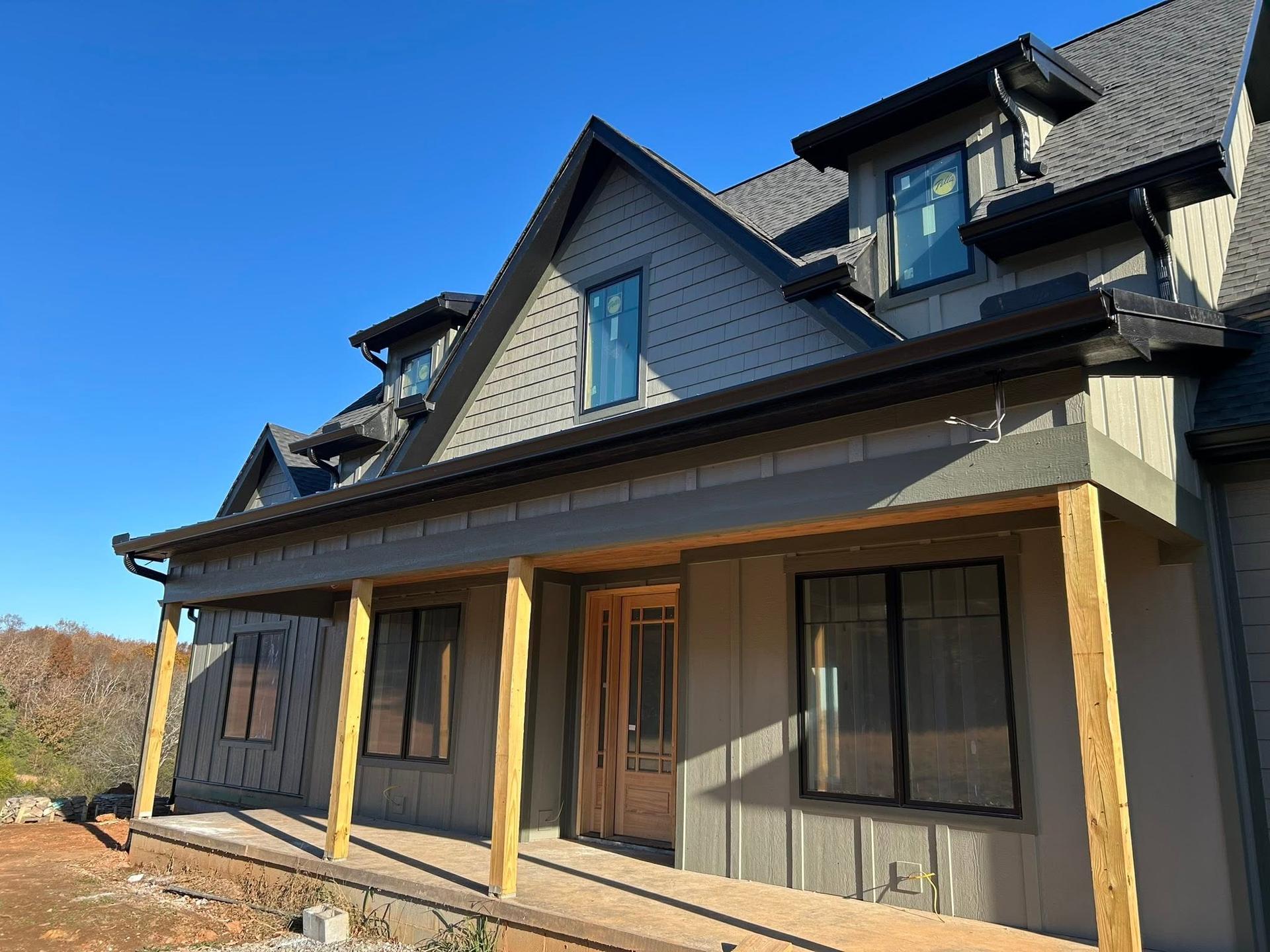
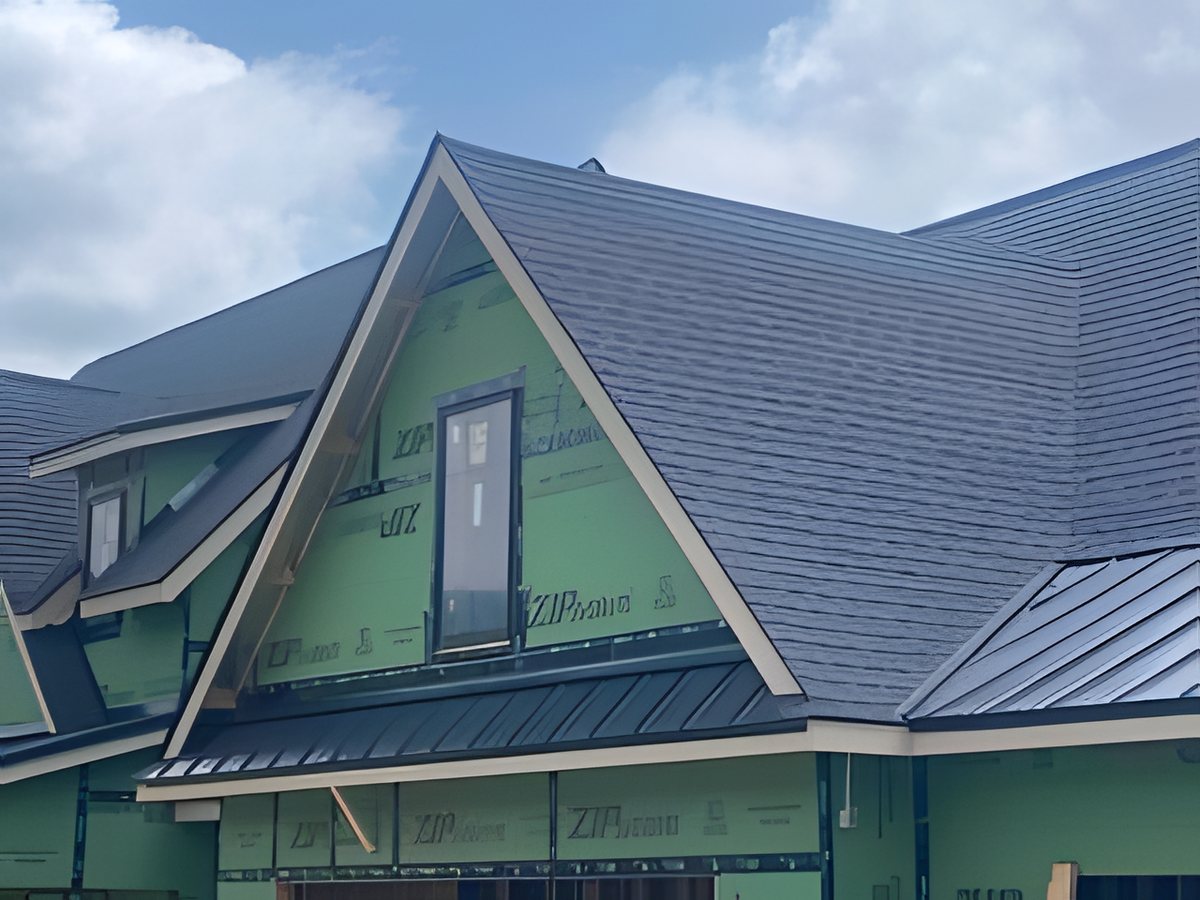
Layered, dimensional asphalt shingles.
Architectural shingles
Price level 1 of 4: $$$$Most affordable- Best for
- Traditional looks and the lowest cost up front
- Brands
- We install all major manufacturers of asphalt shingles
A straightforward exteriors company based in Maryville, Tennessee. Honest pricing, clear communication, and work done right.
Tap a service to see what we install, the options, and how to get a free quote.
We install architectural shingles, exposed-fastener and standing seam metal roofs, and DaVinci synthetic shake and slate. Our installers are certified and factory-trained.
Listed from most affordable to most high-end. Every roof is quoted on your house. Call, text or send the form for a free quote.
Layered, dimensional asphalt shingles.
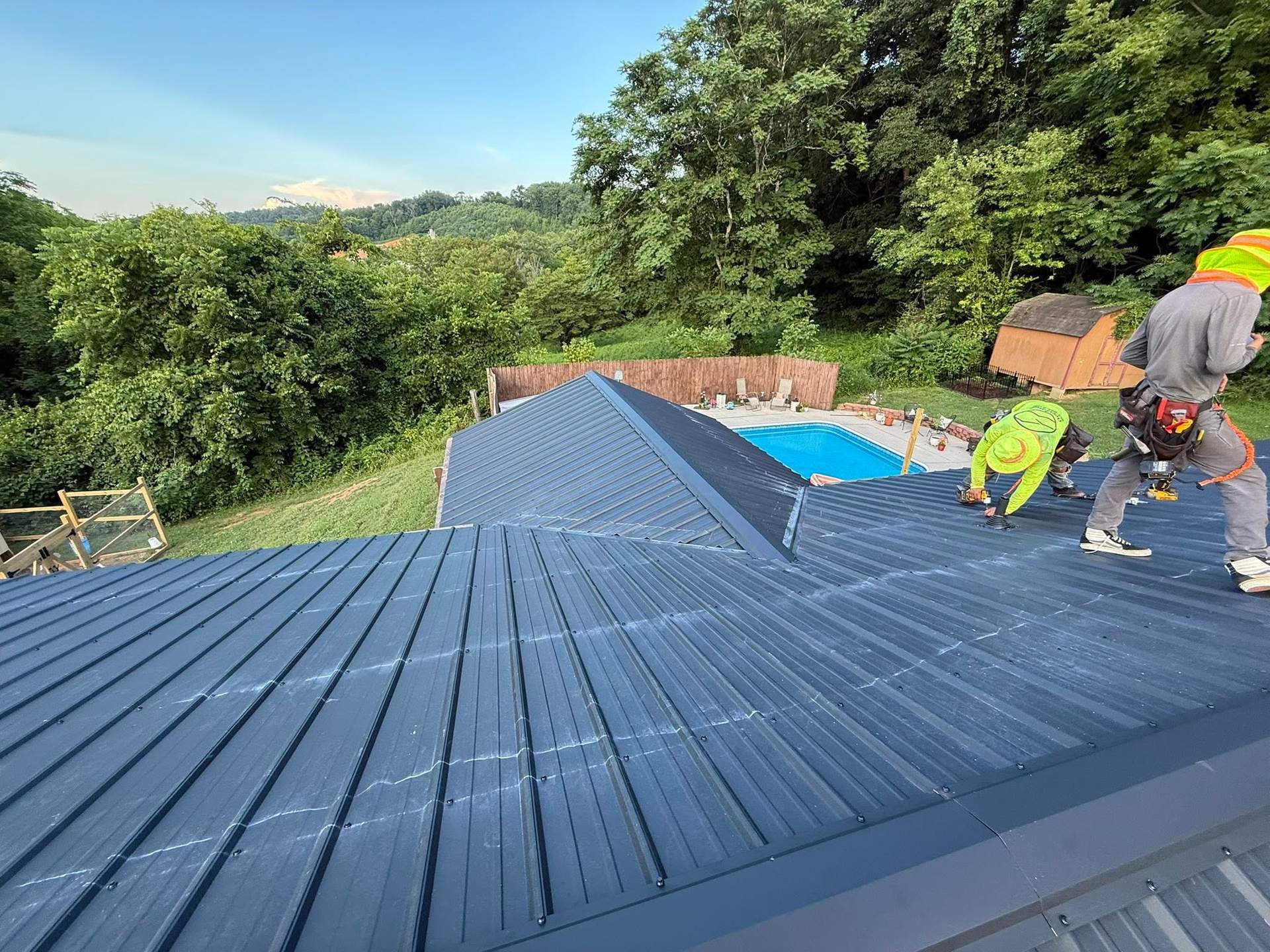
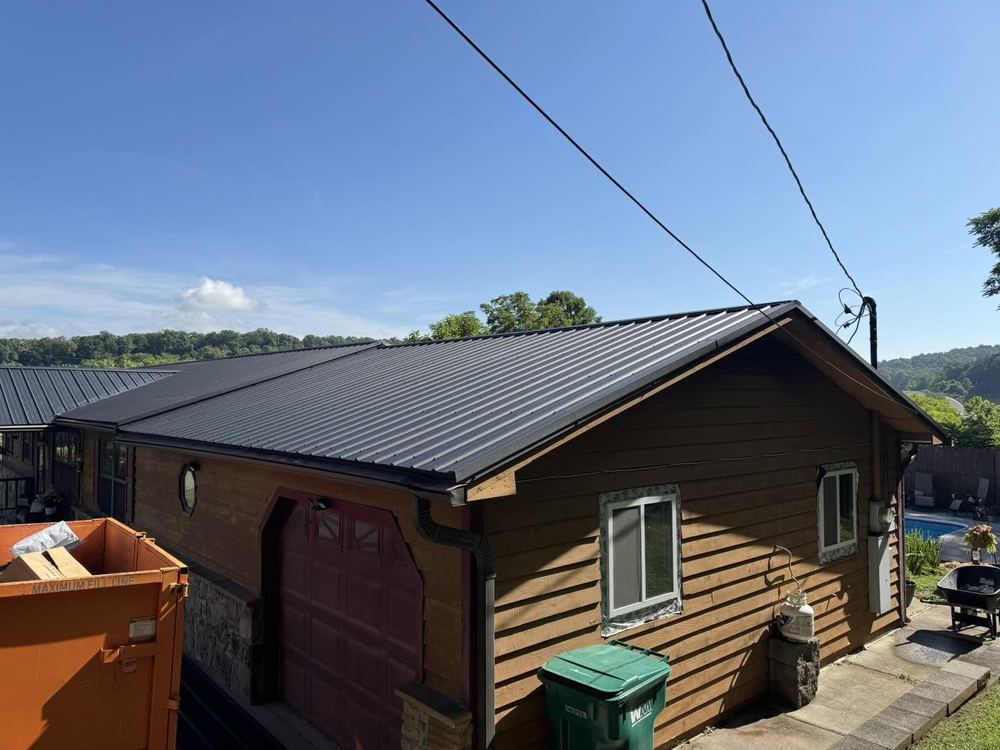
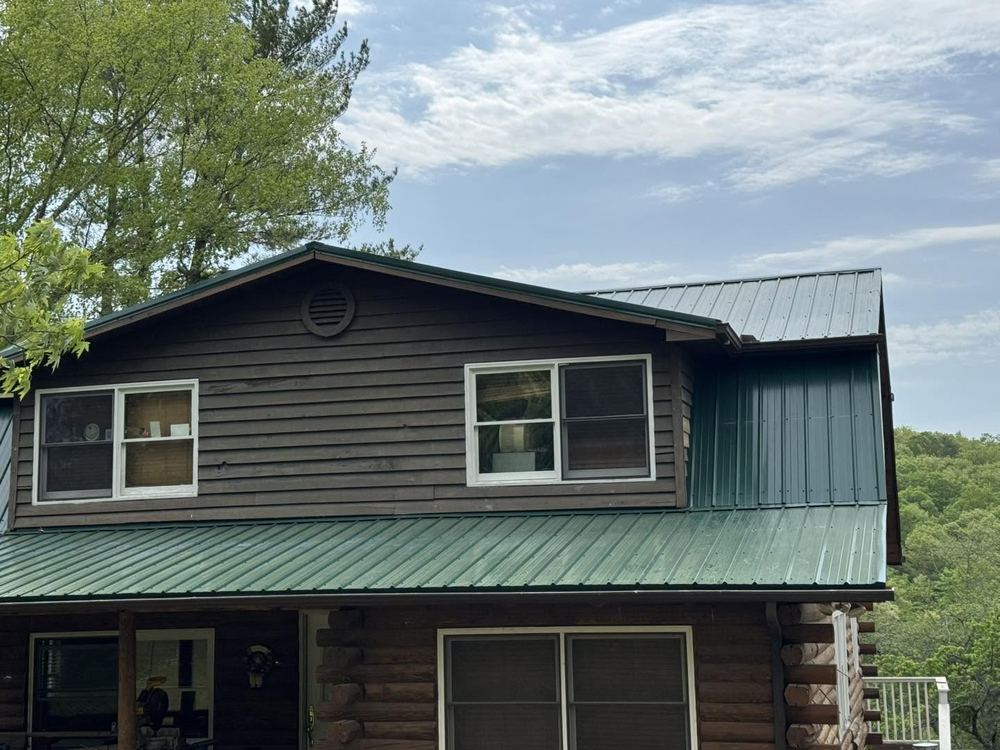
Raised ribs, with screws through the flat of the panel.
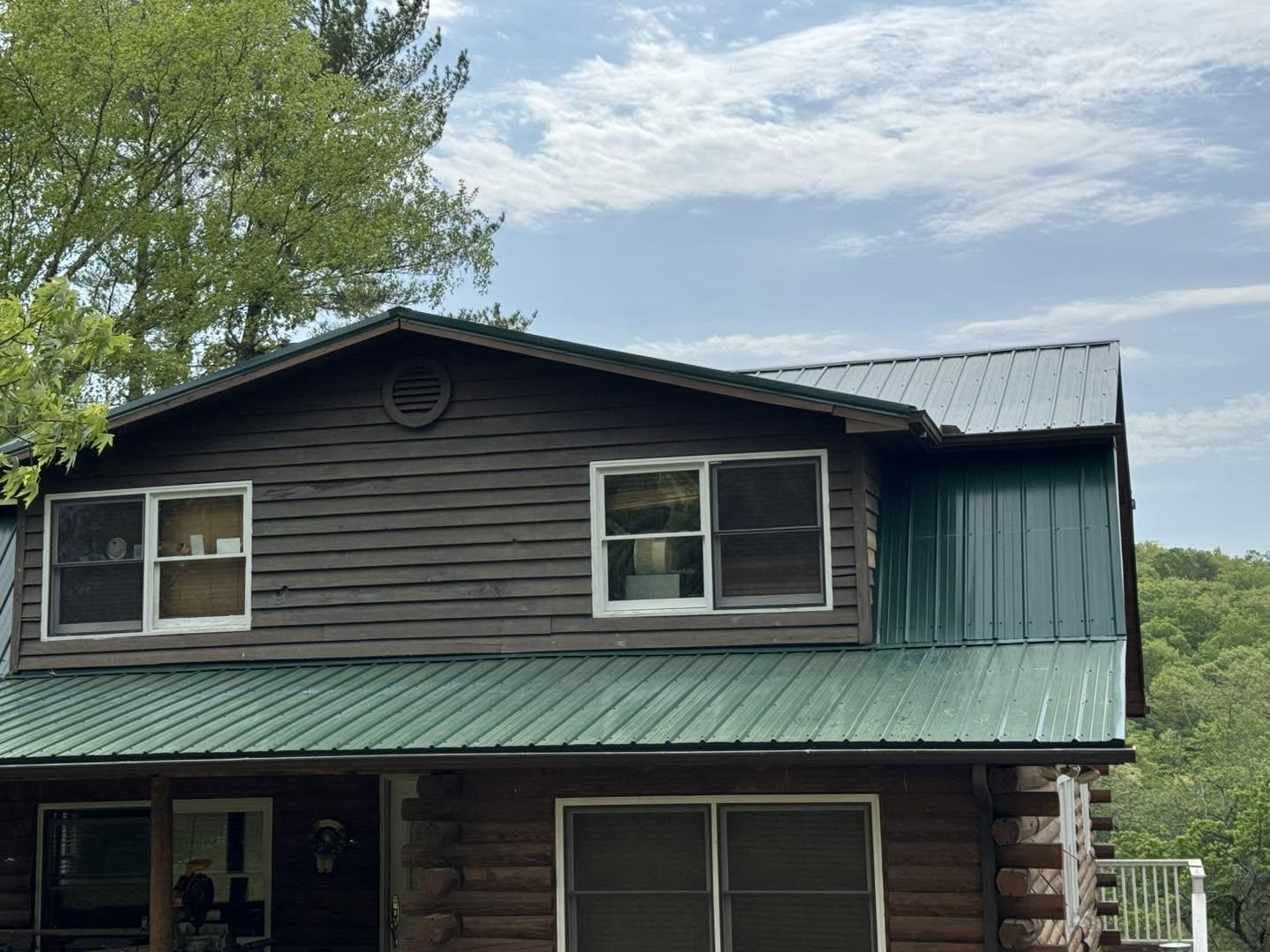
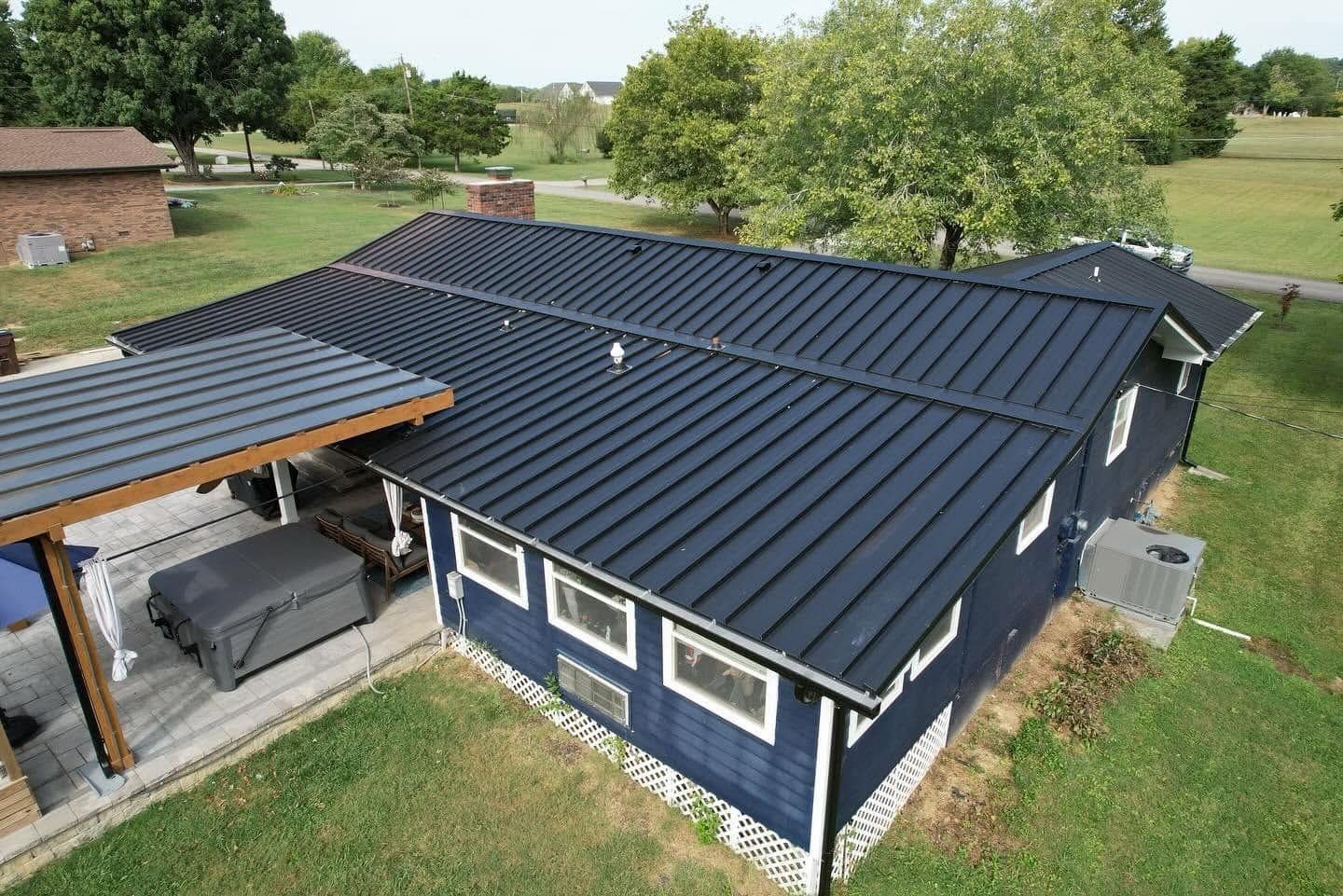
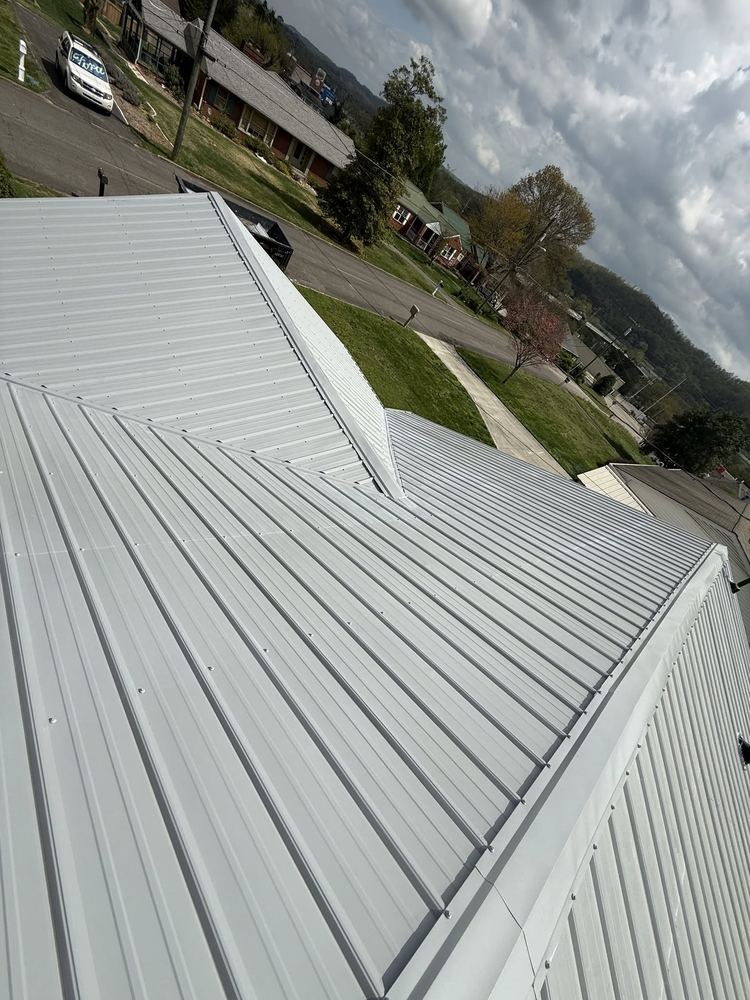
Flat pans between raised seams. No exposed screws.
Synthetic tiles modeled on slate and hand-split cedar.
We work with several metal manufacturers to get the exact look of your project. The steel is American-made. Painted panels carry a Sherwin-Williams lifetime paint warranty, and other paint systems carry 40 years.
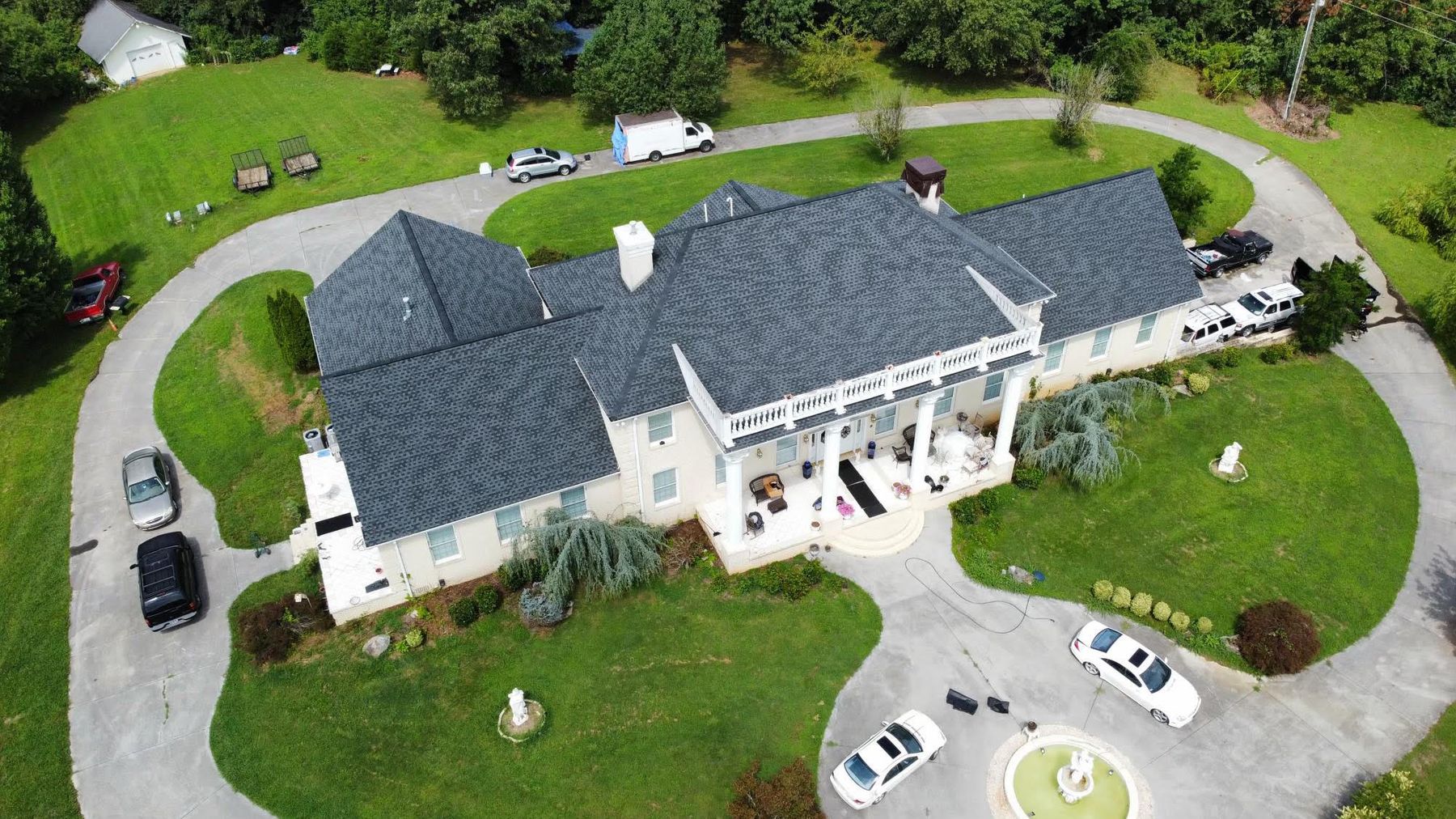
We install all major manufacturers of asphalt shingles, with certified, factory-trained installers.
Not sure it's time? Start with 10 signs you need a new roof.
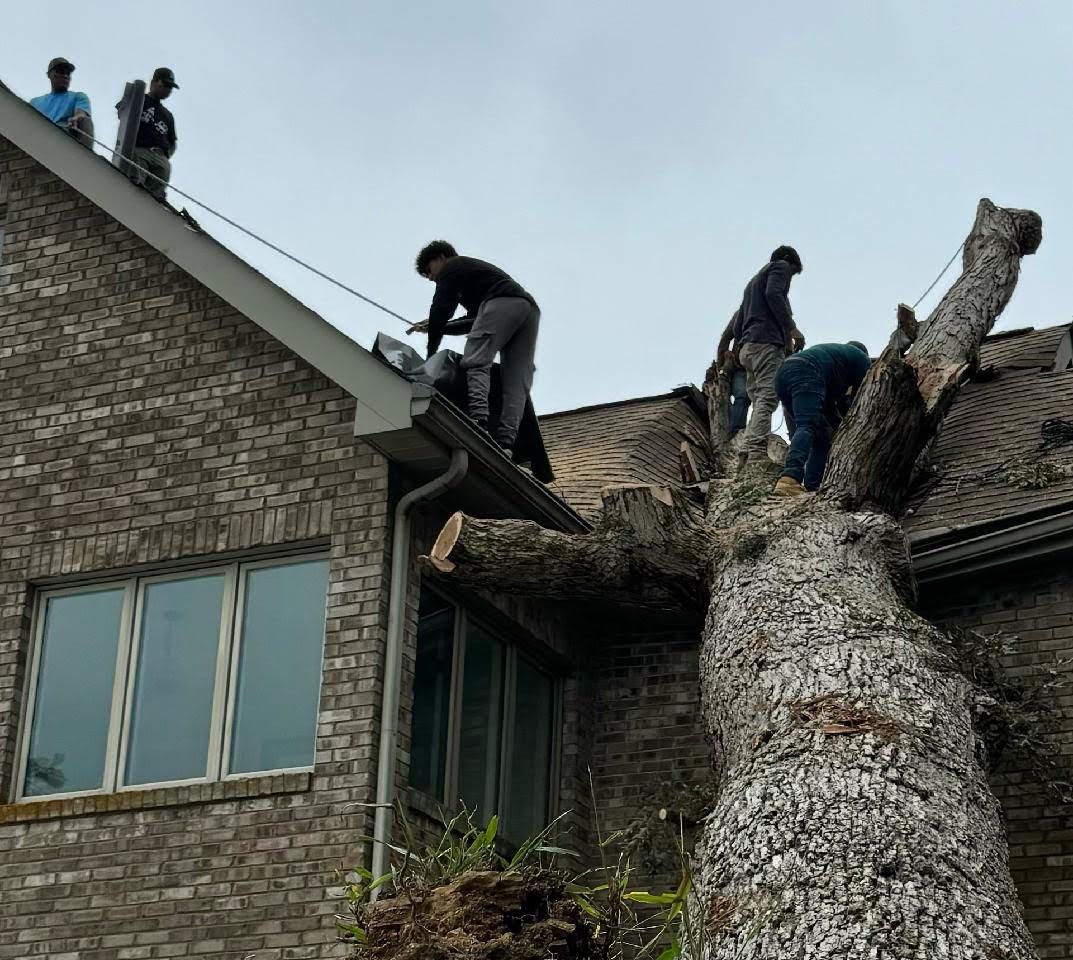
When a storm or a falling tree damages your roof, call us. We document the damage with photos and can meet your insurance adjuster.
Every policy is different, so check yours. Our guide explains how a roof insurance claim works in Tennessee.
Office hours Monday to Friday, 9 AM to 5 PM. Storm and emergency calls answered outside office hours.
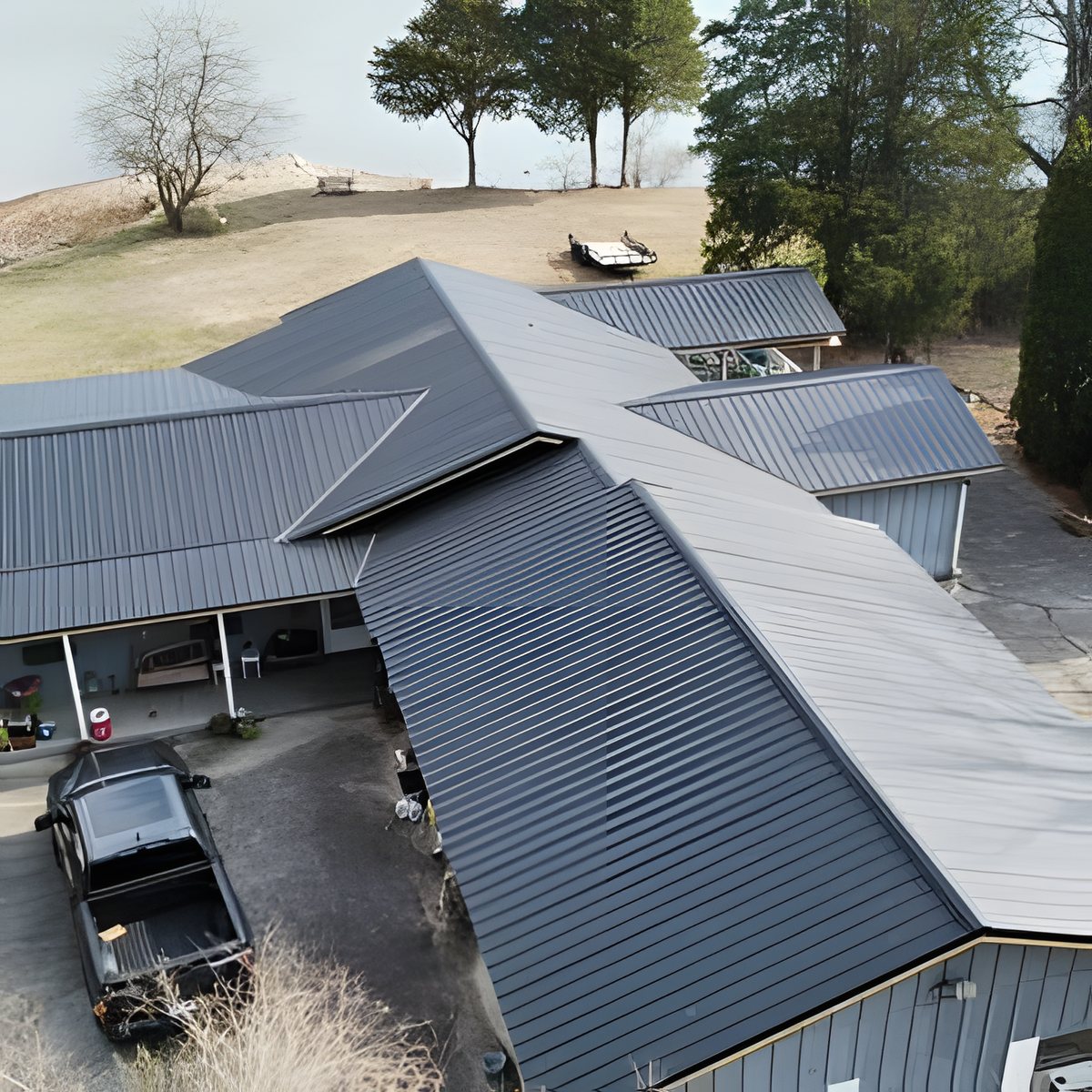
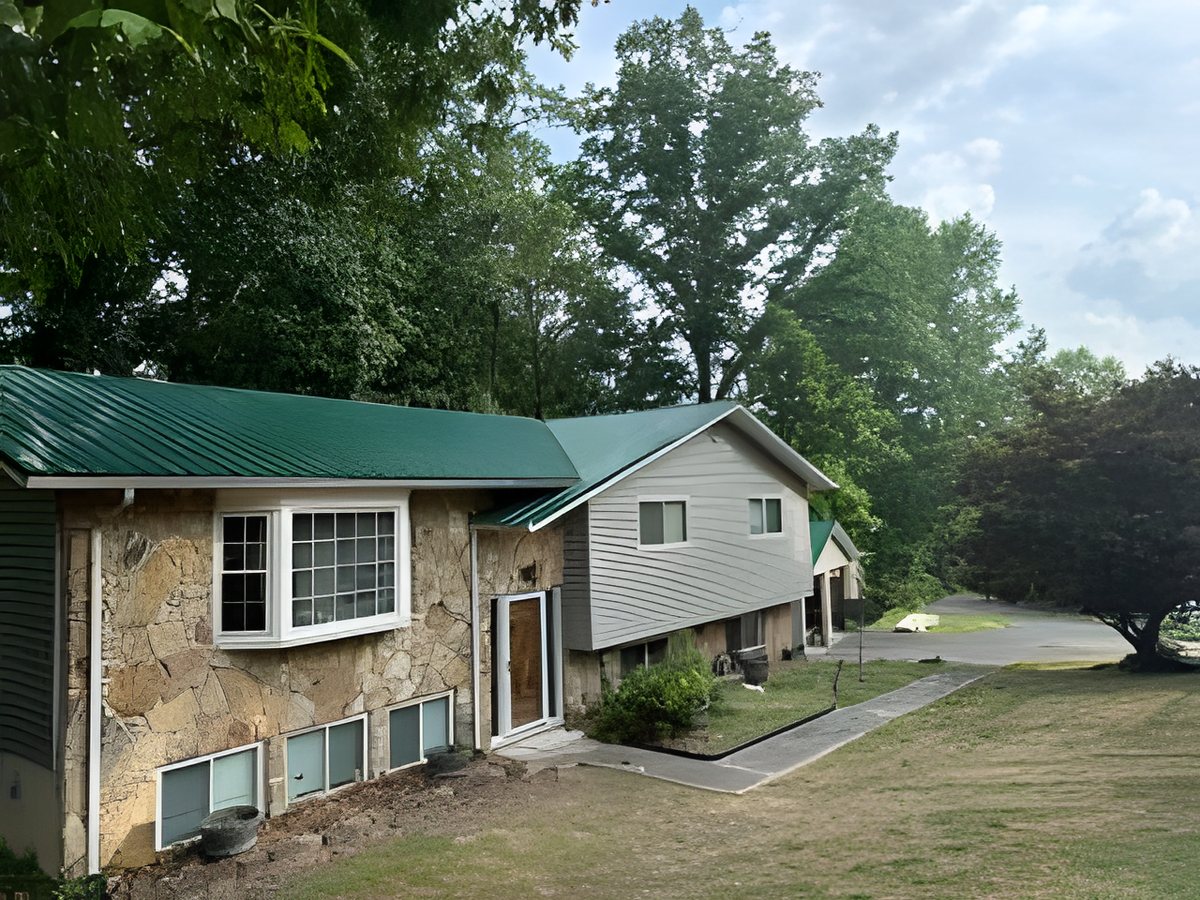
We install steel board-and-batten siding in solid colors, and wood prints that look like real boards. We also replace failing hardboard and Masonite siding.
Siding is quoted on your house. See it on a real home in our award-winning project.
Wide flat boards with narrow raised battens.
Barnwood, Cedar Natural, Primitive Pine and Cedar Gray.
Swollen, flaking hardboard laps.
Press your thumb into the bottom edge of a board near the ground. If it dents, flakes or feels spongy, the board has taken on water, and paint will not fix it. Read the full guide.
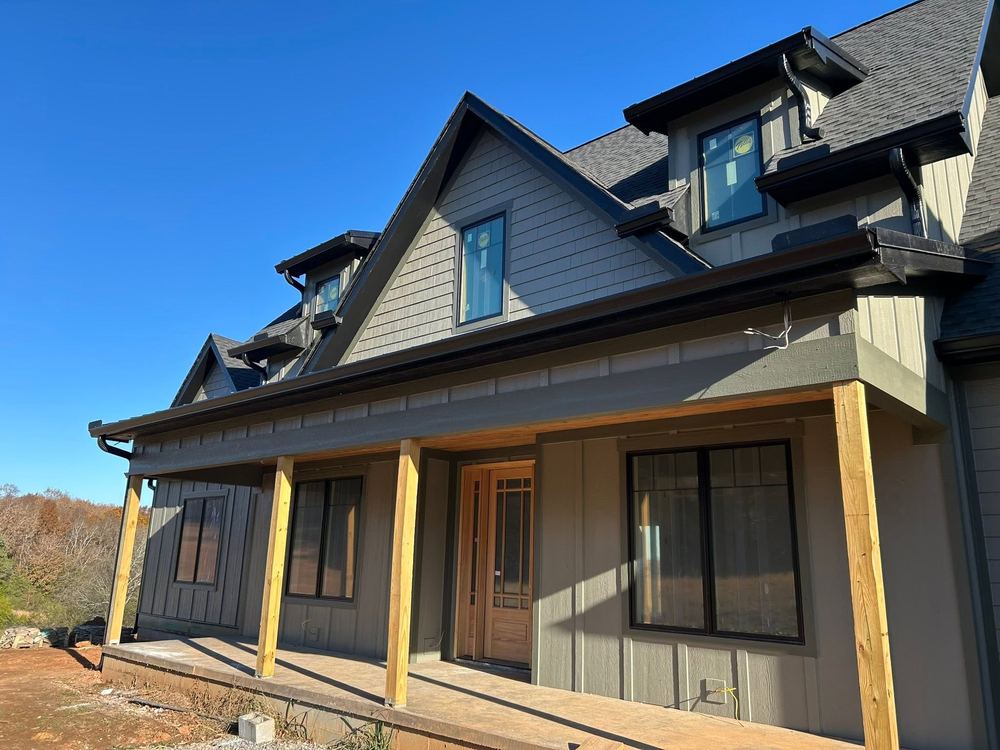
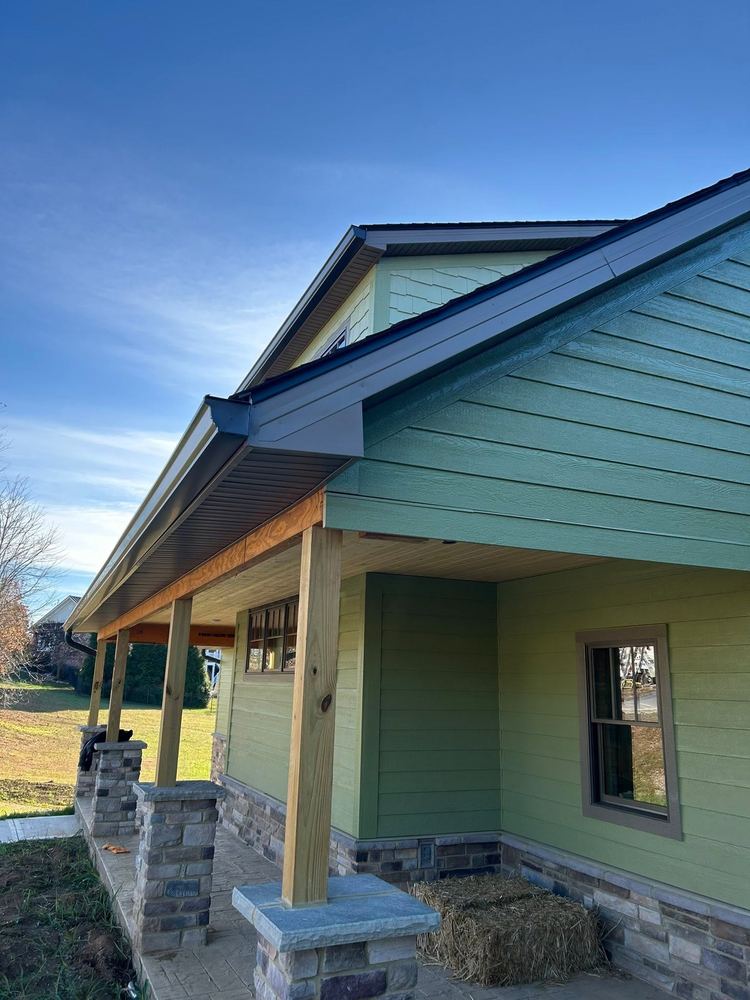
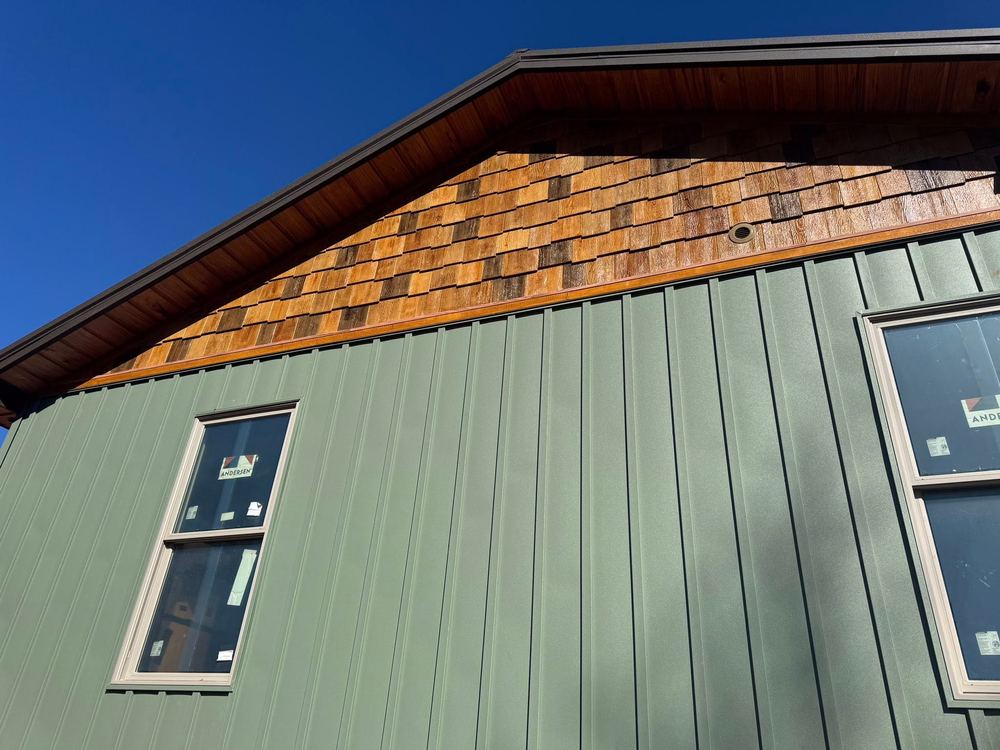
We're an authorized Alcoa Post Buildings dealer. Pick a model and we set it on your land. Every price below is installed, building shell only.
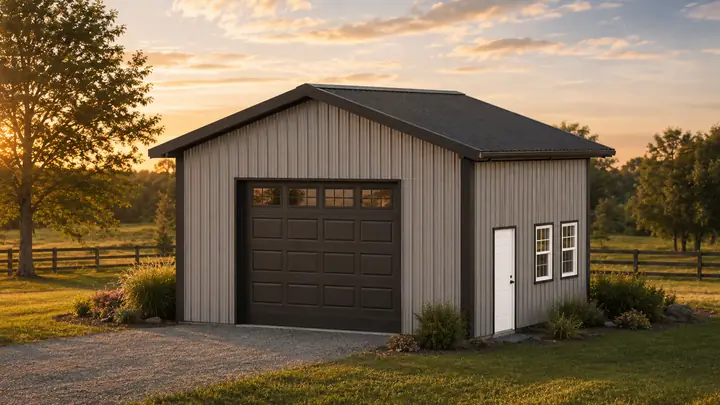
24 × 20 ft, 12 ft walls480 sq ft
Enclosed single-car garage. A compact garage for vehicle storage, a home workshop, lawn equipment, or recreational gear without taking up excessive space.
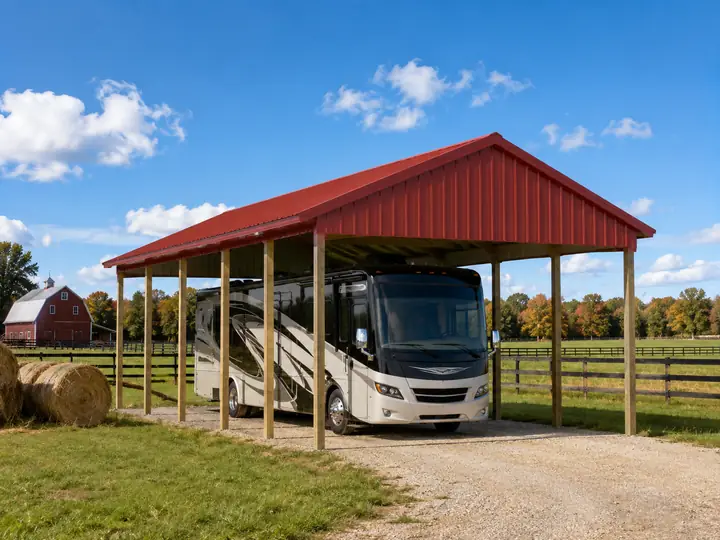
24 × 40 ft, 16 ft walls960 sq ft
Open-sided RV and equipment cover. Tall, open-sided covered storage for an RV, trailer, stacked hay, or farm equipment on properties that need versatile coverage without a fully enclosed building.
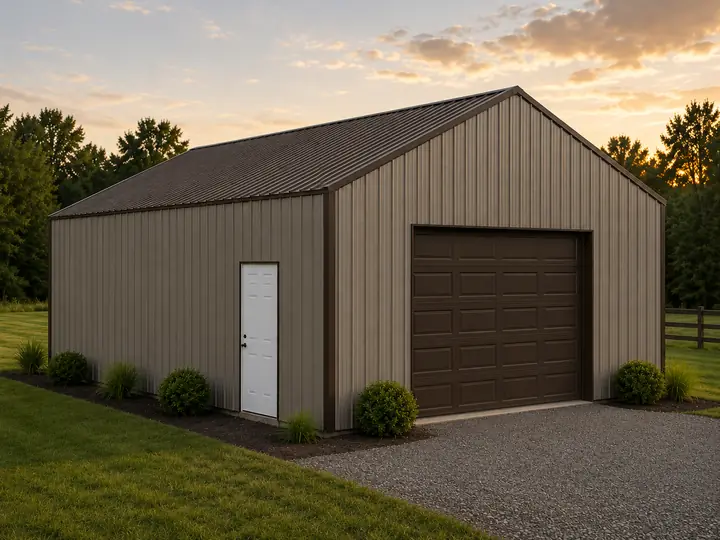
24 × 30 ft, 10 ft walls720 sq ft
Enclosed single-door garage. A practical garage with space for one large vehicle or two smaller vehicles, plus room for shelving, workbenches, and equipment.
A different size, more doors, a lean-to or a barndominium. We'll talk it through.
A lean-to is a roof that hangs off the side of a building, open or closed in. We add them to new buildings and to buildings you already have.
Every lean-to is custom-priced, especially on an existing structure, so we quote each one personally.
Tap to change the size. Every lean-to is custom-priced, so we'll quote yours.
24 ft long, 12 ft deep, open sides
We'll confirm the price after a quick look at your building.
Keep the tractor, mower and trailer out of the rain without building another barn.
Covered parking on the side of a shop or garage.
A shaded place to sit on the side of a building.
Firewood, hay and supplies, with the ends closed in if you like.
We set the building shell on your land and install the windows and exterior doors. You or your builder finish the inside. Every barndominium is quoted personally.
A low-maintenance alternative to wood and vinyl. Choose open rail or privacy, steel-wrapped wood posts or full steel posts, in black, white or a wood print.
Fence color
Open rail, for a ranch or farm look that keeps the view open.
Clean horizontal boards, closed for privacy or spaced for an open look.
Colors: black, white or a wood print. Drawings show standard sections; we quote your fence line personally.
Choose a metal or shingle roof, then pick roof and siding colors. The house changes as you tap.
Actual colors may vary. Final selection should be made from metal color chips. Painted panels carry a Sherwin-Williams lifetime paint warranty; other paint systems carry 40 years.
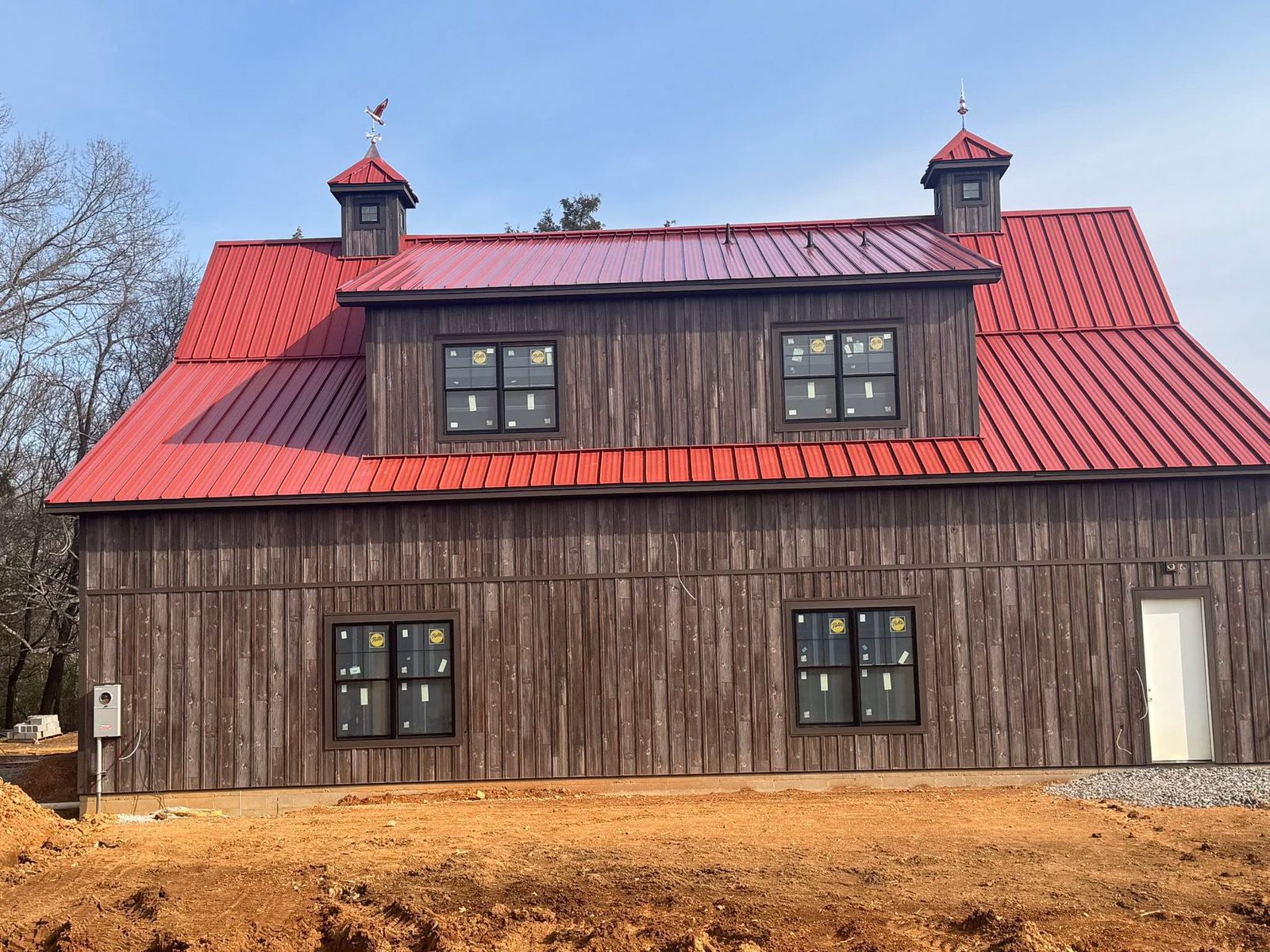
Metal Roofing Magazine, August/September 2026 edition
Our standing seam roof was featured as “Standing Seam Metal Roofing Delivers Timeless Performance on Tennessee Custom Home.”
A red standing seam roof with two cupolas and a dormer, over dark wood-print board-and-batten steel siding and black windows.
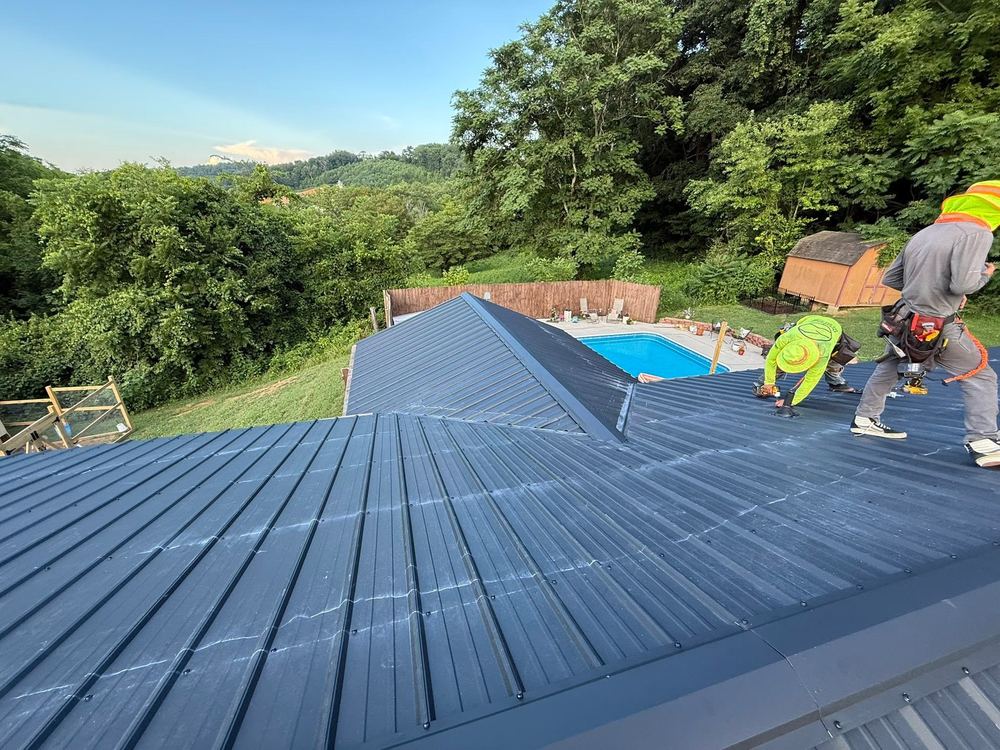
Straightforward from the first call.
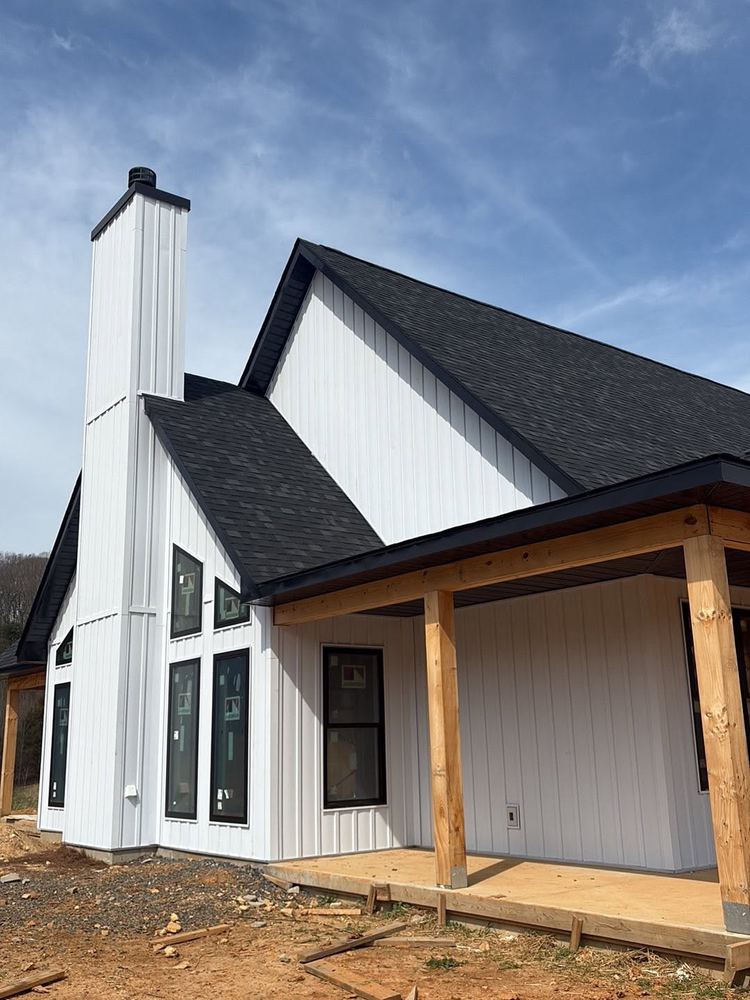
Overland started in 2021 because there was a need for a straightforward construction company: honest pricing, clear communication, and work done right.
Since then we've completed over 800 jobs. Overland Exteriors was formerly Overland Construction & Roofing.
“Chris from Overland Construction is an honest man, and a great person to work with. Always taking each project as if it were his own home, Chris will make sure your new roof is left looking amazing. 10/10 Recommend.”
“I have known Chris for many years both personally and professionally. Overland is a great company that is there to serve. Chris is responsive, on time and always there to listen.”
“They are a great company and group of people to work with, from the initial sales person to the crew that performed the work, everyone included.”
Three short steps. Taps until the last one.
Gauge is the thickness of the steel, and a lower number means thicker metal. 29 gauge is about 0.014 inch, 26 gauge about 0.019 inch and 24 gauge about 0.024 inch. In East Tennessee, 29 gauge suits barns and budget roofs, 26 gauge is a strong all-around choice for homes, and 24 gauge is the premium pick for standing seam.
Gauge is a number that describes how thick a sheet of steel is. The numbering runs backward: the lower the number, the thicker the metal.
The system dates back to the early days of sheet metal, long before anyone measured in thousandths of an inch, and it stuck. So 24 gauge is thicker than 26, and 26 is thicker than 29. The differences look tiny on paper, but in your hand the change in stiffness between 29 and 24 gauge is easy to feel.
Gauge numbers are nominal, meaning the actual thickness can vary slightly by manufacturer. If you are comparing panels closely, ask for the minimum thickness in inches or millimeters, which is a more exact measure.
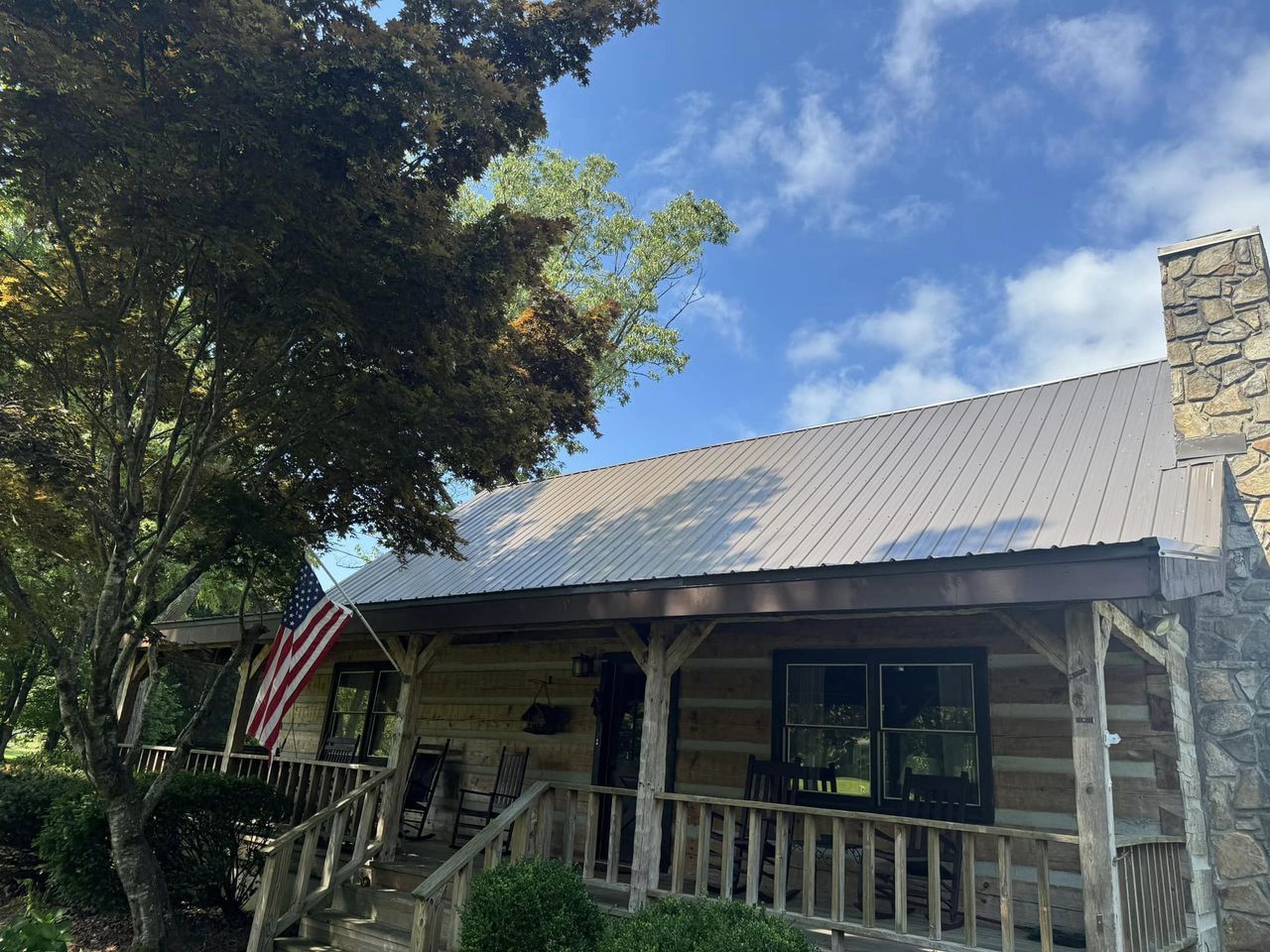
Here is how the three common roofing gauges compare in thickness, strength and typical use.
| Gauge | Approximate thickness | Dent and wind resistance | Typical uses | Relative cost |
|---|---|---|---|---|
| 29 | About 0.014 in. (0.36 mm) | Good | Barns, sheds, carports, post-frame buildings, budget exposed-fastener home roofs | Lowest |
| 26 | About 0.019 in. (0.48 mm) | Better | Home roofs, exposed-fastener and standing seam, siding, areas with more hail or wind | Moderate |
| 24 | About 0.024 in. (0.6 mm) | Best of the three | Premium standing seam, architectural and commercial roofs, long or wide panels | Highest |
Each step thicker adds weight and cost, but even 24-gauge steel is far lighter than asphalt shingles for the same area of roof.
29 gauge is the thinnest steel commonly used for roofing and the most budget-friendly. It is a dependable choice for many buildings when it is installed correctly.
You will find 29 gauge on most pole barns, sheds, carports and post-frame buildings, as well as many exposed-fastener home roofs. The ribs pressed into exposed-fastener panels add a lot of stiffness, which is why thinner steel works well in that profile.
26 gauge is roughly a third thicker than 29 gauge and is a popular middle ground for houses. It resists dents, wind and walking better while staying reasonably priced.
It works in both exposed-fastener and standing seam panels and is a common choice for residential standing seam. If your home sits under large trees, faces open fields where wind picks up, or you simply want more peace of mind about hail, 26 gauge is a sensible upgrade. Many homeowners also choose 26 gauge for steel siding, where a stiffer panel stays flatter and holds up to bumps from mowers and ladders.
24 gauge is the heaviest steel commonly used on homes. It gives the flattest, stiffest panels and the best dent resistance of the three.
It is most often used for premium standing seam roofs, wide flat panels, long runs from ridge to eave and roofs where appearance matters most. The extra stiffness helps reduce oil canning, the slight waviness that can show in flat metal. It costs the most of the three, and for many homes 26 gauge performs very well for less.
24 gauge also makes sense for low-slope roofs with mechanically seamed panels and for wide panels on modern homes, where a thinner sheet would be more likely to show ripples in bright sunlight. If you are investing in standing seam on a home you plan to keep for decades, it is worth pricing both 26 and 24 gauge side by side.
Match the gauge to the building, the panel type and your tolerance for dents. A barn and a lake house usually call for different steel.
Tip: Make sure every quote you compare lists the gauge in writing. Two prices that look far apart may simply be quoting different thicknesses of steel.
Gauge also connects to panel style. Read standing seam vs. exposed-fastener to see how they fit together, and what drives metal roof cost to see how gauge affects your price.
Gauge is only one part of a long-lasting roof. The protective coating, the paint system and the installation matter just as much.
Under the paint, steel roofing is protected by a metallic coating such as Galvalume or galvanized zinc, which is the steel's main defense against rust. A heavier gauge with a thin or poor coating will not outlast a lighter gauge with a good one.
Steel also comes in different strength grades. Many thin exposed-fastener panels are rolled from high-strength steel, which makes them stiffer than their thickness alone suggests. When two panels share the same gauge, the one made from a higher grade of steel will usually resist bending better. It is a fair question to ask when comparing products.
The shape of the panel adds strength too. Taller ribs and pressed-in striations stiffen thin steel, and correct fastener spacing keeps panels tight in high wind. On top, the paint system controls how well the color holds up. Painted panels from Overland Exteriors carry a Sherwin-Williams lifetime paint warranty, with 40-year warranties on other paint systems, and our metal installers are factory-trained. You can explore finishes in metal finishes explained.
East Tennessee sees strong spring thunderstorms, occasional hail and plenty of falling limbs from oaks, maples and pines. Those conditions make dent resistance worth thinking about. For most homes in Maryville, Alcoa, Knoxville and Farragut, 26 gauge offers a good balance of strength and value.
Lake homes around Lenoir City and Loudon often have long, steep, highly visible roofs where 24-gauge standing seam looks its best. Farm buildings, equipment sheds and barns in the countryside are well served by 29 gauge, which keeps costs down on large roofs. Mountain cabins near Sevierville that sit under heavy tree cover may be worth a step up in gauge to handle falling branches and the occasional heavy snow or ice.
It can be. 29-gauge exposed-fastener panels are used on many homes and perform well when installed correctly. If you want better dent resistance or plan to stay a long time, 26 gauge is a worthwhile upgrade.
26 gauge is thicker. In metal roofing, the smaller the gauge number, the thicker the steel. 26 gauge is about 0.019 inch, while 29 gauge is about 0.014 inch.
Thicker steel resists dents better, but no gauge is completely dent-proof in very large hail. Dents from hail are usually cosmetic and rarely cause leaks. Panels with an impact rating offer extra assurance.
Most residential standing seam is 26 or 24 gauge. 24 gauge gives the flattest look and best dent resistance, and 26 gauge is a strong, more economical option for many homes.
Slightly quieter, since heavier panels vibrate less. On a home with solid decking and underlayment, the difference is small because the decking and attic insulation absorb most rain noise.
Steel siding is commonly made in 29 or 26 gauge. Thicker 26-gauge siding stays flatter on long walls and stands up better to bumps from mowers, ladders and hail. Ask which gauge is quoted when you compare siding prices.